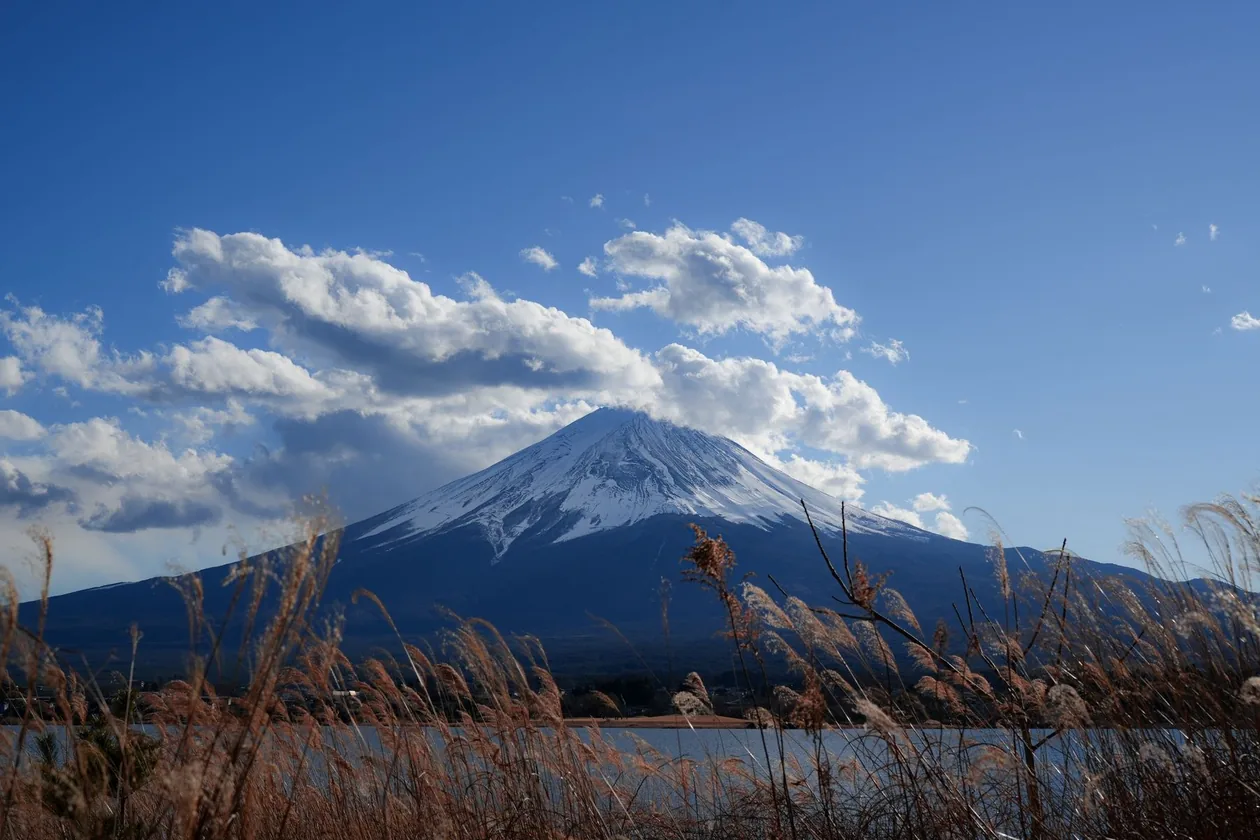
Mount Fuji Day Trip
In July the peak is clear on about one day in five, and the cloud builds from late morning. Which side of the mountain you go to changes what you get, and no tour can promise you the view.
You can book the best-reviewed tour on the platform, leave Shinjuku on time, and spend ten hours looking at a grey wall where the mountain should be. Every operator says the same thing in the small print: visibility is not guaranteed. None of them refund you for cloud.
That single fact should shape how you plan this day, and almost nobody tells you the numbers behind it.
In 3 minutes:
- Fuji is clear on roughly 80 days a year. December runs around 74%, November 72%, January 68%. June is 14%, July 18%, August 21%.
- Cloud builds from late morning, and the tours reach the viewpoints around 10:30.
- Kawaguchiko puts you at the mountain's foot. Hakone gives you a volcanic valley and a lake, with Fuji at a distance.
Will you actually see Mount Fuji?
The month decides this, not the operator. According to one visibility tracker, the peak shows clearly on about 80 days a year, and the seasonal spread is severe: roughly 74% of days in December, 72% in November and 68% in January, against 14% in June, 18% in July and 21% in August.
Read that again if you are planning a summer trip. In July you are looking at something close to one clear day in five, on a tour that costs €45 and takes your whole day.
Time of day matters too, and it works against you. Overnight cooling holds the cloud down, then after about 11:00 sea breezes push moist air inland and cloud forms on the slopes. Visibility runs roughly 12 points better between 03:00 and 06:00 than at midday. The buses leave Tokyo at 08:00 or 08:30 and reach the first viewpoints around 10:30, which is the tail end of the good window, not the middle of it.
None of this makes the trip a bad idea. It makes December a better idea than July, and it makes an early independent train a real alternative if the mountain is the only thing you care about.
Kawaguchiko side or Hakone side?
The tours sold as "Mount Fuji day trip" split into two different days out, and the listings do not make the difference obvious.
The Hakone route spends most of its hours in Hakone: the Heiwa no Torii gate on Lake Ashi, the Hakone Shrine, a ropeway ride, and Owakudani, a geothermal valley from an eruption around 4,000 years ago where the local speciality is eggs boiled black in the sulphur springs. Fuji appears across the water and from the cable car. It is a varied day with the mountain as the backdrop.
The Kawaguchiko route takes you to the foot of it. The 5th Station sits halfway up the mountain and is on the itinerary from roughly April to late November, replaced by Oishi Park in winter. Then Lake Kawaguchi, the ponds at Oshino Hakkai, and the Arakura Fuji Sengen shrine, where the pagoda-and-mountain photograph comes from. That last one costs you a 25-minute walk and a long flight of steps, which reviewers mention with feeling.
Pick by what you want to come home with. If the mountain is the point, go to its foot. If you want a full day out and will treat a clear peak as a bonus, Hakone gives you more to do when the cloud wins.
Where to book
Our take: The Hakone tour is the safer booking on 7,466 reviews and gives you a full day whatever the weather does; the Kawaguchiko one is cheaper and closer to the mountain but has only 56 reviews behind it, so treat it as the enthusiast's pick.
What the day actually looks like
Ten hours, most of them seated. The Hakone route leaves Tokyo Station at 08:00 or Shinjuku at 08:30, drives about two hours, then moves through stops of 20 to 50 minutes each before a two-hour run back, scheduled at 18:10.
Treat that arrival time as optimistic. The operator warns that traffic, weather and holidays can push it back by hours and advises against planning anything after 20:00. A reviewer on the Kawaguchiko tour put it more plainly: a 6pm return to Shinjuku is a theoretical value.
Two costs are not in the ticket. Lunch is on you, and the pirate ship cruise on Lake Ashi is an optional extra at around ¥1,700 that you pay on the day. The ropeway fare is included one way, and if the cable car is closed by the operator you can email for a ¥1,000 refund.
There is also a rule that quietly shapes your day: Japanese drivers are capped at ten working hours, so if the roads are bad the guide shortens or drops a stop. That is why the review summary for the €45 tour keeps returning to the same word, rushed, alongside praise for the guides.
What most visitors get wrong
They book for the season that suits their holiday and expect the mountain to cooperate. Summer is peak travel and the worst visibility of the year. If your dates are fixed in July or August, plan the day as a lake-and-volcano trip that might include Fuji, and you will not spend it disappointed.
They also read "Mount Fuji tour" and picture standing under it. On the Hakone route you are looking at it from across a lake, tens of kilometres away, which is a fine view and not the one in the photograph that sold you the trip.
And they treat the 5th Station as a summit. It is the road head at the halfway point, open on tour itineraries from roughly April to late November. Climbing to the top is a different trip with a short season and an overnight in a hut.
- Duration
- About 10 hours door to door
- Departures
- 08:00 Tokyo Station or 08:30 Shinjuku, return scheduled 18:10 and often later
- Price
- From €45 (Hakone route) or €29 (Kawaguchiko route), per person
- Not included
- Lunch; Lake Ashi pirate cruise, around ¥1,700 paid on the day
- Best months
- November to January for visibility; June to August are the worst
- Not suitable for
- Mobility impairments and respiratory issues on the Hakone route (Owakudani is an active geothermal valley)
Itineraries change with the season and the traffic, and Fuji visibility is never guaranteed. Confirm the stops on the operator's page before you book.
Last verified: July 2026
Frequently asked questions
Will you actually see Mount Fuji on a day trip?
It depends far more on the month than on the tour. One visibility tracker puts the peak clear on roughly 80 days a year, with about a 74% chance in December and 72% in November, against 14% in June, 18% in July and 21% in August. Every operator states that visibility is not guaranteed, and none of them refund you for cloud.
Kawaguchiko or Hakone for Mount Fuji views?
Kawaguchiko puts you at the foot of the mountain: the 5th Station in season, Oishi Park, and the Chureito pagoda view. Hakone keeps you at a distance and gives you Lake Ashi, a volcanic valley and a ropeway instead, with Fuji as the backdrop. Go Kawaguchiko if the mountain is the point, Hakone if you want a varied day and will take the view as a bonus.
How long is a Mount Fuji day trip from Tokyo?
About 10 hours door to door. Typical departures are 08:00 from Tokyo Station or 08:30 from Shinjuku, with a scheduled return around 18:10. Operators warn that traffic pushes this later, and one advises against booking anything after 20:00 on the same day.
What is the best time of day to see Mount Fuji?
Early morning. Overnight cooling suppresses cloud, and after about 11:00 sea breezes push moist air inland and build cloud on the slopes. Visibility scores run roughly 12 points higher between 03:00 and 06:00 than at midday, which is the awkward truth about a bus that reaches the viewpoints around 10:30.
Can you climb Mount Fuji on a day trip from Tokyo?
No. Day tours stop at the 5th Station, which is halfway up and reachable by road. Climbing to the summit is a separate undertaking with a July to early September season, an overnight hut stay for most people, and its own permits and fees.
If you have one free day, it is worth seeing how Fuji compares to the other three day trips before you commit it. If it falls in December, give it to the mountain. If it falls in July, book the Hakone route, expect a lake and a volcano, and let the view be the thing that might happen.
- Best Day Trips from Tokyo: 4 Routes and How to Choose (2026)
- Hakone Day Trip from Tokyo: The Free Pass, the Art, and the Loop (2026)
- Ghibli Museum Tickets: How to Actually Get One in 2026
- 10 Best Museums in Tokyo (2026): Art, History, and Digital Worlds
- Tokyo Skytree vs Tokyo Tower: Which One to Visit (2026)