Baths of Caracalla Tickets 2026: €8, and What You Actually See
€8 buys you one of the best-preserved imperial buildings in Rome, standing at close to full height with almost nothing inside it. The statues are in Naples, the mosaics are in the Vatican, and the underground opens on six evenings a year. Here is whether that trade is worth your afternoon.
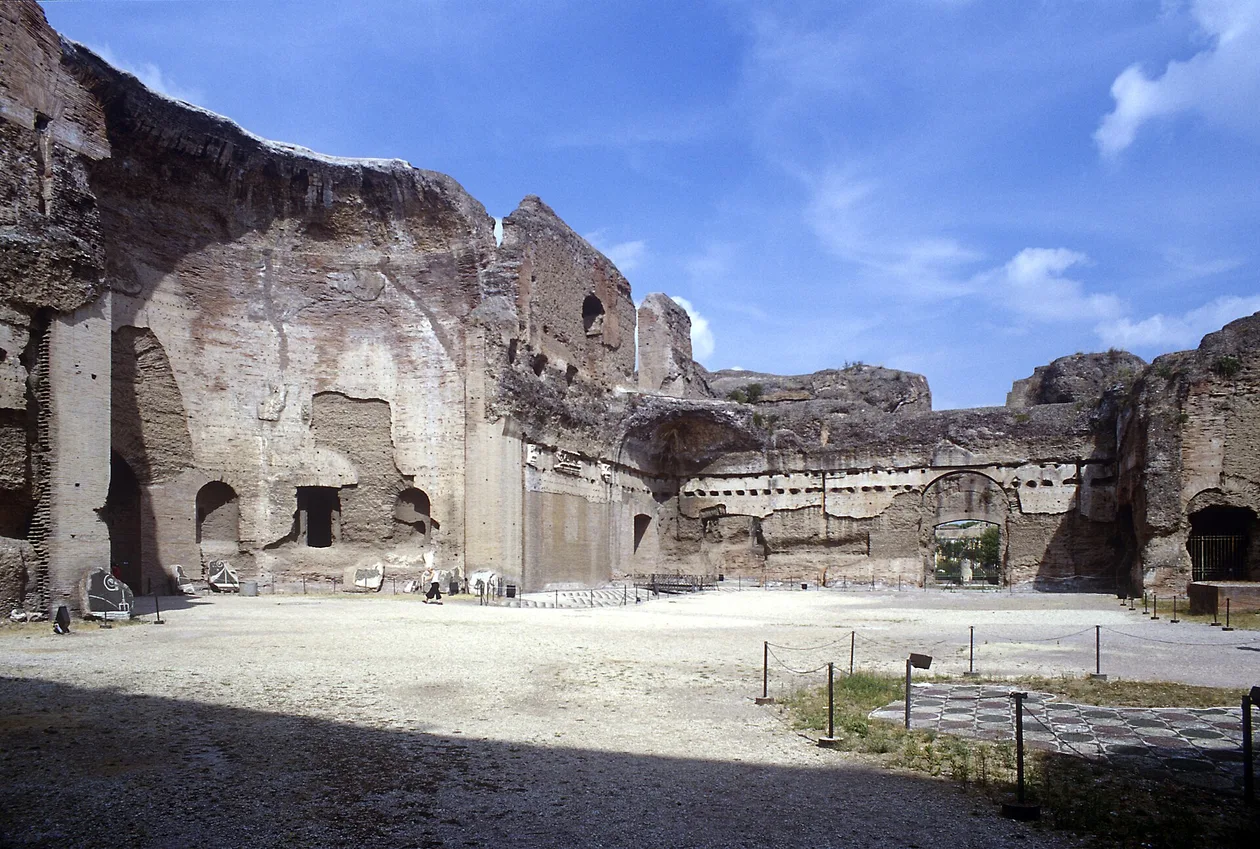
The Baths of Caracalla cost €8, and almost everything that made them famous is somewhere else. The Farnese Hercules and the Farnese Bull, pulled out of this building, are in Naples. The mosaics of athletes that paved its two libraries are in the Vatican Museums. What is left on site is the building itself, standing at close to full height because nothing was ever built on top of it, and empty.
That is the whole decision. This post is about whether that trade is worth an afternoon of a short Rome trip, not about reciting opening hours you can read on a sign.
In 3 minutes:
- €8 full, €2 for EU citizens aged 18–24, free under 18. From 11 September 2026 to 10 January 2027 it goes to €10 / €4 because a Frank Horvat photography exhibition is installed inside the baths.
- The Soprintendenza sells tickets only through the Musei Italiani portal, its app, or the card-only totems at the gate, and states that extras such as guided tours and skip-the-line are not offered here. There is no queue to skip.
- The underground galleries and the Mithraeum, the largest in Rome, are not on the day ticket. In 2026 they opened on six evenings: 16 and 23 July, 2 August, 19 and 26 September, 15 October.
- The summer opera moved out. Restoration work sent the 2026 Teatro dell'Opera season to the Circus Maximus, 29 June to 31 July.
How much are Baths of Caracalla tickets in 2026?
€8 full price. €2 reduced for EU citizens aged 18 to 24, under the ministry's standard rate. Free under 18. The ministry's own listing for the site gives €8 full and notes a €5 supplement when there is a temporary exhibition.
That supplement is live this autumn. The Soprintendenza announced on 27 August 2026 that Frank Horvat: 72 photographs runs inside the baths from 11 September 2026 to 10 January 2027, and that the ticket for that period is €10 full, €4 reduced, on sale from 2 September.
Three things about buying it that most pages get wrong:
- There is no skip-the-line product, because there is no line. The official page for the site says, in plain language, that additional services such as guided visits or fast-track are not provided, and that the Soprintendenza takes no responsibility for purchases made through other channels. Resellers list "skip-the-line" Caracalla tickets anyway. You are paying a margin for a queue that does not exist.
- The old three-site Appian ticket no longer covers Caracalla. The Baths sit under the Soprintendenza Speciale di Roma; the Appian Way sites sit under the Parco Archeologico dell'Appia Antica, whose €12 seven-day park ticket lists the Antiquarium di Lucrezia Romana, Cecilia Metella, Capo di Bove, Villa dei Quintili–Santa Maria Nova, the Via Latina tombs and Villa di Sette Bassi. Caracalla is not on that list. If a combined ticket page promises you all three, check the date it was written.
- The one channel is museiitaliani.it. Online, in the app, or at the totems by the entrance, which take cards only.
Where to book
Our take: we normally point you at GetYourGuide because it is worth the few euros for a real queue-jump. Not here. The site itself says it runs no fast-track and no guided-visit service, the reseller entry tickets sit around 3.8 to 3.9 stars, and the €8 official ticket is the cheapest and only complete option.
The Baths of Caracalla guide — a 90-minute route through an empty building
- The order that makes the plan legible instead of a field of brick
- Where the two surviving mosaic floors are, and which one people walk over without seeing
- The one wall that tells you how high the roof was
Is the Baths of Caracalla worth it if you've done the Colosseum and the Forum?
Yes, and for a reason that has nothing to do with adding another ruin.
The Colosseum and the Forum are crowded shells you read through other people's heads. The Baths of Caracalla is the same period of Rome with the crowd removed, and the building is more intact than either. It survived because the site was never redeveloped: the whole rectangular enclosure, the two libraries, the two exercise courts and the central block on its single axis are still legible on the ground.
What you walk is that axis in reverse: natatio, the open-air swimming pool, then frigidarium, tepidarium, calidarium. Bathers went the other way. The walls of the natatio still carry two orders of niches that once held statues, and they are the single best surviving clue to how high the roofs went, because nothing in the Forum stands that tall.
What you do not get is anything to look at up close. That is not an accident of decay, it is a distribution problem. The colossal sculpture went to the Farnese in the sixteenth century and then to Naples. The library mosaics went to the Vatican: square panels of athletes with the cirrus knot at the nape, judges in togas, arms wrapped in leather cesti. They are a highlight of the Gregoriano Profano rooms that most people walk past on the way to the Sistine Chapel. If you are doing the Vatican Museums on the same trip, seeing the mosaics after the building they came from is a better order than the reverse.
Two things do survive on site and are worth knowing about before you go. The Domus di Vigna Guidi, a house that predates the baths, was restored and added to the visit route in 2022; its shrine shows Anubis, Isis and a third figure read as Osiris facing Jupiter, Juno and Minerva, a pairing the Soprintendenza calls a unicum. It is included in the ordinary ticket, and it closes on the busiest days, the free first Sunday of the month included. And the Reflecting Pool, a contemporary installation in the shape of the ancient natatio, put water back into the complex after roughly 1,800 years; Rome's city tourism office describes it as a stage for concerts and performances as much as an artwork.
So: worth it if you want a Roman building you can read. Not worth it if you want objects, and honestly not worth it as your third ancient site in two days. Our Roman Forum and Palatine guide is the better second stop if you only have one more in you.
When can you see the underground and the Mithraeum?
This is the part the €8 does not buy, and the part worth planning a date around.
Two kilometres of service galleries survive beneath the baths: the furnaces, the water plant, a mill, the wood stores, and the Mithraeum, which the Soprintendenza and Rome's tourism office both call the largest in the city, with the fossa sanguinis used in initiation rites still visible in the floor. Rome's official tourism site is explicit that it can only be visited on the occasion of special events or visits.
In 2026 those events were the Notturno Imperiale evening openings: 16 July, 23 July, 2 August, 19 September, 26 September and 15 October, 19:30 to 22:45 with last entry at 21:45, at the ordinary €8 / €2 price and capped at 1,200 people a night. The 26 September date fell inside the European Heritage Days and cost €1. The route ran surface baths, Reflecting Pool, underground, Mithraeum, and it was self-guided, not a tour. The step-free way down to the galleries is a different gate, via Antonina 5, because the main descent is stairs.
If the underground is the reason you are coming, check the Soprintendenza's news page for the next season's dates before you fix your travel week. It is announced a few weeks ahead, not a year.
What happened to the opera at Caracalla?
For decades the answer to "why go to Caracalla" was the summer opera. In 2026 that answer stopped being true.
Teatro dell'Opera di Roma announced on 10 March 2026 that its summer festival would move to the Circus Maximus, 29 June to 31 July, with capacity up to around 6,000 and tickets from €15 to €170. The stated reason is the restoration work under way at the Baths. The programme that moved included a new Aida staging, Il Gladiatore in concert with Lisa Gerrard, Roberto Bolle and Friends, Cranko's Romeo and Juliet and Carmina Burana.
Dance stayed on site. Caracalla Danza ran from 26 June to 5 July 2026, with a site-specific piece that walked audiences from the Reflecting Pool to the Mithraeum, on separate tickets of €20 to €25 sold by the company, not by the museum. If you are planning around next summer, treat both the opera venue and the dance programme as unannounced until the theatres publish, and do not book a Rome trip on the assumption that opera has returned to the Baths.
What most visitors get wrong
They arrive expecting a museum. There are no galleries and no object labels of the kind the Capitoline or the Vatican give you. Download the free Roma X-PAND app before you go: the Soprintendenza launched it on 6 August 2026 with the Italian Space Agency, and it puts the Farnese Hercules and Farnese Bull back into their original rooms in augmented reality, with an interactive map and voice-read descriptions.
They come on a Monday. The site is closed every Monday of the year. Rome's museum opening hours post has the full Monday map for the city.
They come on the free first Sunday and see less. The site takes part in the ministry's free-Sunday scheme, but the Domus di Vigna Guidi frescoes shut on the most crowded days, first Sunday included. Paying €8 on a Tuesday buys you more of the site than turning up free. Our free things to do in Rome post covers where the free Sunday is actually worth the queue.
They give it fifteen minutes. GetYourGuide's audio-guide version of the ticket is built around 17 stops and a two-hour duration. An hour is enough to walk the axis once. Under forty minutes and you have seen a brick wall.
- Site
- Terme di Caracalla, Viale delle Terme di Caracalla 52, Rome
- Tickets
- €8 full · €2 EU 18–24 · free under 18 · €10 / €4 from 11 Sep 2026 to 10 Jan 2027 (Frank Horvat exhibition)
- Opening hours
- Closed Mondays · Tue–Sun from 9:00 · closes 17:30 (1–28 Mar) · 19:15 (29 Mar–31 Aug) · 19:00 (1–30 Sep) · 18:30 (1–25 Oct) · 16:30 (26 Oct–28 Feb)
- Underground + Mithraeum
- Not on the day ticket · 2026 evening openings 16 and 23 Jul, 2 Aug, 19 and 26 Sep, 15 Oct, 19:30–22:45, 1,200 places
- Free entry
- First Sunday of the month (Domus di Vigna Guidi closed) · 8 March for women · European Heritage Days Saturday at €1
- Getting there
- Metro B Circo Massimo · buses 75, 118, 628, 760 and tram 3 at Circo Massimo · accessible underground entrance at via Antonina 5
- Book at
- Musei Italiani, the only official channel
Hours and prices can change — confirm on the official site before you go.
Last verified: August 2026
Frequently asked questions
How much are Baths of Caracalla tickets in 2026?
€8 full price, €2 for EU citizens aged 18 to 24, free under 18. From 11 September 2026 to 10 January 2027 the ticket rises to €10 full and €4 reduced because of the Frank Horvat photography exhibition staged inside the baths. Tickets are sold only through the Musei Italiani portal, its app, or the card-only totems at the entrance.
Is the Baths of Caracalla worth visiting?
It depends what you want. The complex is one of the best-preserved imperial buildings in Rome because nothing was ever built on top of it, so you get walls at close to their original height and rooms you can read as rooms. What you do not get is decoration: the Farnese Hercules and Farnese Bull found here are in Naples, and the athlete mosaics from the two libraries are in the Vatican Museums. If you want objects, this is the wrong €8. If you want scale and quiet, it is the best value in ancient Rome.
Can you visit the underground and the Mithraeum at the Baths of Caracalla?
Not on a normal daytime ticket. Rome's official tourism site states the largest mithraeum in Rome can only be visited during special events or visits. In 2026 the Soprintendenza opened the underground galleries and the Mithraeum on six evenings under the Notturno Imperiale programme: 16 and 23 July, 2 August, 19 and 26 September, and 15 October, from 19:30 with last entry at 21:45, capped at 1,200 people per night.
What are the Baths of Caracalla opening hours?
Closed Mondays. Tuesday to Sunday it opens at 9:00 and closes at 17:30 (1–28 March), 19:15 (29 March–31 August), 19:00 (1–30 September), 18:30 (1–25 October) and 16:30 (26 October–28 February). Last admission and ticket-office closing are one hour before, except in high summer when the ticket office shuts at 18:00.
Is the summer opera still held at the Baths of Caracalla?
Not in 2026. Teatro dell'Opera di Roma announced on 10 March 2026 that its summer season would move to the Circus Maximus from 29 June to 31 July while the Baths of Caracalla undergo restoration work. Dance did stay on site: Caracalla Danza ran from 26 June to 5 July around the Reflecting Pool, on separate tickets of €20 to €25.
Where are the Baths of Caracalla and how do you get there?
Viale delle Terme di Caracalla 52, about a ten-minute walk from the Colosseum end of the Circus Maximus. Metro B to Circo Massimo is the closest stop; buses 75, 118, 628 and 760 and tram 3 all serve Circo Massimo. The accessible route into the underground, when it is open, starts from via Antonina 5 instead.
Building the rest of the day? The Colosseum tickets guide covers the ticket tiers and the sell-out problem, and things to do in Rome puts the Aventine, Testaccio and the Circus Maximus around this corner of the city into one walk.
Already subscribed? Open the room-by-room guide →
- Roman Forum & Palatine Hill Tickets 2026: €18, Two Passes Explained
- Colosseum Tickets 2026: Prices, Skip-the-Line and How to Book
- Free Things to Do in Rome: An Honest Guide

Or skip the planning: I'll do it for you
Send me your dates. I’ll plan which museum goes on which day, around closures, free days and timed entries, and check every date against the official museum sites myself. In your inbox the same day.
 Planned by Adrià, who writes these guides