Read It Before You Climb It.
A 70-minute route: the original panels and prophets in the museum, the three builders on the facade, then 414 steps to the one view that frames the dome.
Get your free guide
Enter your email to unlock the full room-by-room guide. One email unlocks all Florence museum guides.
Free · No spam · Unsubscribe anytime
Everything carved on the outside of the tower is a copy. The originals were taken down in 1965–1967 and sit in the Opera del Duomo Museum, which is already in your pass. See them first, then climb. The tower reads differently once you know what was on it.
Both passes that include the tower also include the Opera del Duomo Museum. Go there first, but not on the first Tuesday of the month, when the museum is closed. You are here for the tower pieces only; the full museum takes 60–90 minutes. The hexagonal relief panels from the tower's base are here, mostly by Andrea Pisano and his workshop, with five added by Luca della Robbia in 1437. So are the prophets from its niches, including Donatello's Habakkuk, the one Florentines call the Zuccone.
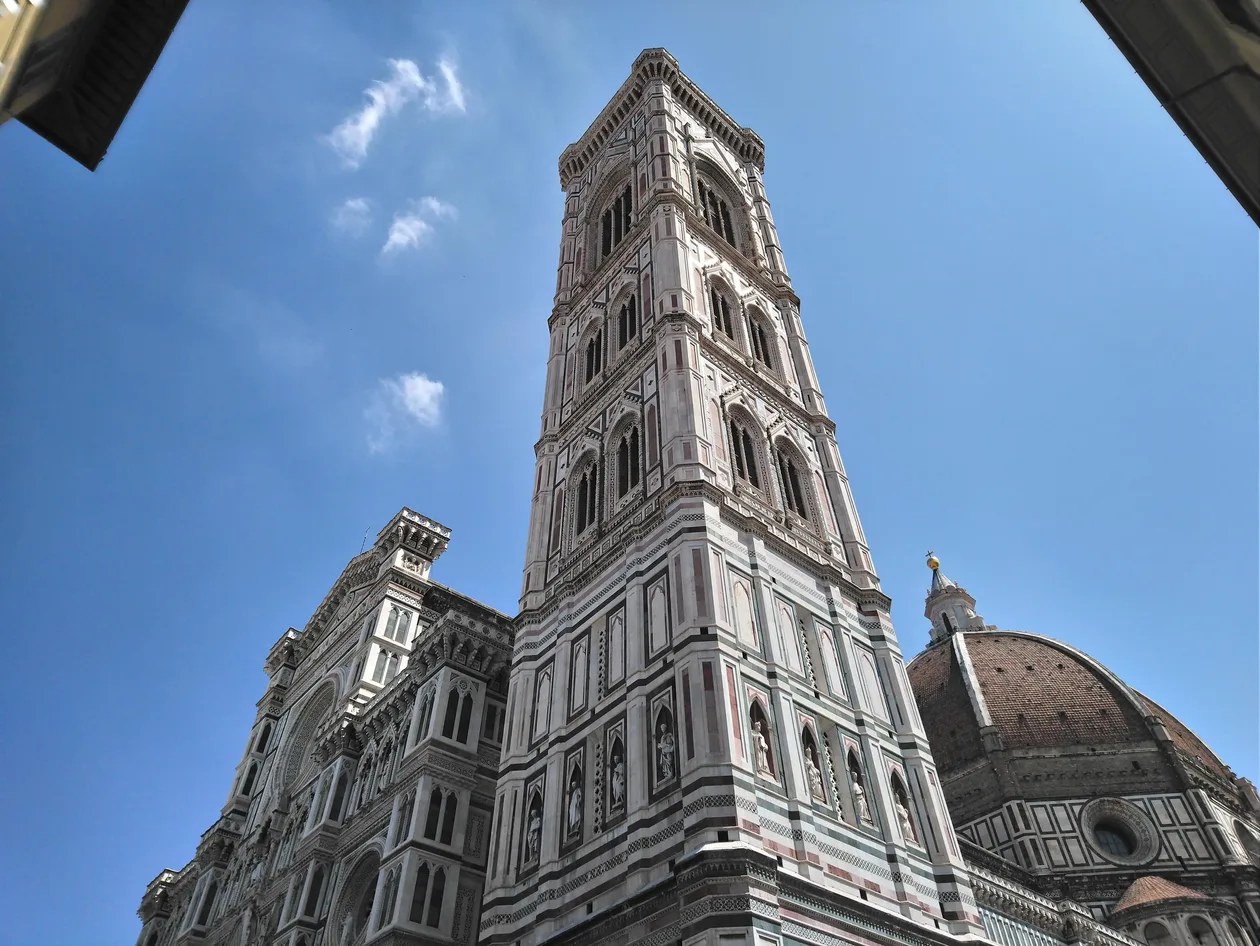
Now stand at the foot of the tower and find the copies of what you just saw. Then look up and count three builders: Giotto's marble-clad lower floor (1334–1337), Andrea Pisano's band of lozenges and the niche levels, and Francesco Talenti's top three levels with the big windows, finished in 1359.
There is no elevator. The stairs break at three window-level floors, so stop at each one instead of pushing through and holding up the line. At the top, turn toward the cathedral: Brunelleschi's dome sits whole in front of you, the view you lose once you are standing on it. In 2026 restoration work may partly block some angles.
The tower opens at 8:15 and the first hour is the quietest. Central hours are the worst, and summer middays turn the narrow stretches into a single-file crawl.
The tower is under major restoration. The top terrace stays open, but the official site warns views may be partially reduced. It also closes for maintenance 9–13 November 2026.
The Giotto Pass (€20) makes you pick a time for the tower, and it cannot be changed. The Brunelleschi Pass (€30) adds the dome and lets you climb the tower any time in its three days.
Medium and large bags are not allowed on any of the monuments and must go to the luggage storage at Piazza Duomo 38/r. Travel light and you skip that stop.
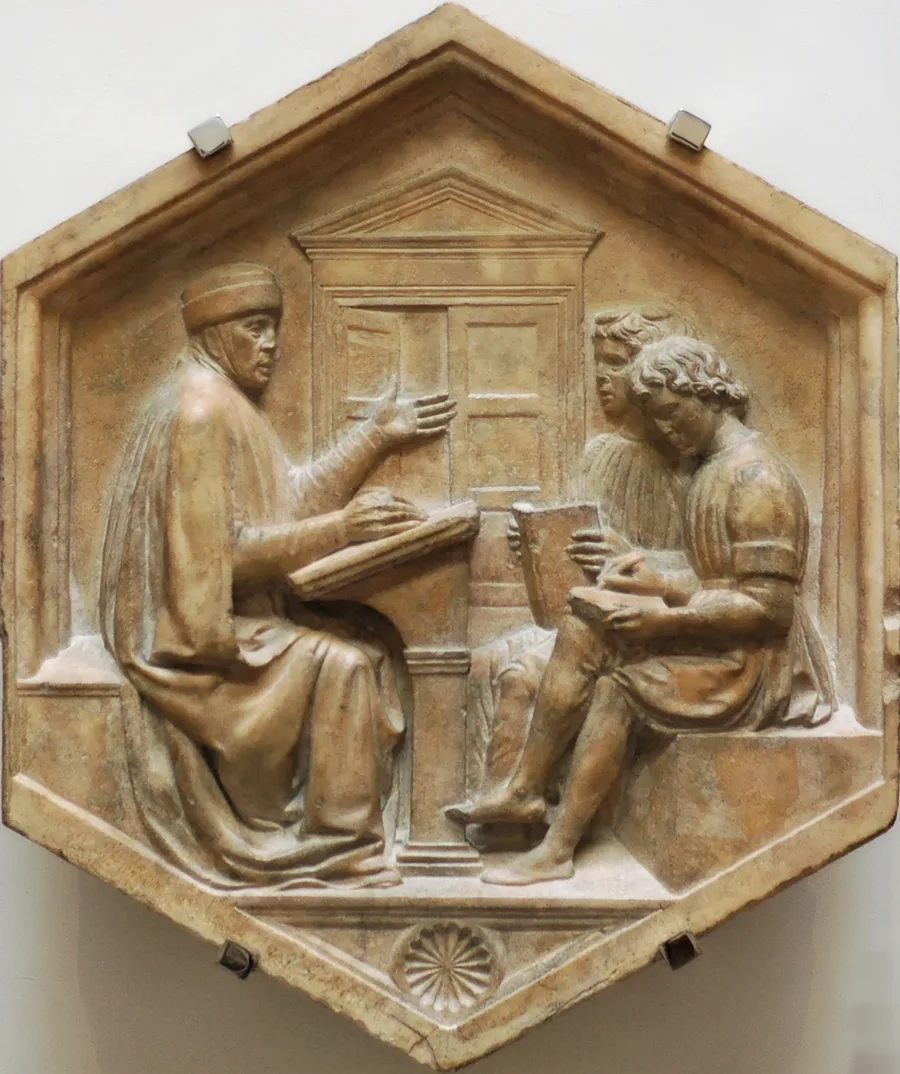
Why it matters: A history of human work in stone: the Genesis story on one side, then the mechanical and creative arts and the liberal arts around the base.
What to notice: Pick one trade you recognise, then find its copy outside. Seen up close in the museum, the figures are working, not posing.
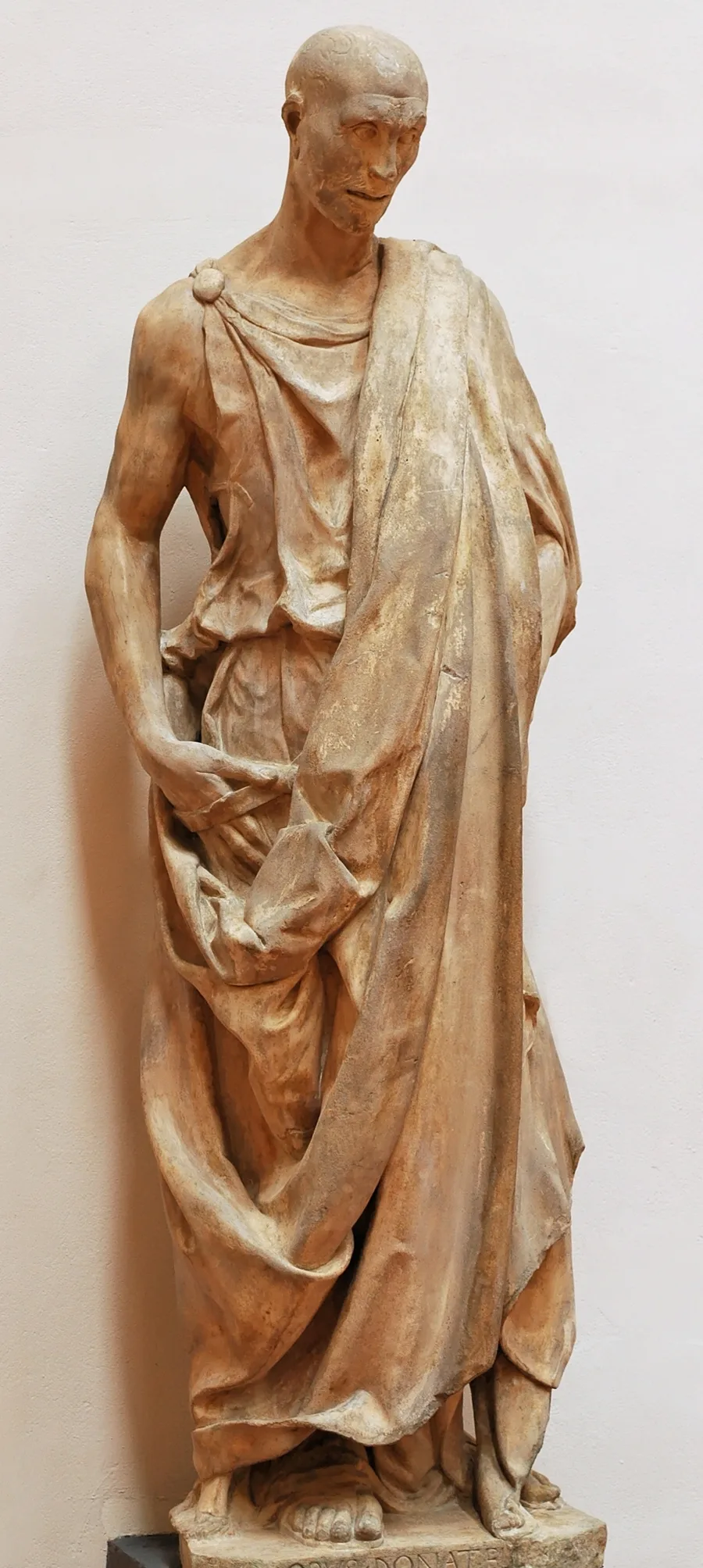
Why it matters: Made to be seen from far below, in a niche high on the tower, which is why the face looks so rough at eye level.
What to notice: Look at it from close, then step back as far as the room allows. The rough carving sharpens with distance, the way it was meant to from the street.
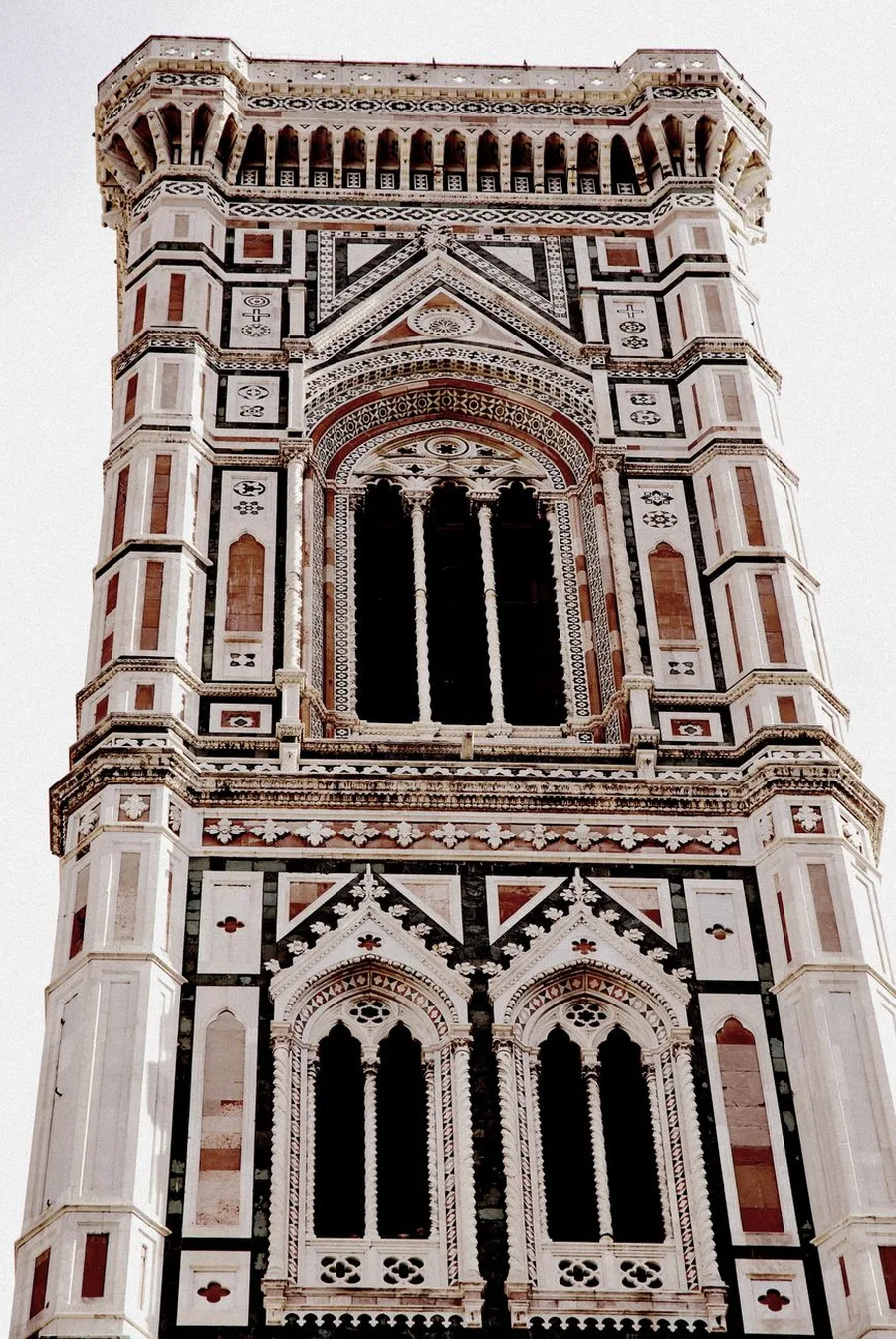
Why it matters: Talenti finished what Giotto and Pisano started, and his levels carry the large windows that make the tower look lighter as it rises.
What to notice: From the piazza, compare the solid lower floors with Talenti's open top. On the climb, the same windows are where you stop to rest.
How well did you look?
3 quick questions about what you just saw
Visit complete!
Share your visit or save it for later
Your collection