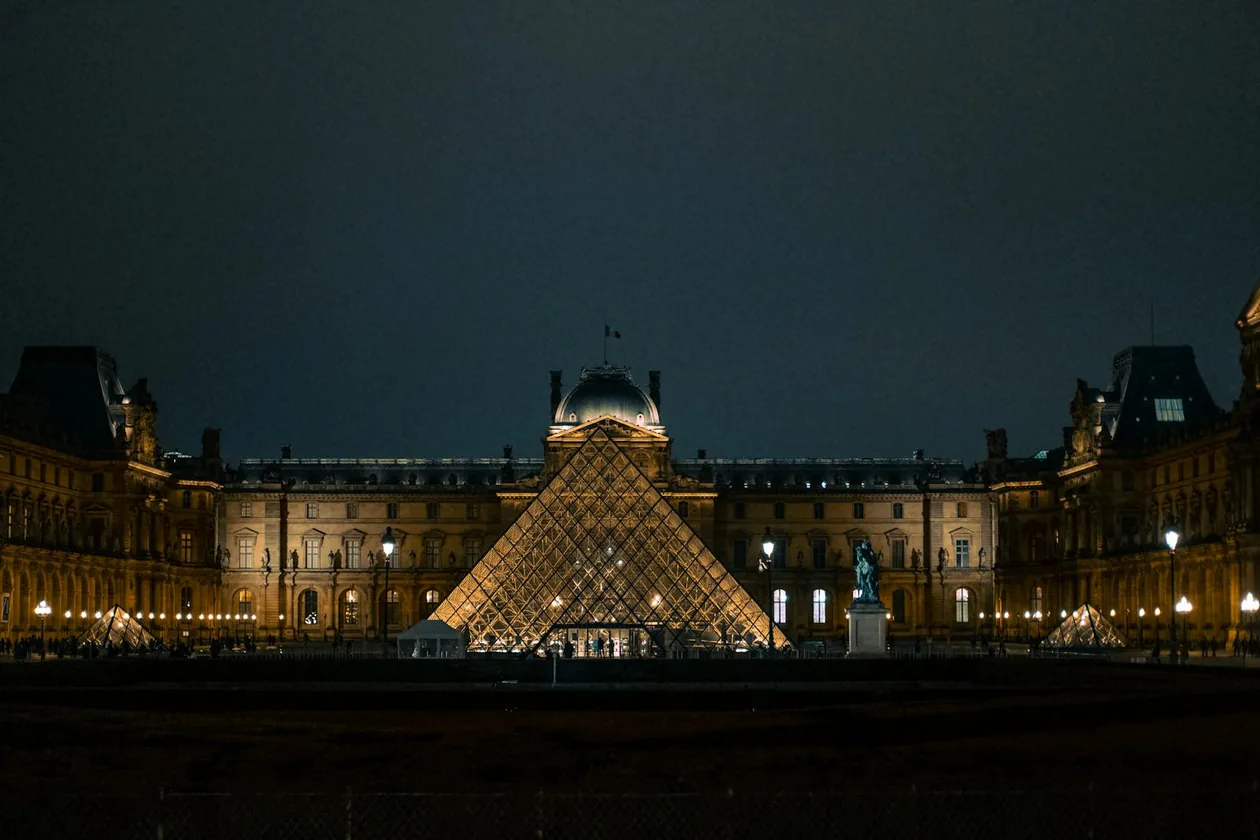
Best Art Museums in the World 2026
The Louvre, the Vatican, the Met, the Prado, fifteen museums worth crossing oceans for. What they show, how long you need, and when to go.
Walk into the Louvre at 9:05 on a Tuesday in January and the Winged Victory of Samothrace is alone on her staircase. Stand in the Sistine Chapel at 8:15 with a small early-entry group and you can hear the building. Show up at the Met on a Thursday morning in February and the American Wing is yours.
These windows exist at every museum on this list. Most people miss them. This is the friend-who-lives-there version of which art museums are worth crossing an ocean for, when to go, and how long to stay. These are, by most reckonings, the most famous and most important art museums in the world.
In 3 minutes
- The triad most visitors should book first: Louvre + Vatican + Uffizi. Add the Prado if you have fourteen days
- The biggest museums punish aimless wandering. Plan a route in each before you go
- Free admission windows exist almost everywhere, most are early morning of the day, late evening, or one Sunday a month
Why "best" is a complicated word
There are three honest ways to rank art museums: by collection size, by cultural weight, and by visitor experience. The Hermitage wins on size. The Vatican wins on density of Renaissance masters per square metre. The Louvre wins on cultural gravity. None of those is the same as "best afternoon for someone who flew here for it."
This list weighs all three but tilts toward the last one. We've cross-checked visitor reviews from TripAdvisor and Google, the 2025 attendance figures The Art Newspaper published in March 2026, real timing data from our own visits across fourteen cities, and the room-by-room work we've published on most of these museums. Every attendance figure below comes from that survey, cross-checked against Wikipedia's list of most-visited art museums and the museums' own reporting. The wider dataset sits in our museum statistics tracker. What's not on the list: museums that fail the traveler test. Big collections in cities almost no one routes through. Buildings that took longer to reach than the visit lasted.
The order below is a defensible ranking, not a verdict. If your trip is themed around modern art, the MoMA moves up. If you've done the Louvre on a previous visit, the Marmottan or the Borghese earns a higher slot. Pick the museums that match the reason you flew.
1. Musée du Louvre, Paris
The largest art museum in the world by visitor count and the most consequential by cultural weight. Just over 9 million people visited in 2025, a record for the building and more than any other museum anywhere. The collection runs from the Code of Hammurabi to Delacroix. The Mona Lisa room is always a fight; the rest of the museum, even at peak season, has rooms you can have to yourself.
Prices changed in January 2026: €22 for EEA residents, €32 for everyone else (louvre.fr). The pricing jump made the Paris Museum Pass mathematically better for most non-European visitors. Go with a route, the Richelieu wing, the Greek antiquities, and the Islamic Art galleries reward more than the Mona Lisa scrum. Free entry is on the first Friday evening of most months, not Sundays, and the nine free Fridays of 2026 skip May, July and August.
Visit: Louvre tickets and what to see → · Time: 3–5 hours · Price: €22 EEA / €32 non-EEA · Best window: Wednesday or Friday evening (open until 21:00, last entry 20:00)
2. Vatican Museums & Sistine Chapel, Rome
Seven kilometres of galleries that end in the Sistine Chapel. The Raphael Rooms, the Pinacoteca, the Gallery of Maps, each of them would be the headline collection of a smaller museum. Just under 7 million visitors in 2025 make this the second-most-visited museum on Earth.
Book the 8:00 slot and walk against the flow: start at the Pinacoteca, then move to the Sistine Chapel before the tour groups arrive. The last Sunday of the month is free but unbookable (museivaticani.va) and the queue starts before sunrise. Skip-the-line tickets are not a luxury here, they're the difference between a visit and three hours in the sun.
Visit: Vatican tickets and timing → · Time: 2.5–3 hours · Price: €25 online · Best window: First entry 8:00 Mon-Sat
3. The Metropolitan Museum of Art, New York
Two million square feet, roughly 1.5 million objects (metmuseum.org), 5,000 years of human visual culture. Close to 6 million people came in 2025. The Met is the largest art museum in the Western Hemisphere and the only one on this list where you could spend three days without repeating a wing.
The crowds concentrate in European Paintings (second floor) and the Temple of Dendur. The American Wing, the Costume Institute galleries, and the rooftop sculpture garden in summer are quieter by orders of magnitude. Pay-what-you-wish applies to New York State residents and to students from New York, New Jersey and Connecticut, with student ID; a non-student living in New Jersey pays the full $30 like everyone else. One ticket covers the same day at both Fifth Avenue and the Cloisters. The old three-consecutive-days rule is gone, so plan the Met as one long day, not a spread.
Visit: Met Museum tickets and what to see → · Time: 3–4 hours · Price: $30, pay-what-you-wish for NY State residents and NY/NJ/CT students · Best window: Thursday morning, or Friday and Saturday evening (open until 21:00). Closed Wednesday
4. Uffizi Gallery, Florence
The finest concentration of Italian Renaissance painting on Earth. Botticelli's Birth of Venus and Primavera in the same room. Leonardo's Annunciation. Caravaggio's Medusa. Titian's Venus of Urbino. Michelangelo's only completed panel painting, the Doni Tondo. All in a 16th-century Vasari building above the Arno.
Book at least two weeks in advance in summer, the Uffizi sells out earlier than any other major Italian museum. Booking ahead costs more, not less: €29 in advance against €25 on the day, and €20 against €16 for the afternoon ticket. You pay the difference for a slot that exists. The morning slots (8:15-10:00) are the only windows where the Botticelli room is bearable. The new Caravaggio rooms on the first floor are still under-trafficked compared to the upstairs.
Visit: Uffizi tickets and how to skip the line → · Time: 2.5–3 hours · Price: €25 same-day, €29 booked ahead (€16 / €20 after 4 PM) · Best window: Tuesday 8:15 first entry
5. Museo del Prado, Madrid
Velázquez. Goya. El Greco. Three Spanish painters who would each justify a museum on their own, all under one roof. Las Meninas hangs in Room 12. Goya's Black Paintings line a side gallery. Bosch's Garden of Earthly Delights sits in Room 56A. The Prado is the most concentrated case anywhere for the argument that 17th-century Spain produced the most consequential painting in Europe.
The Prado is also the best-value major museum on this list: €15 for a collection that can hold you for 3 hours, with daily free admission from 18:00 to 20:00 (17:00-19:00 on Sundays) if you can plan around the last-hour rush. Spanish-language captioning is denser than English in some rooms, bring the official app.
Visit: Prado tickets and what to see → · Time: 2.5–3 hours · Price: €15 (free 18:00-20:00 daily) · Best window: Tuesday or Wednesday at opening (10:00)
6. Rijksmuseum, Amsterdam
The Dutch Golden Age, fully landed. Rembrandt's Night Watch in its own room with the cleaning lab visible behind it. Vermeer's Milkmaid and Little Street. Frans Hals at scale. The renovated 2013 floor plan is the cleanest navigation in any major museum: one route, chronological, no doubling back.
Most visitors stick to the second floor (Golden Age) and miss the medieval and Asian collections downstairs, which are some of the calmest rooms in Amsterdam. Book the first slot (9:00), the Night Watch room fills up by 10:30 every day of the year.
Visit: Rijksmuseum tickets and timing → · Time: 2–3 hours · Price: €25 · Best window: Weekday 9:00 first entry
7. Musée d'Orsay, Paris
The world's best Impressionist collection inside a converted 1900 train station with an iron-and-glass ceiling that competes with the art. Monet's series, Renoir's Dance at Le Moulin de la Galette, Degas' dancers, Van Gogh's Bedroom in Arles and Starry Night Over the Rhône. All on the 5th floor, all in one long sweep.
The Thursday evening window (18:00–21:45, €12 instead of €16) is the single best museum deal in any major capital. Crowds drop by two-thirds and the clock-face windows glow at sunset. Don't try to combine this with the Louvre on the same day. See the case for Orsay over Louvre here →.
Visit: Orsay tickets and Thursday-evening trick → · Time: 2–3 hours · Price: €16 (€12 Thursday after 18:00) · Best window: Thursday 18:00
8. British Museum, London
Free entry, around eight million objects (britishmuseum.org), 6.4 million visitors in 2025, and the most consequential single gallery in any museum: the Parthenon Marbles in Room 18. The Egyptian collection on the ground floor (including the Rosetta Stone in Room 4) is the densest concentration of ancient artefacts under one roof in Europe.
The British Museum is not chronological and not regional, it's organised by acquisition history, which means you'll backtrack a lot. The Great Court is the calmest indoor public space in central London on a rainy day, regardless of whether you go into the galleries. Saturday afternoon is the worst time; Wednesday morning the best.
Visit: British Museum guide and key rooms → · Time: 2.5–3 hours · Price: Free · Best window: Weekday 10:00 opening
9. Museum of Modern Art (MoMA), New York
The reference collection for 20th-century painting. Van Gogh's Starry Night. Picasso's Les Demoiselles d'Avignon. Matisse's Dance. Monet's Water Lilies triptych. Warhol, Pollock, Rothko, Hopper, every name a non-specialist already knows is here, often in the first painting on the gallery wall.
The 2019 expansion added 40% more gallery space, which means rooms that were unbearable in 2018 are now manageable. The fifth and fourth floors are the heart of the collection; the sixth is rotating contemporary. Uniqlo Friday Nights (17:30-20:30) drop the cost to zero, but only for New York State residents, and only with a ticket reserved ahead. If you flew in for this, that window is not yours.
Visit: MoMA tickets and what to see → · Time: 2–3 hours · Price: $30 · Best window: Tuesday or Wednesday at 10:30 opening
10. State Hermitage Museum, St. Petersburg
The largest art collection in the world by object count, around 3 million pieces, of which fewer than 5% are on display at any time. Six historic buildings on the Neva embankment, with the Winter Palace as the anchor. Two Leonardos, twenty-six Rembrandts, the largest Matisse collection outside France, two rooms of Picasso, and the only major Western art museum where the building itself competes with the collection on equal footing.
International access in 2026 is more complicated than for the other museums on this list. Visa requirements, payment-card limitations, and reduced flight connectivity make this a museum to plan around current advisories, not to drop into casually. We don't have a dedicated guide because the practical landscape changes too often for an evergreen page to be honest, confirm visa, route, and ticketing on the official Hermitage site close to your trip dates.
Visit: hermitagemuseum.org · Time: 4+ hours · Price: check current rates · Best window: Wednesday or Friday late opening (when running)
11. The National Gallery, London
Western painting from 1250 to 1900, free, in Trafalgar Square. Van Eyck's Arnolfini Portrait. Leonardo's Virgin of the Rocks. Two Vermeers. Two Caravaggios. The largest Constable collection in the world. Turner's Fighting Temeraire, voted Britain's favourite painting in a 2005 BBC poll and still arguably the most-visited single canvas in the building.
Smaller than the Louvre or the Met, easier to finish in a morning. The Sainsbury Wing reopened in 2025 after renovation, which is where the early Italian Renaissance collection lives. Pair with the Wallace Collection (also free, 15 minutes away) for a perfect free-museum day.
Visit: National Gallery guide and what to see → · Time: 2 hours · Price: Free · Best window: Weekday 10:00 opening
12. Tate Modern, London
Modern and contemporary art inside a converted Bankside power station, with one of the best free museum views in any capital from the 10th-floor viewing terrace. The Turbine Hall installation rotates every six months and is usually the strongest single piece of contemporary curation in Europe at any given moment.
The Boiler House (original 2000 building) holds the permanent collection, Rothko's Seagram Murals are the one room nearly every reviewer mentions. The Blavatnik Building (2016 extension) handles photography, performance, and rotating exhibitions. Free entry to permanent galleries; paid tickets only for special exhibitions. See how it compares to the National Gallery →.
Visit: Tate Modern guide and what to see → · Time: 2 hours · Price: Free permanent collection · Best window: Sunday morning, or Friday and Saturday evening (open until 21:00)
13. Centre Pompidou, Paris (closed 2025-2030)
The Pompidou closed in September 2025 for a five-year renovation and is targeted to reopen in 2030. Its collection, Europe's largest modern and contemporary art holdings, with works by Kandinsky, Matisse, Picasso, Pollock, and the largest set of Brancusi in the world, has been partly redistributed across other Paris venues.
This museum stays on the list because the building itself, by Renzo Piano and Richard Rogers, will return as one of the defining 20th-century structures in any major city. If you're planning a 2026-2029 Paris trip and modern art is the reason, see our guide on where to find Pompidou art across other Paris venues →.
Visit: Closed until 2030 · Time: N/A · Best plan: route around it for now, return when it reopens
14. Galleria Borghese, Rome
The finest sculpture collection in the world inside a building small enough to finish in 2 hours. Bernini's Apollo and Daphne alone justifies the visit, marble fingers turning into laurel leaves in a single uninterrupted block of stone. Add Canova's Pauline Bonaparte, three Caravaggios, a Raphael, and Bernini's David.
Mandatory booking, 2-hour slots, 180 visitors maximum. The strictest entry rules of any museum on this list. The 9:00 first slot is the calmest window. See the case for Borghese over the Vatican on a return Rome trip →.
Visit: Borghese tickets and time-slot strategy → · Time: 2 hours (fixed slot) · Price: €18 · Best window: Tuesday or Thursday 9:00 first slot
15. Kunsthistorisches Museum, Vienna
The Habsburg imperial collection, kept together. The largest Bruegel concentration in the world in a single room, The Tower of Babel, Hunters in the Snow, the Months cycle. Vermeer's The Art of Painting. Caravaggio's Madonna of the Rosary. The Picture Gallery on the first floor is the single densest hour of Northern Renaissance painting outside Antwerp or Amsterdam.
The building, a 19th-century palace facing the Hofburg, is part of the experience. The café under the dome is one of the best in any European museum. See whether the Kunsthistorisches is worth a Vienna trip →.
Visit: Kunsthistorisches tickets and key rooms → · Time: 2.5 hours · Price: €22 online, €24 at the door · Best window: Thursday late opening (until 21:00)
How to plan a world art tour
Ten days, three cities, five major museums. Paris: Louvre + Orsay (split across two days, never the same). Rome: Vatican + Borghese (different days, Borghese on a 9:00 slot). Florence: Uffizi (one morning, then Florence on foot). This route covers ancient sculpture through Impressionism without rushing.
Fourteen days, add Madrid. Drop the Prado in between Paris and Rome, or after Florence on the way home. Madrid pairs naturally with one of the two Iberian routes, either Lisbon-Madrid or Madrid-Barcelona. Three nights minimum to do the Prado plus the Reina Sofía and the Thyssen.
Twenty-one days, the full European loop. Paris (Louvre + Orsay + Marmottan) → Amsterdam (Rijksmuseum + Van Gogh) → London (National Gallery + British Museum + Tate Modern) → Vienna (Kunsthistorisches + Belvedere) → Rome (Vatican + Borghese) → Florence (Uffizi + Accademia) → Madrid (Prado + Reina Sofía). Nine cities is too many; eight is the realistic upper bound before fatigue.
One museum, one city, one weekend. Pick the Uffizi on a Friday-morning first slot, then have the weekend in Florence. Or the Prado on a Tuesday morning, then walk Retiro Park. Single-museum weekend trips are the most underrated way to see art, fewer transitions, more time looking.
For city-by-city ranking, see our guides for Paris, Rome, London, Madrid, Amsterdam, Florence, Vienna, and New York.
If you want the art history before you go, two independent blogs worth your time: Alberti's Window for accessible essays on Western art, and Every Painter Paints Himself for close readings of how artists put themselves into their work.
- Biggest by visitors
- Louvre Paris (9.0M in 2025)
- Biggest by collection
- Hermitage St. Petersburg (~3M objects)
- Best free entry
- British Museum, National Gallery, Tate Modern (London), free year-round
- Strictest booking
- Galleria Borghese (2-hour slots, 180 visitors max)
- Best value
- Prado (€15, daily free 18:00-20:00)
- Closed in 2026
- Centre Pompidou (reopens 2030)
Attendance figures from The Art Newspaper's 2025 survey, published March 2026. Prices, hours, and free-day rules can change, confirm on the official site before you go.
Last verified: August 2026
Frequently asked questions
What is the best art museum in the world?
By any measurable benchmark, visitor numbers, collection breadth, cultural weight, the Louvre in Paris. Just over 9 million people went through it in 2025, the highest count in The Art Newspaper's annual attendance survey, and the collection covers 9,000 years of human image-making, from Mesopotamian reliefs to 19th-century French painting. For sheer concentration of Renaissance and Baroque masterpieces in a single room, the Vatican Museums Pinacoteca and Sistine Chapel are unmatched. For a more manageable experience, the Musée d'Orsay or the Prado offer collections of similar weight you can actually finish in a morning.
How many art museums should you visit on a single trip?
Two large museums per day is the practical ceiling, and only if both are in the same city. Visitor reviews and our own measurements show museum fatigue sets in around 2.5 hours of active looking. Trying to combine the Louvre with the Orsay on the same day is the most common mistake first-time Paris visitors make. A realistic European art trip covers 5-7 major museums across three cities in 10 days. Trying to do more turns the holiday into an endurance test.
Which art museum has the largest collection?
The State Hermitage Museum in St. Petersburg holds the largest art collection in the world: around 3 million objects across the Winter Palace and four adjacent buildings. The Louvre has 615,000 objects with about 35,000 on display. The Met holds roughly 1.5 million objects. The Vatican's Pinacoteca and Apostolic galleries hold about 70,000 works, but the density of major Renaissance pieces per square metre is higher than anywhere else.
Are the world's best art museums worth the ticket price?
Cost-per-hour, the major museums are a bargain compared to most paid entertainment. The Louvre at €22 for a 3-hour visit works out to about €7 an hour. The Vatican Museums at €25 for 2.5-3 hours is similar. The Prado at €15 with 2.5 hours is the best value on this list. Compare that to a cinema ticket in the same cities, most museums come out cheaper. The exception is the Met in New York at $30 for non-residents, which is closer to standard tourist pricing.
What's the busiest art museum in the world?
The Louvre, by a wide margin. Just over 9 million visitors in 2025, peaking at 30,000 people on the busiest summer days. The Vatican Museums sits second at just under 7 million, and the British Museum third at 6.4 million. The Met in New York handles close to 6 million, Tate Modern 4.5 million. The British Museum and Tate Modern stay free, which changes the crowd pattern: more people, but no booking pressure. Less-trafficked alternatives include the Marmottan in Paris and the Hermitage outside peak summer. Figures from The Art Newspaper's 2025 attendance survey.
What are the best art museums in Europe for a first-time visitor?
For a single ten-day trip: the Louvre and Musée d'Orsay in Paris, the Vatican Museums and Galleria Borghese in Rome, and the Uffizi in Florence. Five museums, three cities, two countries. That route covers ancient sculpture, Renaissance painting, Baroque, Impressionism, and post-Impressionism in one trip. Add the Prado in Madrid if you have fourteen days. Skip everything else on the first European art trip, the museums above are dense enough to fill the time without rushing.
Which art museums offer free admission days?
Most major museums have a free window. The Louvre is free on the first Friday of most months after 18:00 (July and August excluded), and free any day for under-18s and under-26 EEA residents. The Musée d'Orsay is free first Sunday of every month. The Vatican Museums are free on the last Sunday of each month. The Prado is free daily from 18:00-20:00 (17:00-19:00 on Sundays). The Met has pay-what-you-wish pricing for New York State residents and for students from New York, New Jersey and Connecticut. The British Museum, National Gallery, and Tate Modern in London are free year-round.
Should you book art museum tickets in advance?
For the Louvre, Vatican Museums, Uffizi, and Galleria Borghese: yes, absolutely. The Borghese caps entry at 180 visitors per 2-hour slot and is the strictest, no walk-ins, ever. The Uffizi sells out two weeks ahead in summer. The Vatican queue can be 2-3 hours without a pre-booked timed entry. The Met is the easy one: advance tickets are not required, and you can pay at the door. The Rijksmuseum is the opposite and often gets lumped in with it — every visitor books a time slot there, Museumkaart holders included. The British Museum, National Gallery, and Tate Modern are free walk-in entry, no booking needed.
Last verified: August 2026
Fifteen museums, ten cities, two thousand years of looking. The list isn't a verdict. Pick the two that match the trip you're actually taking and let the rest wait. The art has been there for a long time. It will be there next year too.