Best Art Museums in Paris 2026
The Louvre is the obvious answer. The Orsay is the better one. Twelve Paris museums worth your time in 2026 — what to see, how long it takes, and how to fit them into a real trip.
Paris has more major art museums than any city in Europe. The problem isn't finding one. It's knowing which one deserves your afternoon and which ones you can save for the trip after this one. Three days won't cover the headline list. Five won't either.
Here's the honest ranking. Twelve museums worth your time, with the realistic combinations for a 2-4 day trip.
Note: The Centre Pompidou closed in September 2025 for a five-year renovation. It's not on this list — not because it doesn't deserve to be, but because you can't visit it. See where to find Pompidou art in 2026.
For the inverse view, see Paris museums to skip on your first visit. If you're planning three or more, run the math on the Paris Museum Pass before booking separately.
In 3 minutes
- The Orsay beats the Louvre for first-time visitors. Thursday evenings are the single best deal in the city
- The Louvre raised non-EEA prices to €32 in January 2026 — plan around it or buy the pass
- Two of the best Paris museums are free every day: Petit Palais and Carnavalet (there are eleven free city museums in total)
1. Musée d'Orsay
The finest Impressionist collection in the world, inside a converted 1900 train station with an iron-and-glass ceiling that competes with the art. The 5th floor alone — Monet's series, Renoir's Dance at Le Moulin de la Galette, Degas' dancers, Van Gogh's Starry Night Over the Rhône — is worth the trip.
The Thursday evening window (18:00–21:45, €12 instead of €16) is the single best deal in the city. Crowds drop by two-thirds and the clock-face windows glow at sunset. Timed entry has been mandatory since March 2026.
Visit: Musée d'Orsay tickets and hours → · Time: 2–3 hours · Price: €16 (€12 after 18:00 Thursdays)
2. The Louvre
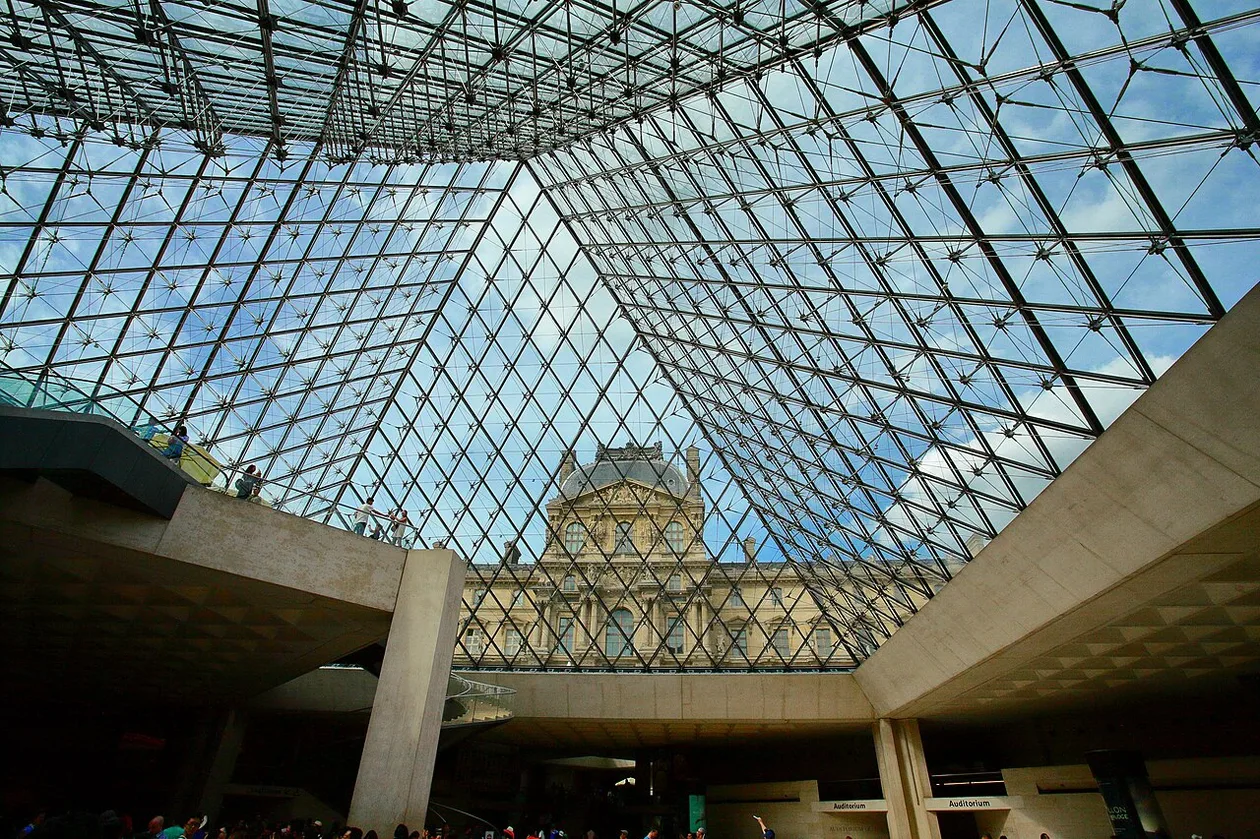
Just over 9 million visitors in 2025, 35,000 objects on display. The Louvre rewards planning and punishes aimless wandering. The Mona Lisa room is always a scrum. The Greek antiquities wing, the Dutch Masters rooms, and the Islamic Art galleries rarely are.
Prices changed in January 2026: €22 for EEA residents, €32 for everyone else. The jump made the Paris Museum Pass mathematically better for most non-European visitors planning more than one museum. Go with a route — the Richelieu wing and Denon sculpture galleries reward more than the Mona Lisa fight. First Sunday is free; queues start before 9:00.
Visit: Tickets and what to see → · Time: 3–5 hours · Price: €22 EEA / €32 non-EEA
3. Musée de l'Orangerie
Two oval rooms. Eight Water Lilies panels that wrap the walls. Monet designed the installation himself, and it's unlike anything else in a museum — immersive, quiet, unhurried. The lower level adds Cézanne, Matisse, and Picasso from the Walter-Guillaume collection.
If Monet is one of several reasons you came to Paris, the Orsay covers him at scale. If you came to stand inside the Water Lilies specifically, this is the only place that delivers it.
Visit: Tickets → · Time: 1.5 hours · Price: €12.50 online / €11 on-site
4. Petit Palais
Free, underrated, never crowded. The Petit Palais houses the City of Paris's fine arts collection — 19th-century French painting, Dutch Old Masters, one of the best sets of Gustave Courbet works anywhere, plus a Monet, a Cézanne, a few Modiglianis. The building, built for the 1900 World Fair, is worth seeing on its own. The courtyard café is one of the calmer lunch spots in central Paris.
Skip on a tight 48-hour trip, but don't skip it twice. Reviews from regulars consistently call it the most underrated museum in the city.
Visit: Avenue Winston Churchill, 75008 · Time: 1–2 hours · Price: Free permanent collection
5. Musée Rodin
Half museum, half garden. The sculptures inside — The Thinker, The Gates of Hell, The Kiss — are the obvious draws, but the experience that lingers is walking the garden where Rodin himself placed the bronzes. On a clear afternoon, it's one of the most pleasant hours in Paris. Full 2026 tickets and garden logistics in our Musée Rodin guide.
It's a 30-minute Métro ride from the Louvre/Orsay axis — far enough to be its own stop. Trying to squeeze it in as a third large museum is what gets cut and resented.
Visit: 77 Rue de Varenne, 75007 · Time: 1.5–2 hours · Price: €14
6. Musée Marmottan Monet
The largest Monet collection in the world — over 100 works, including Impression, Sunrise, the painting that gave Impressionism its name. The 16th arrondissement location near the Bois de Boulogne keeps tourist numbers far lower than the collection deserves. The basement holds the major works; the upper floors add Berthe Morisot.
Thursday late opening (until 21:00) is the quietest window. Worth the Métro ride if Monet is the reason you came to Paris.
Visit: Marmottan Museum tickets and hours → · Time: 1.5–2 hours · Price: €14
7. Musée Picasso Paris
The Hôtel Salé in the Marais houses the most important private Picasso collection in existence — works from every period, including pieces he kept for himself and never sold. Almost 300 paintings plus hundreds of sculptures and drawings.
It rewards visitors who already know Picasso's story; it's harder to navigate without context. The Marais does the rest of the work, either side of the visit.
Visit: Musée Picasso Paris tickets and hours → · Time: 1.5–2 hours · Price: €16
8. Musée de Cluny
The medieval museum in the Latin Quarter, recently renovated and easy to miss. The reason to come is The Lady and the Unicorn — six tapestries from around 1500, often called the Mona Lisa of tapestry art, with one major advantage: nobody is fighting for a photo.
Beyond the tapestries, the museum sits on Roman thermal baths whose stone walls form part of the gallery. A deliberate break from the larger-scale museums.
Visit: 28 Rue du Sommerard, 75005 · Time: 1–1.5 hours · Price: €12
9. Bourse de Commerce — Pinault Collection
The newest of the major Paris museums. François Pinault's contemporary collection inside Tadao Ando's renovation of an 18th-century corn exchange — a concrete cylinder dropped inside a glass dome. The building is the strongest argument for visiting; the rotating collection is hit-or-miss depending on what's installed.
Worth the ticket if contemporary art is in your trip and you want a counterweight to the Orsay's 19th century.
Visit: 2 Rue de Viarmes, 75001 · Time: 1.5 hours · Price: €14 dated / €18 open
10. Musée Jacquemart-André
The finest private collection of European art in Paris, inside the 19th-century mansion of Édouard André and Nellie Jacquemart. Italian Renaissance (Botticelli, Uccello, Mantegna), Flemish masters (Rembrandt, Van Dyck), and 18th-century French rooms preserved as the couple lived in them.
Reopened in March 2026 after a year-long restoration. The salon de thé in the original dining room is still one of the better museum tearooms in the city.
Visit: 158 Boulevard Haussmann, 75008 · Time: 1.5–2 hours · Price: €18.50
11. Musée Carnavalet
The Museum of Paris itself — the city's history across two restored Marais mansions, 3,800 objects, free permanent collection. Important, dense, and text-heavy: it rewards visitors who already know names like Robespierre, Haussmann, and Madame de Sévigné.
If French history is part of why you came to Paris, this is the museum that anchors it. If you're here for the art, the Belle Époque reconstructions and the French Revolution gallery are worth a 60-minute walk-through. The rest can wait for a return trip with context.
Visit: 23 Rue de Sévigné, 75003 · Time: 1–2 hours · Price: Free permanent collection
12. Musée du Quai Branly — Jacques Chirac
Non-European art and ethnography — Africa, Oceania, the Americas, Asia — inside a Jean Nouvel building with a vertical garden façade. Strong collection, excellent displays, audio guide worth the extra €5.
A different conversation from the Louvre + Orsay axis. If you've been to Paris before and want something other than another Impressionist room, this is where to go.
Visit: 37 Quai Branly, 75007 · Time: 2 hours · Price: €12
How to combine them: realistic 2-4 day itineraries
One day, one museum. Orsay on a Thursday evening. The galleries empty out, the price drops to €12, and the building glows at sunset.
Two days, two large museums. Day 1: Louvre from 9:00, Orangerie at 14:00. Day 2: Orsay morning, Rodin garden afternoon. Right bank then left bank, Old Masters to Water Lilies to sculpture.
Three days. Add either Marmottan (if Monet matters), Picasso + Marais walk, or Cluny + Latin Quarter wander. The Paris Museum Pass starts paying off here for non-EEA visitors.
Four days. Add the contemporary axis (Bourse de Commerce + Quai Branly), the free-museum day (Petit Palais + Carnavalet + a long Marais lunch), or a house-museum morning at the Gustave Moreau Museum — the Symbolist's preserved studio in the 9th, €8 and rarely busy.
If you're tempted by five or six museums in a long weekend, see our list of museums to skip first time. The trip people regret is the marathon version.
Where to book and how to save
For 3+ museums in 2-4 days, the Paris Museum Pass breaks even at the third large museum (non-EEA) or the fourth (EEA). It covers Louvre, Orsay, Orangerie, Cluny, Picasso, Rodin, Quai Branly, Versailles, and 40+ others — but not Marmottan, Jacquemart-André, the Bourse de Commerce, or the Petit Palais (which is free anyway). Time-slot reservations are still required at nine of the covered sites; book Louvre and Versailles slots first.
For one or two museums, individual tickets are cheaper. For first-Sunday strategy, the Louvre free-admission rules are the most useful starting point.
- Free permanent collections
- Petit Palais · Musée Carnavalet · Musée d'Art Moderne (city collection)
- Free first Sunday
- Louvre, Orsay, Orangerie, Cluny, Picasso, Quai Branly, Rodin (queues start before 9:00)
- Closed in 2026
- Centre Pompidou (reopens 2030)
- Newly reopened
- Musée Jacquemart-André (March 2026)
Prices, hours, and free-day rules can change — confirm on the official site before you go.
Last verified: May 2026
Frequently asked questions
What is the best art museum in Paris for a first-time visitor?
The Musée d'Orsay. It's smaller than the Louvre, the Impressionist collection on the 5th floor is the finest in the world, and the building — a converted 1900 train station — is worth the visit. Thursday evenings after 18:00 are quieter and cost €12 instead of €16.
How many museums can you visit in Paris in one day?
Two comfortably. The Louvre and Orangerie pair well — both on the right bank, ten minutes apart. Orsay and Rodin are a natural left-bank combination. Don't attempt the Louvre and Orsay on the same day unless you enjoy exhaustion.
How much does the Louvre cost in 2026?
€22 for EEA residents, €32 for everyone else as of 14 January 2026. The €10 jump for non-EEA visitors is the biggest pricing change at any Paris museum this year. First Sunday of the month is free for all, but the queue starts before 9:00.
Is the Centre Pompidou open in 2026?
No. The Pompidou closed in September 2025 for a five-year renovation and is targeted to reopen in 2030. Its collection is partly redistributed — see our guide on where to find Pompidou art in 2026.
Which Paris museums are free?
The Petit Palais and the Musée Carnavalet have free permanent collections every day. Most national museums — Louvre, Orsay, Orangerie, Picasso, Cluny, Quai Branly — are free on the first Sunday of each month. Under-26s enter most national museums free year-round as EEA citizens, or as EEA residents holding a permit or visa longer than 90 days.
Is the Paris Museum Pass worth it for art museums?
For 3+ paid museums in 2-4 days, usually yes. The pass covers Louvre, Orsay, Orangerie, Cluny, Picasso, Rodin, Quai Branly, Versailles, and 50+ sites. It doesn't cover Marmottan, Jacquemart-André, the Bourse de Commerce, or the Petit Palais (which is free anyway).
Which Paris museum has the best Monet collection?
The Musée Marmottan in the 16th arrondissement holds the largest Monet collection in the world — over 100 works including Impression, Sunrise, the painting that gave the movement its name. The Orsay has the most famous Monets; the Orangerie has the immersive Water Lilies installation.
Are Paris museums crowded in 2026?
The Louvre and Orsay are crowded year-round. Marmottan, Cluny, Petit Palais, Quai Branly, and Jacquemart-André rarely are. Thursday evenings at Orsay and Marmottan are the quietest windows at the biggest museums. Avoid the first Sunday queues if you can pay.
How many museums are there in Paris?
Paris has over 150 museums of all types. Around 80 are regularly open to the public. The 12 on this list cover the essential art collections for most visitors — from the Louvre and Orsay on the Right and Left Banks to smaller gems like the Marmottan and Cluny.
What are the essential art museums to visit in Paris?
For a first visit: Musée d'Orsay (Impressionism, best overall), the Louvre (Old Masters and antiquities, 3+ hours), and Musée de l'Orangerie (Monet Water Lilies, 90 minutes). That three-museum combination covers the core of Paris art in 2-3 days. On a second visit: add Marmottan, Rodin, or Picasso depending on your interests.
Last verified: May 2026
The list isn't a verdict. If your trip is themed around modern art, the Bourse de Commerce moves up. If you've already done the Louvre and Orsay on a previous trip, the Cluny and Marmottan move into the headline slots. Pick the two that match the reason you came to Paris and let the rest wait.
For a cross-Europe view: see the world ranking of 15 best art museums or the monthly tracker of European museum prices.
- Paris Museums to Skip on Your First Visit
- Paris Museum Pass: Is It Worth It in 2026?
- Louvre vs Musée d'Orsay: Which Museum
- Musée d'Orsay Tickets 2026
- Louvre Museum Tickets 2026
- Musée de l'Orangerie Tickets 2026
- Musée Picasso Paris Tickets 2026
- Where to See Pompidou Art in 2026
- Opéra Garnier Tickets 2026: Prices & What to See