Museo Thyssen-Bornemisza — 800 Years of Art in One Building
The Prado has depth. The Reina Sofía has Guernica. The Thyssen has range — from medieval gold panels to Edward Hopper, all in chronological order.
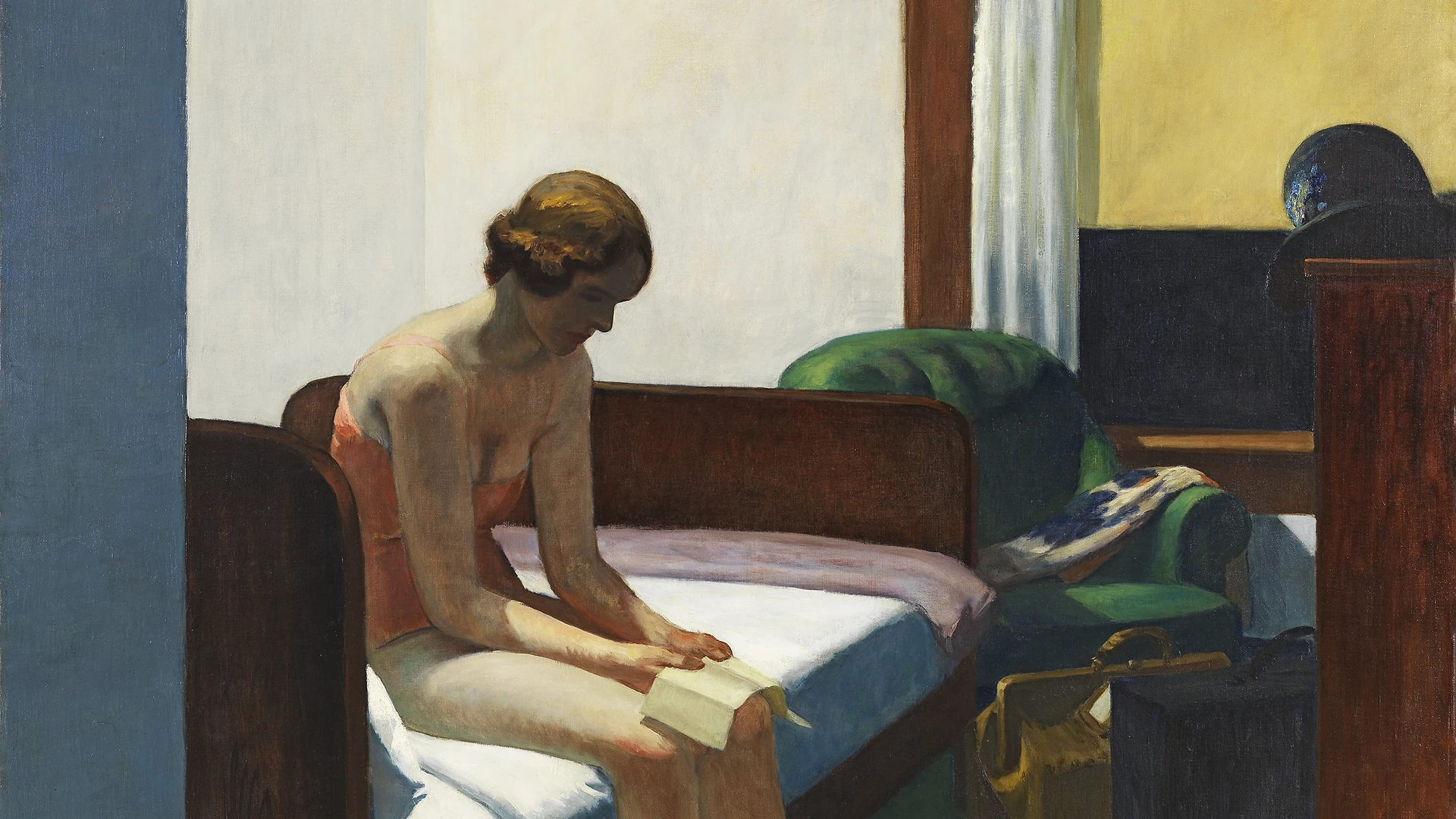
The Thyssen is the museum that makes Madrid's art triangle complete. The Prado covers Spanish masters. The Reina Sofía covers 20th-century Spain. The Thyssen covers everything else: Italian primitives, Dutch Golden Age, Impressionism, German Expressionism, American realism. Eight centuries of Western art, hung in chronological order from the top floor down.
In 3 minutes, you'll know:
- Why the top-to-bottom route matters and where to spend your time
- The works that surprise visitors most (hint: not the famous names)
- How to visit for free, and why you probably shouldn't
How did one family collect 800 years of art?
The collection started in the 1920s with Heinrich Thyssen-Bornemisza, a German-Hungarian steel magnate. His son Hans Heinrich expanded it into the second-largest private art collection in the world, after the British Royal Collection. Over 1,600 paintings, stored in a villa in Lugano, Switzerland.
Spain got involved in 1988 when the collection was loaned to Madrid. In 1993, the government purchased 775 works for $350 million. The architect Rafael Moneo converted the Villahermosa Palace on the Paseo del Prado into the museum that opened that year.
Then there's the Carmen Thyssen collection. Carmen Cervera, Hans Heinrich's fifth wife, brought her own 180 paintings to the ground floor. Since 2021, Spain pays €6.5 million per year to keep them on display. The art is good — Dutch landscapes, Impressionist works — but the business arrangement behind it is one of the most debated deals in Spanish cultural policy.
Where to book
Our take: Same €14 either way and the Thyssen rarely sells out. Pick this museum if you want a chronological walk through Western art (medieval gold panels → Hopper) — it's the only one of Madrid's Big 3 organized that way. Skip if you only have one slot: the Prado has more depth and the Reina Sofía has Guernica.
The Thyssen guide — 800 years, one route
- Floor-by-floor route from medieval to Hopper with timing
- The 10 works that surprise visitors most (and where to find them)
- Why free Mondays are a trap, and the Saturday-night window that is not
- Designed for your phone — open it inside the museum
What exhibitions are on at the Thyssen in autumn 2026?
Two temporary shows land within eleven days of each other, both in the ground-floor rooms, and for twelve weeks they run side by side.
Mauritshuis loves Thyssen-Bornemisza: Masterpieces from The Hague runs 9 October 2026 to 10 January 2027. The Mauritshuis sends 25 works from The Hague, and the one people will queue for is Vermeer's View of Delft (c. 1660-61). Seeing it in Madrid saves you a trip to a museum that holds it as its second-most famous painting after the Girl with a Pearl Earring.
The Freudian Universe of Dali runs 20 October 2026 to 24 January 2027. Seven chronological sections curated by Jaime Brihuega, tracking Dali's reading of Freud from the 1920s to their meeting in London in 1938 and on into his Catalan years, with reference works by Picasso, Max Ernst and Yves Tanguy.
The overlap is 20 October to 10 January. Before 20 October you get the Dutch show alone; after 10 January the Dali runs on for two more weeks. If you only have one Madrid day and want both, aim for the overlap.
Neither carries a surcharge. The Thyssen sells one ticket at €14 that covers the permanent collection, the Carmen Thyssen collection and whatever temporary shows are up that day. There is no separate exhibition tariff and no combined ticket to work out, which is not how every museum handles a Vermeer loan.
The free window that covers them is Saturday night, not Monday. Free Mondays are Collection only. Saturdays 21:00 to 23:00 the temporary exhibitions on the ground and lower ground floors are free, and both of these shows are in those rooms. That makes a late Saturday the cheapest way to stand in front of the View of Delft in Madrid.
If the Dutch rooms are what brings you, the Mauritshuis in The Hague is where these paintings live the rest of the year.
What are the best works to see at the Thyssen?
Start on Floor 2 with Ghirlandaio's Portrait of Giovanna Tornabuoni (Room 5). A Renaissance portrait of a young Florentine woman, painted in profile with jewels and embroidered sleeves. Look at the detail in the fabric. Ghirlandaio was showing what money could buy in 1488, and the painting still works as a status portrait today.
Find Carpaccio's Young Knight in a Landscape (Room 5). A full-length knight standing in a meadow, surrounded by animals and a walled city. The painting is a puzzle — every element is symbolic. The ermine means purity, the heron means patience. The museum considers it one of the first full-length portraits in Western art.
Look for Caravaggio's Saint Catherine of Alexandria (Floor 2). The dramatic lighting, the sword, the broken wheel. Caravaggio painted from live models in a dark studio. You can tell. The light source feels physical, not painted.
Spend time in the Kirchner rooms (Floor 1, Rooms 35-40). German Expressionism is where the Thyssen's collection is strongest. Ernst Ludwig Kirchner's Franzi in Front of Carved Chair is bright, angular, and unsettling. The colours are wrong on purpose. These rooms have more energy than anywhere else in the building.
Find Hopper's Hotel Room (Floor 1). A woman sitting on a bed in a sparse hotel room, reading a train schedule. It's quiet, lonely, and immediately recognisable as American. Visitors consistently name this as the painting they remember most.
What do most visitors wish they knew about the Thyssen?
The museum is the quietest of the three on the Paseo del Arte. On a Tuesday or Wednesday morning before 11:00, you may have entire rooms to yourself. This is unusual for a collection of this calibre, and it changes how you experience the art.
Free Mondays (12:00-16:00, sponsored by Mastercard) are the opposite. Queues wrap around the building and the galleries fill up. If your schedule allows, pay the €14 on a weekday morning instead. The experience is worth the difference.
And free Monday only covers the Collection. The temporary exhibitions are not included, which matters a lot in a season with two of them. The window that does cover them is Saturday 21:00 to 23:00, free on the ground and lower ground floors, sponsored the same way. It is late, it is quiet, and it is the least known free slot in Madrid's Big Three.
The top-to-bottom route is deliberate. Floor 2 starts with 13th-century Italian gold-ground panels and moves through the Renaissance, Baroque, and Dutch masters. If the Dutch rooms hook you, the Rijksmuseum in Amsterdam holds the full story — Rembrandt, four Vermeers, and 800 years of Golden Age painting. Floor 1 picks up with Impressionists, Expressionists, and Cubists. Ground floor ends with post-war art. Walking down is walking forward through time.
In July and August the building outlasts the Collection. The doors stay open to 21:00 Tuesday to Friday, but the permanent collection and the floors 1 and 2 galleries shut at 19:00. Turn up at 19:30 in August and you get the temporary exhibition on the lower floors, not the Hoppers. Outside those two months the whole museum runs to 19:00, except Saturdays, which run to 23:00.
The audio guide is €5 and available as a web app on your phone. The museum offers a 30-minute short route covering 15 masterpieces, which works well if you're visiting all three Paseo del Arte museums in the same trip.
Photography is allowed throughout the collection.
The Prado is a 5-minute walk south. Reina Sofía is 10 minutes further, near Atocha station. If you're picking between Madrid's big three, start with our Prado vs Reina Sofía comparison. For a full overview of Madrid's art museums beyond the Paseo del Arte, see our guide to the best art museums in Madrid. The Paseo del Arte card (€32.80) covers all three. If you're extending your art tour to Barcelona, check the best art museums there — the MNAC Romanesque collection offers medieval art history complementary to the Thyssen's breadth.
Practical information
- Hours (1 Sep–30 Jun)
- Tue–Fri & Sun 10:00–19:00 · Sat 10:00–23:00 · Mon 12:00–16:00
- Hours (1 Jul–31 Aug)
- Tue–Fri 10:00–21:00 · Sat 10:00–23:00 · Sun 10:00–19:00 · Mon 12:00–16:00. The Collection closes at 19:00; the late hours are the temporary shows only
- Price
- €14 general · €10 students, over 65s and pensioners · €12 groups of 7+ · one ticket covers collection and temporary shows
- Always free
- Under 18 · unemployed · disability 33% or above · Friends of the Museum
- Free entry
- Mon 12:00–16:00 Collection only · Sat 21:00–23:00 temporary exhibitions only (ground and -1). Not valid with Paseo del Arte card
- Closed
- 1 Jan, 1 May, 25 Dec · 24 and 31 Dec 10:00–15:00
- Autumn 2026
- Mauritshuis masterpieces 9 Oct – 10 Jan (Vermeer's View of Delft) · Freudian Universe of Dalí 20 Oct – 24 Jan
- Book tickets
- GetYourGuide (non-refundable) · museothyssen.org
- Metro
- Banco de España (L2)
- Audio guide
- €5, web app, 30-min or 2.5-hour routes
Hours and prices can change. Confirm on the official website before your visit.
Last verified: August 2026
Frequently asked questions
How long do you need at the Thyssen Museum?
2 to 3 hours for the permanent collection. The museum offers a "1 Hour at the Thyssen" audio route covering 15 masterpieces if you're short on time. Most visitors spend about 2 hours.
Is the Thyssen Museum worth visiting?
Yes, especially if you want to see art history as a timeline. The Thyssen fills the gaps the Prado and Reina Sofía leave — Impressionists, German Expressionists, Dutch masters, and American art. It's also the quietest of the three Paseo del Arte museums.
When is the Thyssen free?
Twice a week, and the two windows cover different parts of the museum. Mondays 12:00 to 16:00 is free for the Collection only, sponsored by Mastercard, and it gets crowded: expect queues around the block. Saturdays 21:00 to 23:00 is free for the temporary exhibitions on the ground and lower ground floors, which is the quieter of the two and the one almost nobody knows about. If you want the permanent collection without a queue, Tuesday to Thursday mornings at €14 are a better deal.
What exhibitions are on at the Thyssen in autumn 2026?
Two, both in the ground-floor temporary rooms. Mauritshuis loves Thyssen-Bornemisza: Masterpieces from The Hague runs 9 October 2026 to 10 January 2027, with 25 works from the Mauritshuis including Vermeer's View of Delft. The Freudian Universe of Dali runs 20 October 2026 to 24 January 2027, seven chronological sections curated by Jaime Brihuega, with reference works by Picasso, Ernst and Tanguy. Both overlap between 20 October and 10 January. Neither has a surcharge: the single €14 ticket covers the collection and the temporary shows, and they are free on Saturdays from 21:00 to 23:00.
What's the best order to visit the Thyssen?
Start on Floor 2 (top) and walk down. The collection is arranged chronologically: medieval and Renaissance on Floor 2, Impressionists and modern on Floor 1, contemporary on the ground floor. This is how the museum was designed to be seen.
The Thyssen doesn't compete with the Prado for drama or the Reina Sofía for politics. It offers something rarer: a clean, chronological walk through 800 years of painting, in a building quiet enough to let you think.
Already subscribed? Open the room-by-room guide →
- Prado vs Reina Sofía: Which One?
- Museo del Prado Madrid: What to See in 2 Hours
- Museo Reina Sofía Madrid: Guernica & What Else to See