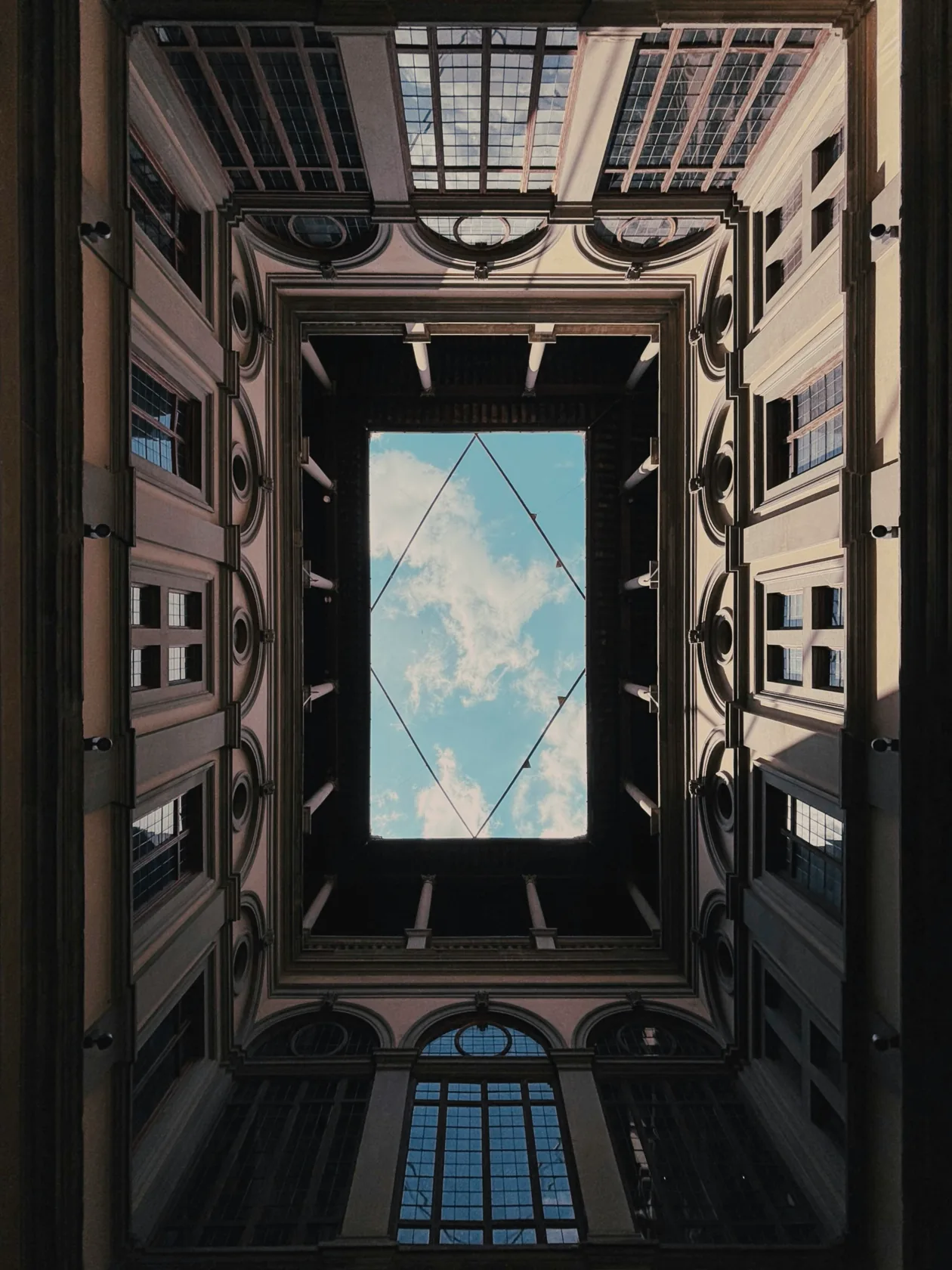
Rothko in Florence, room by room
The piano nobile route through 70+ works, plus the two satellite venues that explain why this show is here
Get your free guide
Enter your email to unlock the full room-by-room guide. One email unlocks all Florence museum guides.
Free · No spam · Unsubscribe anytime
The two Laurenziana studies are hung at the foot of Michelangelo's staircase — the architectural detail Rothko saw in 1950 and turned into the Seagram Murals eight years later. It is one of the most direct artist–source pairings in any current exhibition.
The opening rooms hold the late-1930s and 1940s work — Surrealist-influenced figures, mythic forms, automatic drawing. Untitled (1944) sets the chronology. Most visitors rush this part. Don't. The 1949 breakthrough only registers if you've seen what Rothko abandoned to get there.
No. 3 / No. 13 (1949, on loan from MoMA) is the pivot — the moment Rothko commits fully to the floating rectangles. The mid-50s rooms hold the high-saturation oranges, plums, and reds. Walk back further than feels natural. The colour fields are calibrated for a viewing distance of about 45 cm per metre of canvas height.
The closing rooms turn oxblood, dried-blood red, and black. These are the works tied to the Seagram commission Rothko abandoned and the Houston Chapel cycle that followed. They are hung without protective glass, per the artist's instructions — unusual for a touring loan show. Sit on the benches. The benches mark the intended viewing distance.
The Biblioteca Medicea Laurenziana is open Mon–Fri 10:00–13:30 only, last entrance 13:00. It holds two Seagram studies at the foot of Michelangelo's staircase. Visit it before Strozzi opens at 10:00 — or first thing if you're starting late — because it has the tightest window.
Thursdays the palace stays open until 23:00 (last entry 22:00). After 19:30 the morning crowd is gone and you can have most rooms to ten or fifteen people. Weekends between 12:00 and 16:00 are the busiest slot of the week.
The €4 audio guide is one hour, English or Italian, and it holds the thread when the chronology jumps between 1940s figurative and 1960s darks. The Strozzi has form on commentary quality — it is the one upsell that earns its price.
Anything over those dimensions has to be left in the free cloakroom (combination lockers). Plan an extra ten minutes at busy slots. Backpacks are turned away at the gallery door.
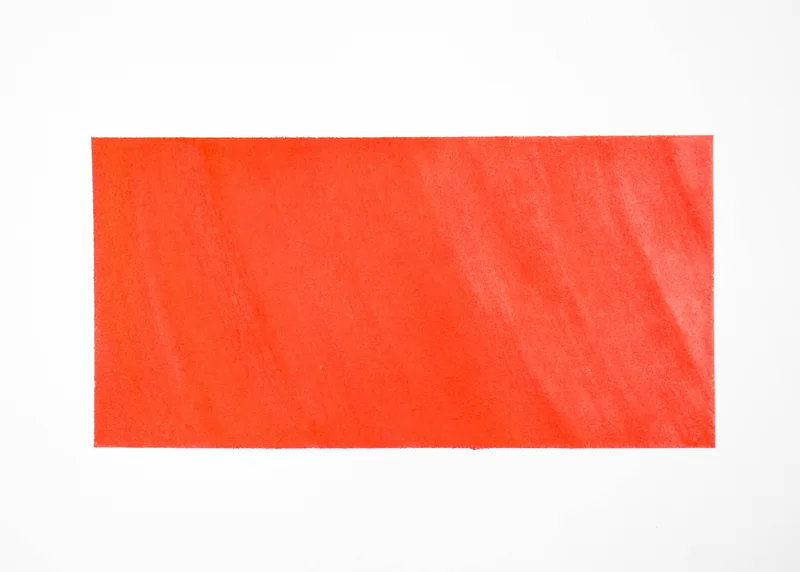
Why it matters: The painting that marks the pivot. Rothko had spent fifteen years making Surrealist-adjacent figures. In 1949 he stops, and the floating rectangles begin. Every later Rothko leads back here.
What to notice: The edges. The colour bands don't have hard borders — they bleed into each other in a controlled feathering Rothko developed by layering thinned paint. The rectangles look as if they are hovering in front of the canvas because the edges refuse to settle.
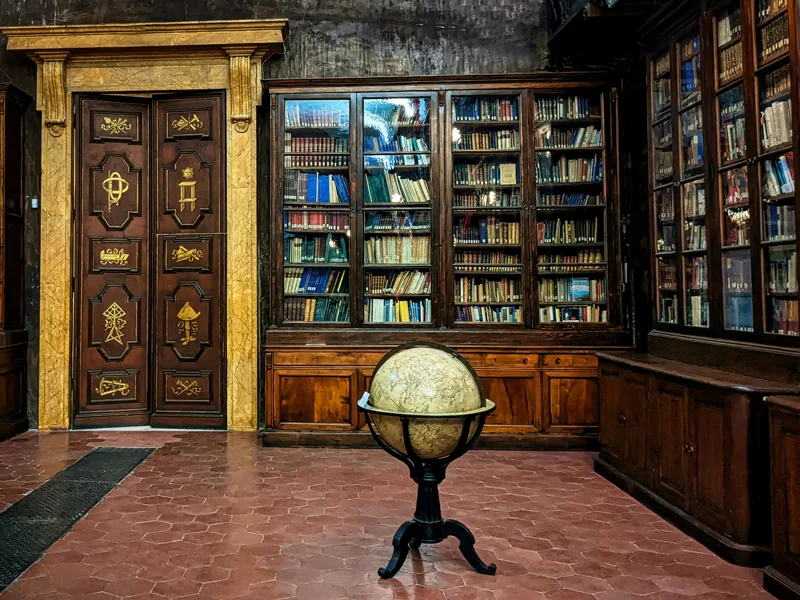
Why it matters: These are the studies for the Four Seasons commission Rothko eventually walked away from. He returned the advance and the finished cycle went to Tate. Hung here, at the staircase that shaped them, the connection is impossible to miss.
What to notice: Look up at the vestibule itself before you look at the paintings. The staircase folds in on itself; the walls press inward. That compression — Michelangelo's deliberate confinement before the upward release — is the spatial idea Rothko transplanted into the Seagram cycle.
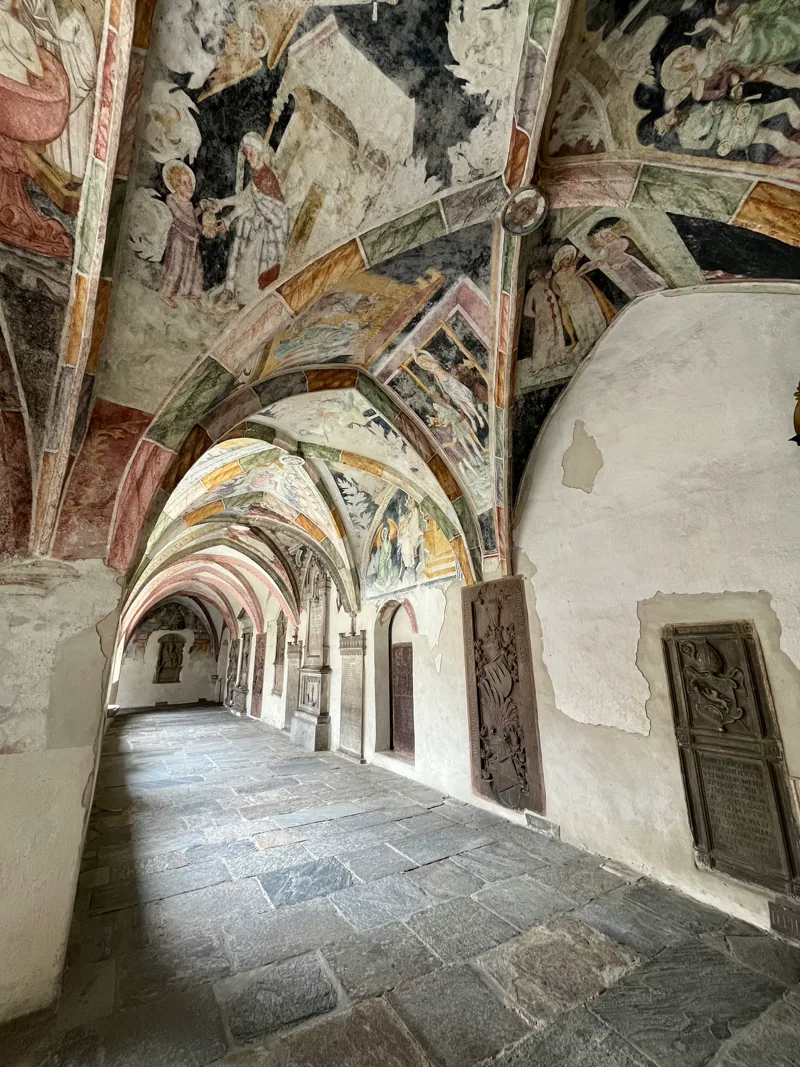
Why it matters: Rothko spent hours in 1950 looking at Fra Angelico's frescoes in these exact cells. Five of his late paintings are now placed inside the cells beside the Angelicos. The curators don't push the comparison. They let the rooms do it.
What to notice: The natural light. Fra Angelico painted these for a single narrow window per cell. Rothko's late work uses the same low, side-falling light. Stand in one cell, then walk to the next. The transition between centuries is shorter than it should be.
How well did you look?
3 quick questions about what you just saw
Visit complete!
Share your visit or save it for later
Your collection