
How Picasso Became Picasso
A room-by-room route through the collection — from academic discipline to Las Meninas.
Get your free guide
Enter your email to unlock the full room-by-room guide. One email unlocks all Barcelona museum guides.
Free · No spam · Unsubscribe anytime
The academic rooms feel traditional, and that is the point. They are the discipline that makes everything after Room 8 legible.
The museum's own plan labels these rooms Early years, and almost everyone walks them in four minutes on the way to something with a famous name. Do the opposite. The featured work the museum picks for Room 2 is Aunt Pepa, painted in 1896, and it is the portrait of a woman by someone not yet sixteen who can already do everything the Academy asks for. Science and Charity, painted the following year, is the peak of it. Nothing in the rest of the building reads correctly unless you have seen what he was walking away from.
Room 8 is where the Blue Period starts and where the museum hangs Barcelona Rooftops, 1903: the city from a window, with colour doing the work that detail used to do. Rooms 8 to 11 stay in that register up to 1917. Then Room 12 is a one-room detour most visitors skip, and it is the reason the collection exists at all. Jaume Sabartés, the friend whose square you crossed to get in here, painted in 1939 in a ruff and bonnet he never owned.
The series runs across four rooms and Las Meninas itself is in Room 14, not in 12, which is where a lot of guides send you. Room 13 holds The Pigeons, painted the same year, 1957, looking out of the same window in Cannes. Walk it as one work rather than as separate canvases: he takes Velázquez apart, moves the light, flattens the hierarchy, and the Infanta ends up as a shape. If you have time left, the ceramics are in Rooms B1 and B2.
The free windows are Thursday 17–19h and the first Sunday of the month, and they are the two busiest slots of the week for exactly that reason. If you are paying anyway, the first hour after opening is the emptiest the collection gets.
The museum is five linked medieval palaces on Montcada street, so the room numbering runs through doorways that were never meant to connect. The audio guide keeps the sequence straight when the architecture stops helping.
Rooms B1 and B2, downstairs and off the main run. When the Las Meninas rooms are three deep, this is where you go to look at something without a shoulder in front of it.
<em>Guernica</em> is in Madrid and the Demoiselles are in New York. This collection is the formation: the years of learning the rules, and the year he spent taking one Velázquez apart.
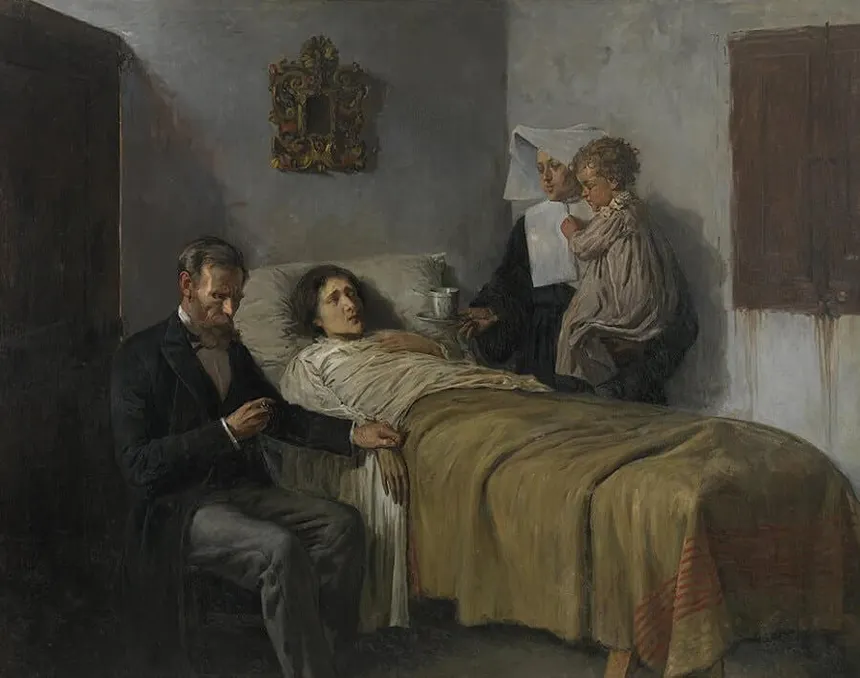
Why it matters: He was fifteen. The composition, the narrative and the control are all at the level the Academy was training people for, and within four years he had abandoned every part of it. This is the before.
What to notice: Look at the bed. Step back two metres, then walk in close. The perspective was built so the mattress reads as a different size from each distance, and the doctor's hand on the wrist stays the fixed point while it happens.
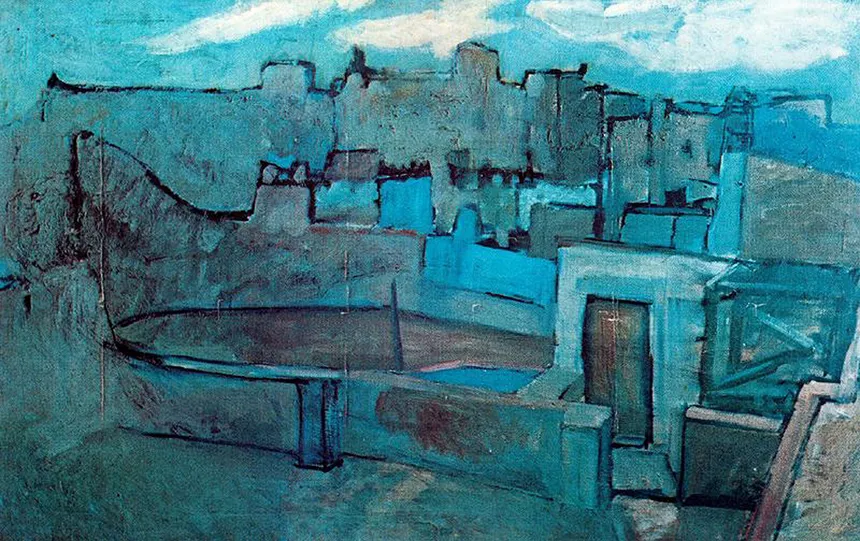
Why it matters: The museum's own featured work for Room 8, and the cleanest example of what the Blue Period changed: the subject stops carrying the meaning and the colour starts.
What to notice: Find the horizon line, then count the separate blues above and below it. The roofs are drawn with almost no detail, so everything you read as distance is being done by temperature of colour alone.
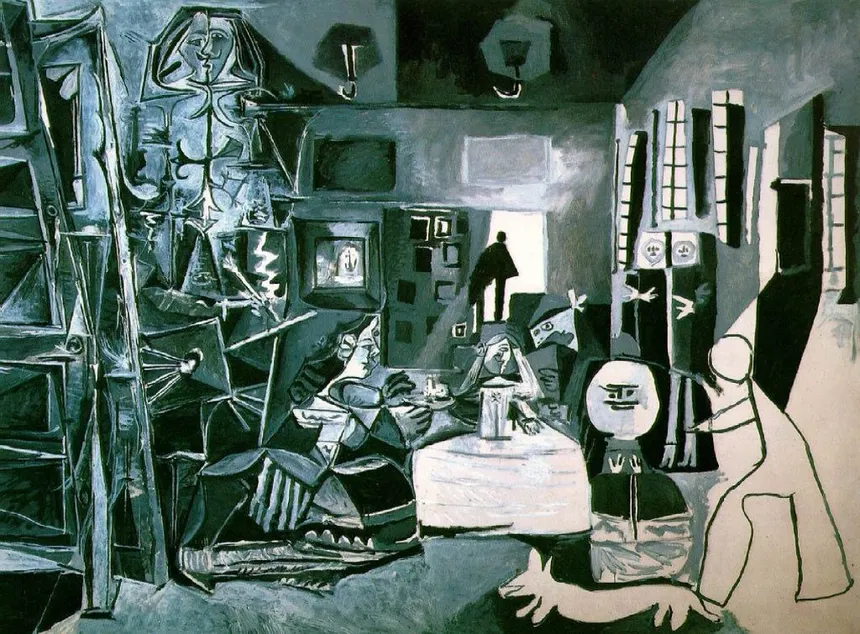
Why it matters: Not a copy of Velázquez. Picasso pulls the original apart into a sequence and repaints the same room until the hierarchy inside it collapses.
What to notice: Track the dog across the canvases, and the Infanta's face. In the large version in Room 14 the painter is enormous and the light arrives from the wrong side; by the later panels the figures are closer to signs than to people.
How well did you look?
3 quick questions about what you just saw
Visit complete!
Share your visit or save it for later
Your collection