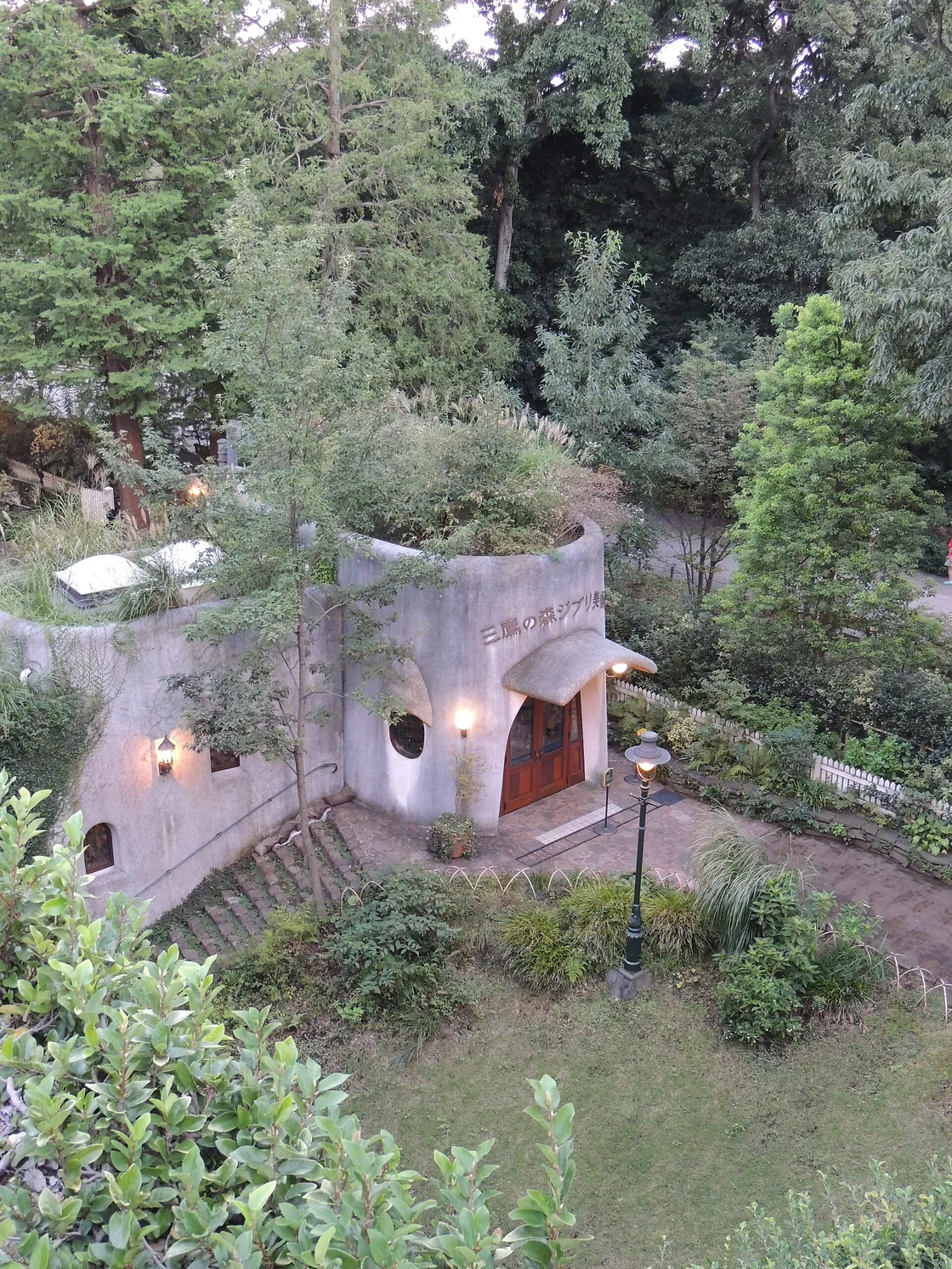
Lose Your Way on Purpose
The basement-first route through eight rooms, the rooftop robot, and the short film you can only see here.
Get your free guide
Enter your email to unlock the full room-by-room guide. One email unlocks all Tokyo museum guides.
Free · No spam · Unsubscribe anytime
The museum has no numbered rooms and no set route. Miyazaki designed it so you would get lost. Going to the basement first, for the theater time, is the one move that saves your visit.
Enter through the basement. Trade your voucher for the 35mm film-strip ticket and read the Saturn Theater screening board before anything else. Then spend time in "The Beginnings of Movement", the permanent room with the strobe-lit Totoro zoetrope. Look up in the Central Hall: a yellow whale swims across the glass dome, with Kiki and Nausicaä hidden in the painted vines.
Catch your Saturn Theater screening (about 15 minutes, Japanese, loops every 15–30 min). Then walk the first-floor "Where a Film is Born" rooms — a working animator's studio recreated with reference books, paint and pinned sketches. The Special Exhibit Room sits alongside; the current show runs from November 2025.
Take the spiral staircase up to the rooftop garden and the 5-metre Robot Soldier — the only place photography is allowed. On the way down, the Catbus room (under-12s only now), the MAMMA AIUTO! shop and the Straw Hat Café. Budget for the shop queue; it moves slowly and eats into a timed visit.
Saturn Theater screenings are timed and loop every 15–30 minutes. Check the board the moment you enter and line up a little early in summer, when the room fills fast.
Cameras are banned everywhere inside. The rooftop Robot Soldier is the only spot you can take a photo, which catches most people out with their phone already up.
The climbable Catbus now admits under-12s only; the adult-sized version was retired. Don't promise an older child a ride.
Your Saturn Theater ticket is a cut frame of real 35mm film from a Ghibli print. Hold it to a window before you hand it in to see which film you got — no two are the same.
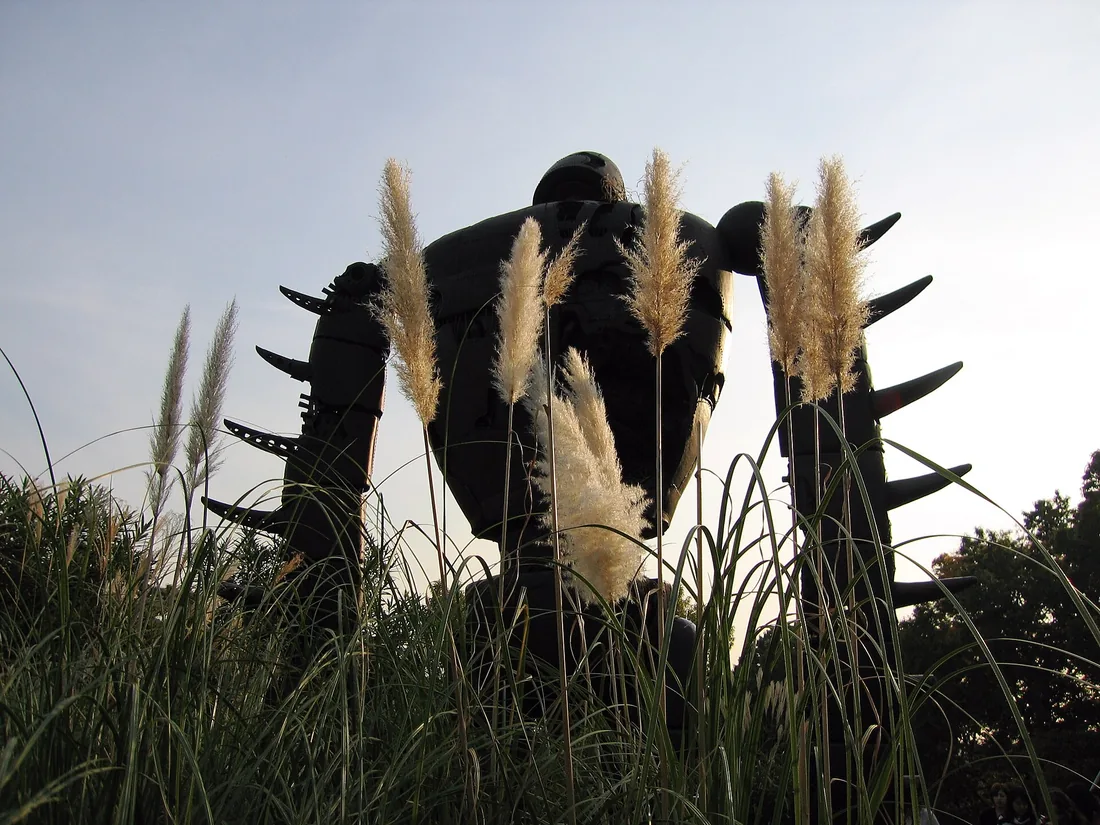
Why it matters: The 5-metre robot from Castle in the Sky, weathered and half-swallowed by grass as it is in the film. It is the museum's one outdoor exhibit and the only place you may take photos.
What to notice: Walk around the back. The black cubic stone beside the robot is the Laputa flight-stone from the film, and most visitors photograph the robot without noticing it.
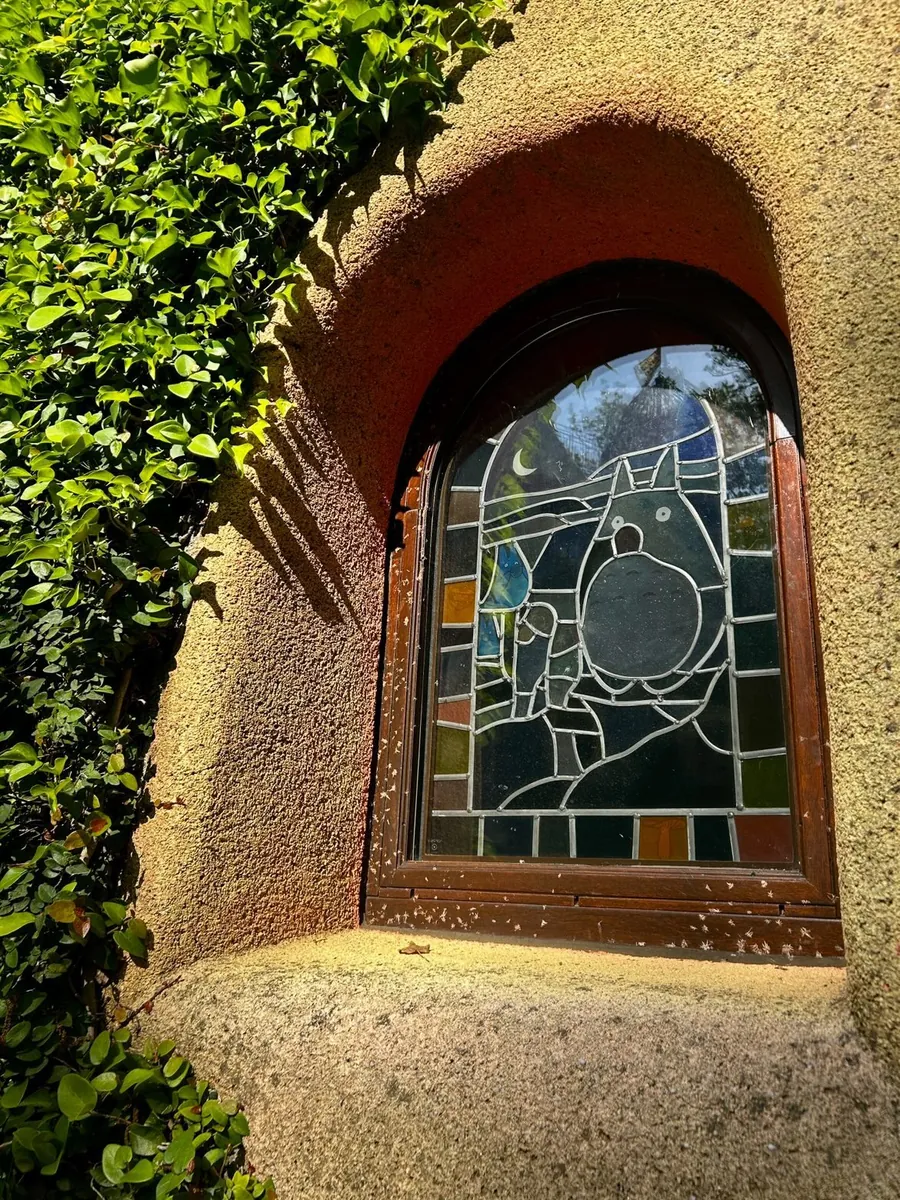
Why it matters: Ghibli fitted the building's windows with stained glass of its characters. The best-known one frames Totoro under a crescent moon in an arched entrance window, set into the rough plaster wall.
What to notice: Come back to it at a different hour. The picture holds still, but the pool of coloured light it throws onto the plaster moves with the sun.
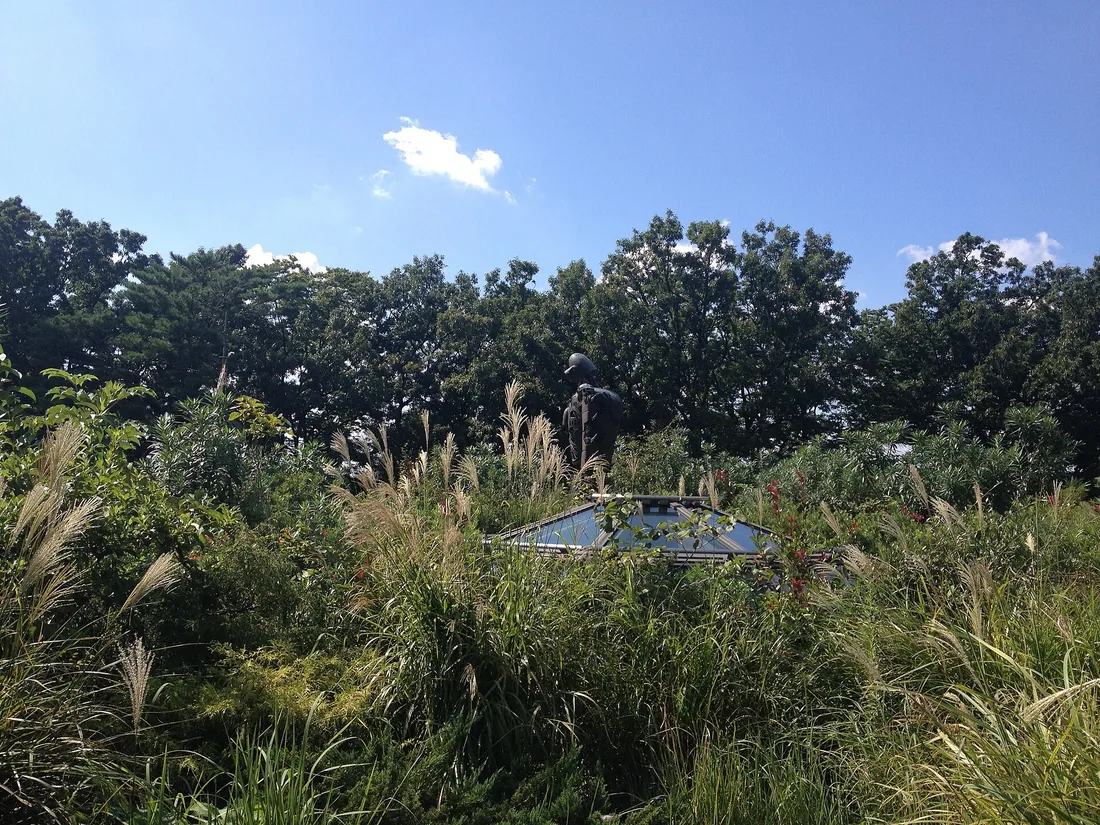
Why it matters: The rooftop is planted to look half-wild, with the Robot Soldier rising out of the tall grass and a glass skylight breaking through the greenery. It is the open-air end of the visit.
What to notice: Find the glass pyramid skylight buried in the planting — it drops daylight straight down into the exhibit floors below. The garden is left deliberately overgrown.
How well did you look?
3 quick questions about what you just saw
Visit complete!
Share your visit or save it for later
Your collection