Day Trips from Madrid
Toledo is 34 minutes away and Segovia is 27. The hard part is not getting there, it is that half these places give you free entry on a specific afternoon and nobody tells you which.
Madrid sits in the middle of Spain with three UNESCO cities inside forty minutes of it, which is a better hand than Paris or Rome holds. Getting to them is easy. The part nobody explains is that most of these places have a free-entry window buried on a specific afternoon, and knowing which one is worth more than any tour.
In 3 minutes:
- Toledo needs six to eight hours. Any tour that pairs it with Segovia gives you under three. Do not buy one.
- The Zone T pass at €15.40 a day covers El Escorial, Aranjuez and Alcalá plus all Madrid transport. It does not cover Toledo or Segovia, which need AVE or Avant.
- Segovia's Alcázar and Ávila's walls are free on Tuesdays, 14:00 to 16:00. El Escorial and Aranjuez are free on Wednesday and Sunday afternoons.
Which day trip from Madrid should you pick?
| Travel each way | Entry | Closed | Hours needed | |
|---|---|---|---|---|
| Segovia | 25–27 min, Chamartín | €7 Alcázar, €4 cathedral | 25 Dec | 5–6 |
| Toledo | 34 min, Atocha | €12 cathedral | Sun mornings | 6–8 |
| Aranjuez | 33 min, Cercanías C-3 | €9 palace | Mondays | 3–4 |
| Alcalá de Henares | ~39 min, Cercanías C-2 | Free | Mondays | 4–5 |
| El Escorial | ~50 min, bus 664 | €14 | Mondays | 3.5–4 |
| Chinchón | ~1 hour, bus 337 | Free | — | 2.5–3 |
| Ávila | 1h53, ~5 trains/day | €8 walls | Mondays in winter | 4–5 |
| Cuenca | AVE from Atocha | Free museum | Mondays | 5–6 |
Two of these are effectively free days out. Alcalá's headline museum costs nothing, and Cuenca's Hanging Houses are a museum with free entry that most visitors only photograph from outside.
Where to book
Our take: The two worth a tour are the two the train does not reach. El Escorial means the 664 bus from Moncloa, and Chinchón means the 337, both of which run to timetables that decide your day for you. Ávila is a borderline case at 1h53 with only five trains a day. Segovia and Toledo are 25 and 34 minutes from the centre of Madrid on a high-speed train, and paying a tour for either is paying someone to buy you a train ticket.
What are the best day trips from Madrid?
Toledo, the one that justifies a full day
Thirty-four minutes on the Avant from Madrid Puerta de Atocha, around fifteen a day, first at 06:45. The ALSA bus from Plaza Elíptica takes about fifty minutes direct and starts from €6.55, with eighty-three departures a day, which makes it the better option if you are not travelling first thing.
The cathedral is €12, €8 reduced, €6 for children eight to fourteen, and free under eight. Mon–Sat 10:00 to 18:30, and Sundays only from 14:00, so a Sunday morning arrival is a locked door.
The thing to buy is the Pulsera Turística at €14: a wristband covering seven monuments including Santo Tomé, where El Greco's Burial of the Count of Orgaz hangs in the church it was painted for, plus Santa María la Blanca, San Juan de los Reyes and Cristo de la Luz. Valid seven days. Individually those are €4 each. The cathedral is not included.
The 2026 caveat matters for budgeting. The cathedral's 800th-anniversary exhibition, Primada, runs 25 May to 14 October 2026 across roughly 2,000 square metres of the building, with around 330 works from the thirteenth to eighteenth centuries and about half never publicly shown, including Velázquez, El Greco and Bellini. It is a separate €12 ticket. So a full cathedral day in Toledo this summer costs about €24, not €12.
One practical thing: the old town is a hundred metres above the station and the river. The city runs public mechanical escalators at Paseo de Recaredo and Safont, open from 07:00 until late. Use them.
Segovia, if you have five hours
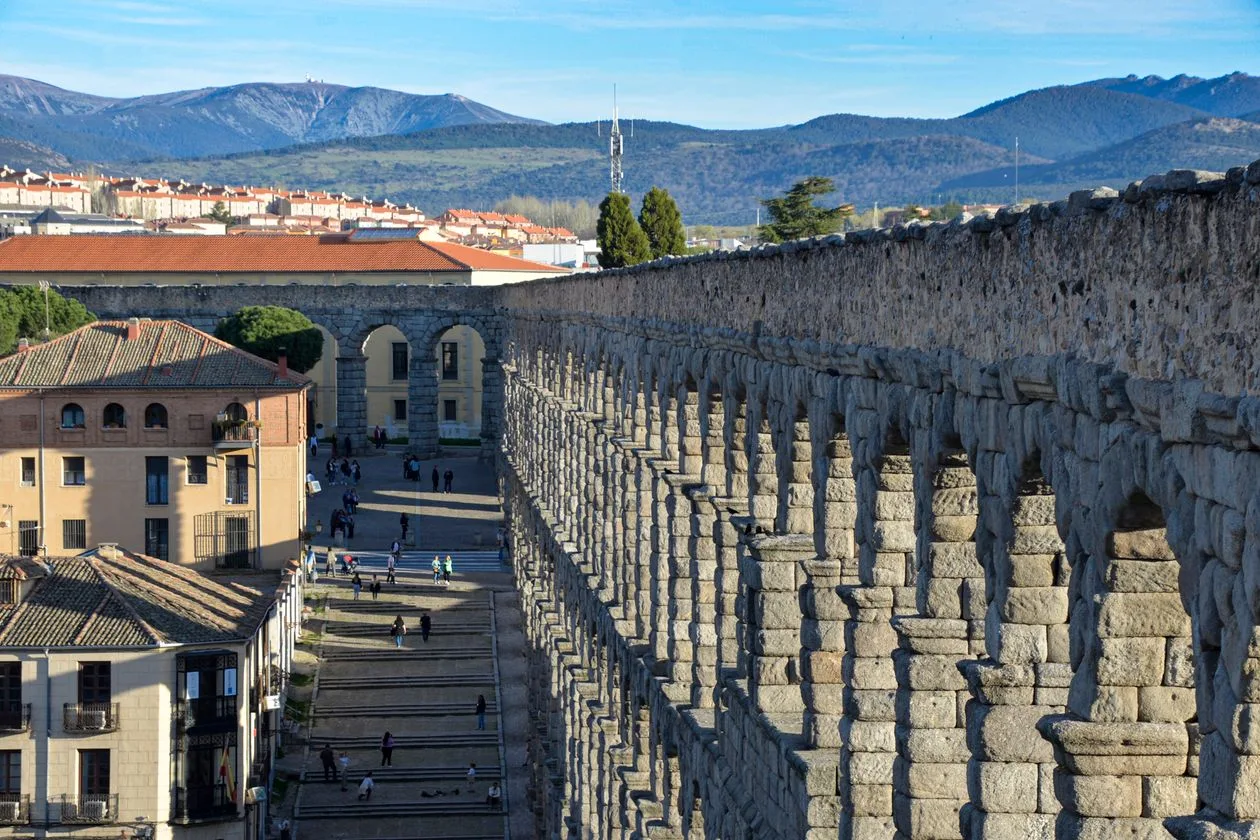
Twenty-five to twenty-seven minutes at best from Madrid Chamartín to Segovia-Guiomar. The three sights sit in a straight line, aqueduct to cathedral to Alcázar, about a twenty-minute walk end to end. The Alcázar is €7 for the palace and museum, €10 with the Torre de Juan II. The cathedral is €4, or €7 with the tower.
Two free windows, and they are the reason to think about which day you go. The Alcázar palace and museum are free every Tuesday from 14:00 to 16:00 for EU citizens, but only if bought at the physical ticket window and subject to capacity. The cathedral is free on Sundays from 09:30 to 10:30.
The catch nobody mentions in the travel time: Segovia-Guiomar is about six kilometres outside the old town. City bus 11 or 12 connects, timed to train arrivals, so add fifteen to twenty minutes each way on top of the twenty-seven-minute train.
Alcalá de Henares, the underrated one
Around thirty-nine minutes on Cercanías C-2 or C-7 from Atocha, roughly every fifteen minutes. Cervantes was born here, and the Casa Natal de Cervantes is free: Tue–Fri 10:00 to 18:00, weekends and holidays to 19:00, closed Mondays.
This is also where the transport pass earns its money. Alcalá, Aranjuez and El Escorial are all inside the Madrid regional zone system, so a Zone T Tourist Travel Pass at €15.40 for one day covers any of them plus unlimited metro and city buses. Two of them in one pass beats point-to-point tickets. Zone A at €10.30 is city-only and reaches none of them, and the pass explicitly excludes AVE and Avant, so it does nothing for Toledo or Segovia.
Four to five hours: the university, the Casa Natal, and the Calle Mayor colonnade.
El Escorial, by bus rather than train
Take CRTM bus 664 from the Moncloa interchange, about fifty minutes, roughly every fifteen minutes, €3.00 each way on the flat interurban fare. It drops you in the centre of San Lorenzo de El Escorial, next to the monastery. The Cercanías train, by contrast, arrives at a station in the town of El Escorial, two kilometres downhill from San Lorenzo, which is a detail the train option never advertises.
Entry is €14, up from €12 when Patrimonio Nacional revised its prices, or €7 reduced. Closed Mondays, plus 13 September 2026 among other dates. Winter hours 10:00 to 18:00, summer to 19:00, with the ticket office closing an hour and a quarter before.
Free entry runs on Wednesday and Sunday afternoons, 15:00 to 18:00 in winter and 15:00 to 19:00 in summer, for EU citizens and Ibero-American residents with proof. Patrimonio Nacional's own pages state this slightly differently in two places, so confirm on the day. Free is also the busiest window, and you get two to three hours before closing.
Aranjuez, the one to skip unless it is free
Thirty-three minutes at best on Cercanías C-3 from Atocha, with around sixty-four trains a day, so the access is genuinely easy. The palace is €9, €4 reduced, and the Casa del Labrador is a separate €10. Closed Mondays, plus 30 May and 5 September 2026.
The honest problem is content. The palace interior is about a forty-five-minute visit, the gardens are large and flat and hot in summer, and the town has little else. UNESCO status and a Cercanías line get it pushed hard; the actual day is roughly two hours of substance for two hours of transit and queueing. Same free window as El Escorial: Wednesday and Sunday afternoons.
If you go, check whether your date falls on the Tren de la Fresa, the heritage strawberry train that runs on set dates from late March to early June with period carriages and strawberries served on board.
Chinchón, as a half day
No train. CRTM line 337 from Conde de Casal, and the whole point is the Plaza Mayor: a circular arcaded square of wooden balconies that doubles as a bullring. Entry to a public square is free, and lunch is what you came for.
The 2026 change helps here more than anywhere. From 1 January the Comunidad de Madrid replaced zone-based interurban bus fares with a flat €3.00 single, so €6.00 return regardless of distance. Chinchón sits at the far edge of the network, where the old fare was highest.
Be honest with yourself about the scale: this is one square and a meal, two and a half to three hours. It is not a full day and does not pretend to be.
Ávila, if you can live with the timetable
Renfe Media Distancia, fastest 1 hour 53, and only around five trains a day with the first at 09:40, which is late. The walls are €8, €5 reduced, and you walk roughly 1,700 metres of rampart above the town.
Free every Tuesday from 14:00 to 16:00, except holidays and days before holidays, the same trick as Segovia's Alcázar and equally unadvertised. Winter hours 10:00 to 18:00 with Mondays closed; in high summer some gates stay open until 22:00 or later.
This is the one destination where a coach leaving at 08:00 genuinely buys you two extra hours that Renfe cannot.
Cuenca, for the free museum nobody enters
An AVE from Atocha to Cuenca Fernando Zóbel, first at 06:30. The Hanging Houses are the thing everyone photographs, and the thing almost nobody realises is that the Hanging Houses are a museum, and it is free: the Museo de Arte Abstracto Español, Spain's founding collection of post-war abstraction, with Zóbel, Saura, Tàpies, Chillida and Millares. Closed Mondays, and closed 18 to 21 September 2026 for the San Mateo festival.
The caveat that keeps Cuenca out of the top tier: the station is about six kilometres outside the old town, uphill, and service frequency is low. Check the return times before you buy anything.
What most visitors get wrong
They buy the Toledo and Segovia combined tour, which is the most-sold day trip in Madrid and the worst. The two cities are on opposite sides of the city with no direct link, so every version is Madrid to Toledo to Madrid to Segovia to Madrid: five to six hours of coach in an eleven-hour day. You get roughly two and a half hours in a city that needs six to eight, the cathedral is usually not included, and you reach Segovia late afternoon, after the free Tuesday window and close to the winter 18:00 closing. Two separate train days cost less and give you four times the time on the ground.
They also repeat the "trains are free in Spain" line. That programme is over. For 2026 what remains is 50% off Avant multi-trip tickets, 40% off ten-trip and monthly Media Distancia passes, free travel for children born 2012 onwards, and free Cercanías only in Asturias and Cantabria. None of it applies to a visitor buying a single or a return.
And they ignore the free windows entirely, which is the cheapest mistake to fix on this page. Tuesday afternoon for Segovia's Alcázar and Ávila's walls. Wednesday and Sunday afternoon for El Escorial and Aranjuez. Sunday 09:30 to 10:30 for Segovia's cathedral.
Staying in Madrid? Things to do in Madrid covers the centre, and free museums in Madrid applies the same logic to the Prado and the Reina Sofía.
- Toledo
- 34 min Avant from Atocha, or ALSA bus from Plaza Elíptica ~50 min from €6.55 · cathedral €12, Sundays from 14:00 only · Pulsera Turística €14, 7 monuments, 7 days, cathedral not included · Primada exhibition 25 May–14 Oct 2026, separate €12
- Segovia
- 25–27 min from Chamartín to Segovia-Guiomar, then city bus 11 or 12 (~6 km) · Alcázar €7, or €10 with the tower · cathedral €4 · Alcázar free Tuesdays 14:00–16:00 at the ticket window · cathedral free Sundays 09:30–10:30
- Alcalá de Henares
- ~39 min, Cercanías C-2 / C-7 · Casa Natal de Cervantes free, closed Mondays
- El Escorial
- Bus 664 from Moncloa, ~50 min, €3.00 each way · entry €14, €7 reduced · closed Mondays · free Wed and Sun 15:00–18:00 winter, 15:00–19:00 summer
- Aranjuez
- 33 min, Cercanías C-3 from Atocha · palace €9, Casa del Labrador €10 · closed Mondays · free Wed and Sun afternoons
- Chinchón
- CRTM bus 337 from Conde de Casal · €3.00 single, €6.00 return · Plaza Mayor free · half day
- Ávila
- From 1h53, ~5 trains/day, first at 09:40 · walls €8, €5 reduced · free Tuesdays 14:00–16:00 · closed Mondays in winter
- Cuenca
- AVE from Atocha, first at 06:30 · Museo de Arte Abstracto Español free, closed Mondays · station ~6 km from the old town
- Transport passes
- Zone T Tourist Travel Pass €15.40/day covers El Escorial, Aranjuez, Alcalá and all Madrid transport · excludes AVE and Avant · flat €3.00 interurban bus single since January 2026
- Book day trips
- Day trips from Madrid on GetYourGuide — free cancellation on most tours
Renfe does not publish fixed fare tables for Avant and AVE routes, and prices move with demand and booking date. Confirm entry prices, closing days and free-entry windows before you travel.
Last verified: July 2026
Frequently asked questions
What is the best day trip from Madrid?
Toledo, and it is not close. Thirty-four minutes on the Avant from Atocha into a walled city that needs six to eight hours, with a cathedral, an El Greco in the church he painted it for, and a €14 wristband covering seven monuments for a week. Segovia is the better choice if you only have five hours, because the aqueduct, cathedral and Alcázar sit in a straight line.
Is the Toledo and Segovia in one day tour worth it?
No. The two cities are on opposite sides of Madrid with no direct link between them, so every such tour is a double radial with five to six hours of coach time in an eleven-hour day. That leaves roughly two and a half hours in Toledo, which needs six to eight, and under two in Segovia. Toledo Cathedral is usually not included either.
Which day trips from Madrid does a transport pass cover?
The Zone T Tourist Travel Pass, €15.40 for one day, covers El Escorial, Aranjuez and Alcalá de Henares along with the metro and city buses, with unlimited trips. It explicitly excludes AVE and Avant, so it is useless for Toledo and Segovia. Zone A at €10.30 is city-only and reaches none of them.
Are trains in Spain still free or discounted in 2026?
Not in any way a visitor can use. The free multi-trip passes are gone. What remains for 2026 is 50% off Avant multi-trip tickets, 40% off Media Distancia and Avant ten-trip and monthly passes, and free travel for children born 2012 onwards. Free Cercanías now exists only in Asturias and Cantabria. None of it applies to a single or return ticket bought by a tourist.
Is Aranjuez worth a day trip from Madrid?
It is the weakest on this list. The palace interior is about a 45-minute visit, the gardens are large and flat, and the town is thin, so you spend close to two hours in transit and queues for roughly two hours of substance. Go on a Wednesday or Sunday afternoon when Patrimonio Nacional entry is free, or go somewhere else.
Pick the day before you pick the place. On this list the day of the week is worth more than the destination.