
Four floors, one route, no backtracking
Hit the dinosaurs, the whale and the cosmos before the school groups fill the halls
Get your free guide
Enter your email to unlock the full room-by-room guide. One email unlocks all New York museum guides.
Free · No spam · Unsubscribe anytime
The museum is four connected buildings across four floors. People wander in from the Central Park West steps and lose an hour before they reach a single dinosaur. Start at the top and work down.
The fossil halls are the reason most people come, and they empty out by mid-morning if you start there. Head straight for the Hall of Saurischian Dinosaurs for the Tyrannosaurus rex, then the Wallach Orientation Center where the Titanosaur's head reaches toward the elevators.
The Milstein Hall of Ocean Life holds the 94-foot blue whale — see it from the mezzanine, not the floor. Then cut through the Hall of North American Forests for the giant sequoia cross-section, a quiet room most visitors walk past.
The Hayden Sphere anchors the Rose Center for Earth and Space; walk the spiral ramp for the size-of-the-universe comparisons. If time allows, the Gilder Center adds the Gems and Minerals halls and the Insectarium.
School groups fill the fossil and ocean halls from late morning through early afternoon. The 10am opening and the last two hours are the calmest windows.
The pay-what-you-wish rate for General Admission only works in person with a valid NY State ID. Booking online locks you into the fixed price.
The Hayden Planetarium Space Show, the Butterfly Vivarium and Invisible Worlds are separate ticketed slots. Reserve them online before you arrive.
The Columbus Avenue entrance at the Gilder Center is step-free and usually moves faster than the grand Central Park West staircase.
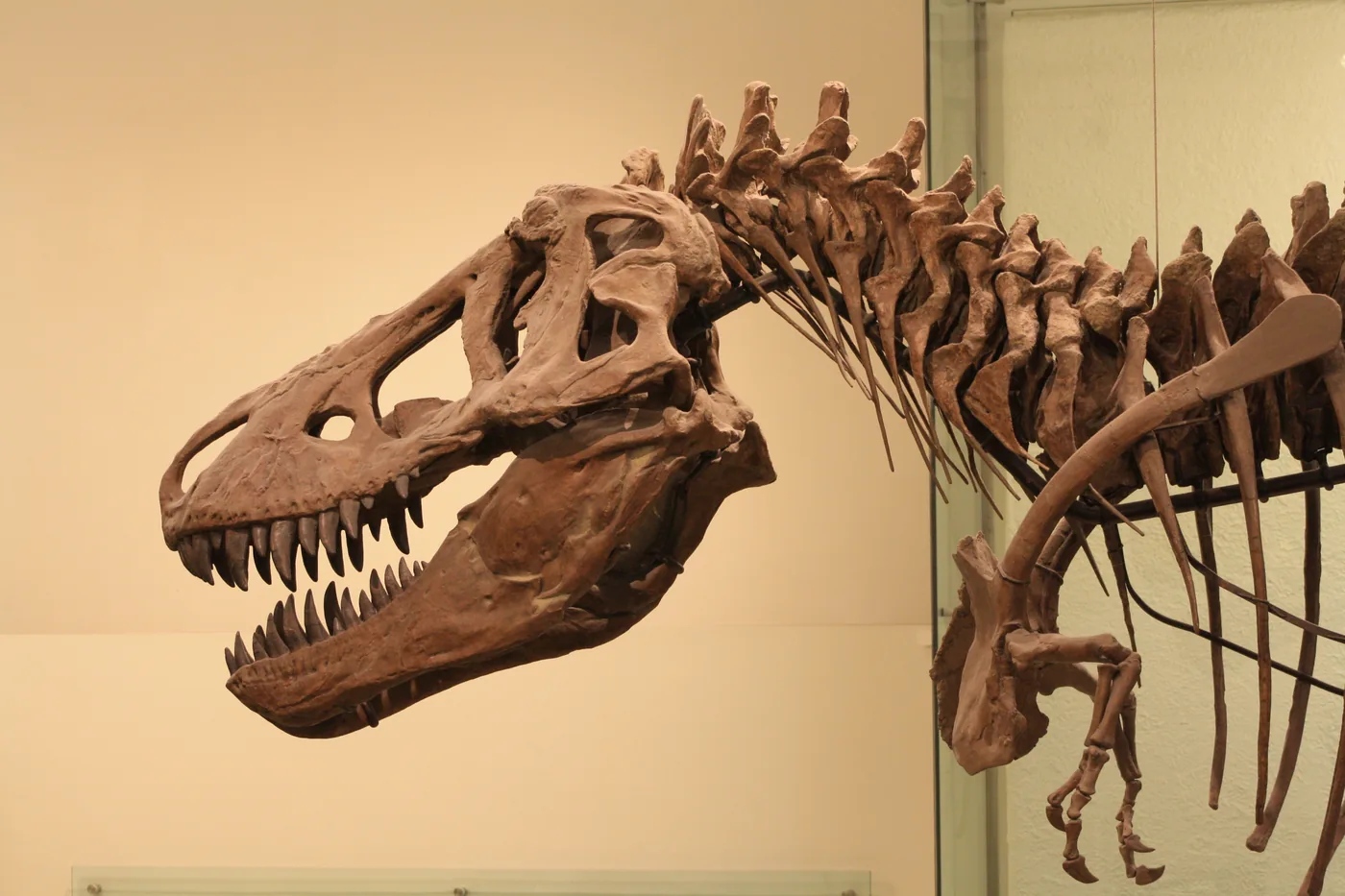
Why it matters: The mount was rebuilt into a stalking, head-low posture based on modern research, not the old upright tail-dragging pose.
What to notice: Look at how low the skull sits and how the tail floats level with the ground — that horizontal line is the whole argument about how the animal moved.
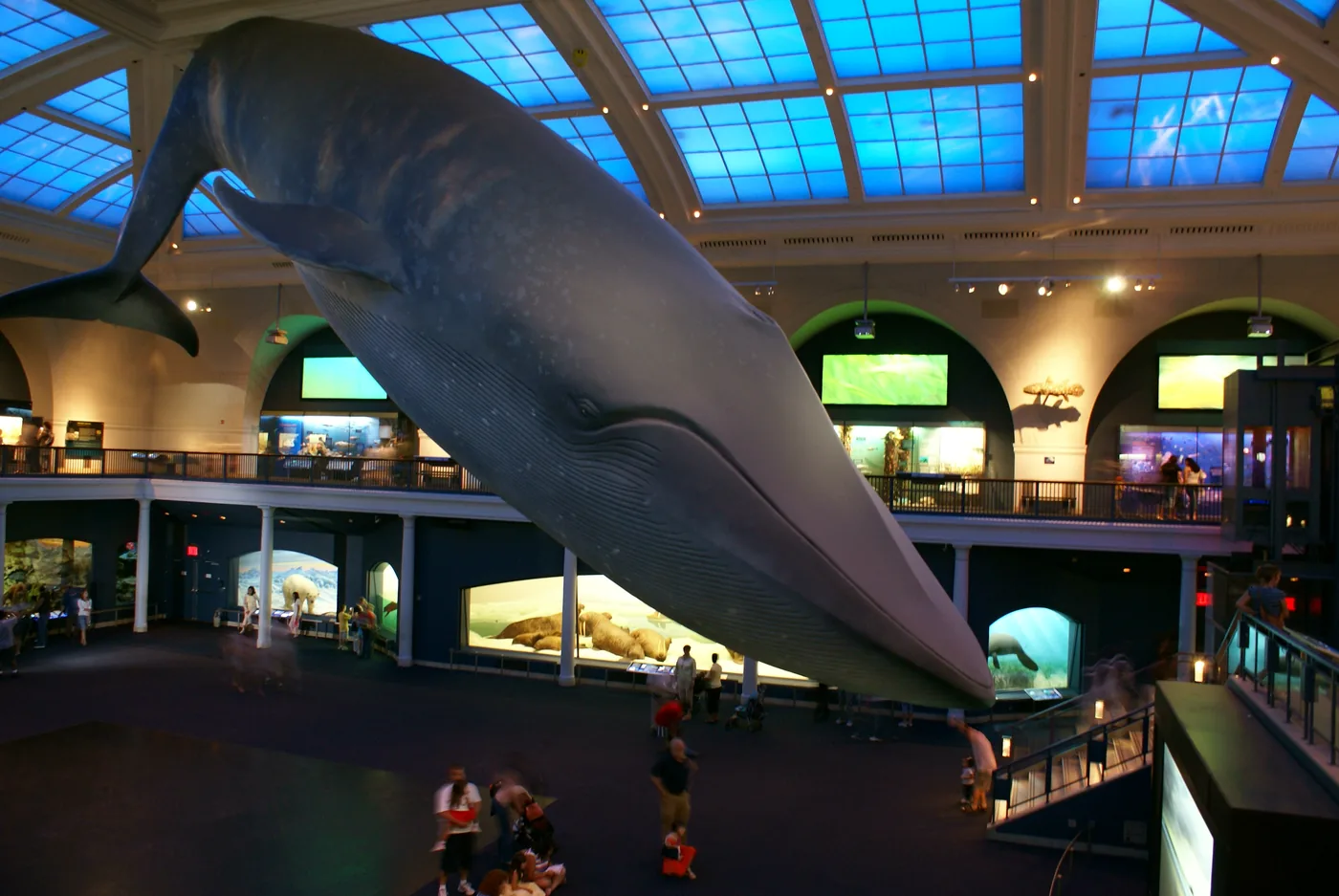
Why it matters: The 94-foot model is based on a female measured off South America; the 2003 refit corrected the eyes, blowhole and added a navel.
What to notice: Watch it from the upper mezzanine with the lights low — from the floor you lose the scale that makes the room work.
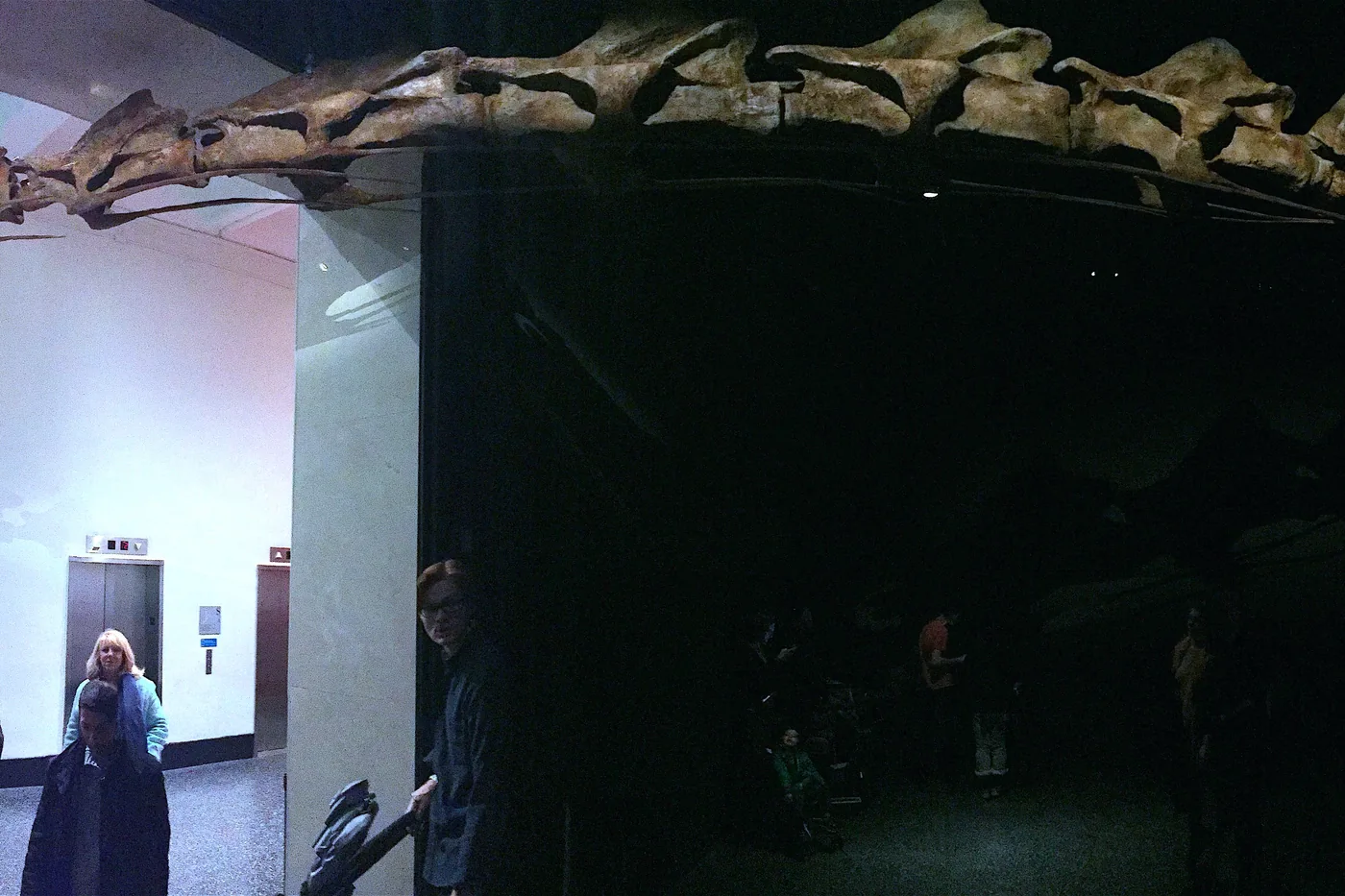
Why it matters: At 122 feet the cast is too long for its gallery, so its neck and head stretch out toward the elevator lobby to greet you.
What to notice: Put your hand on the femur cast by the doorway — it comes up past most people's heads, which tells you more than the full skeleton does.
How well did you look?
3 quick questions about what you just saw
Visit complete!
Share your visit or save it for later
Your collection