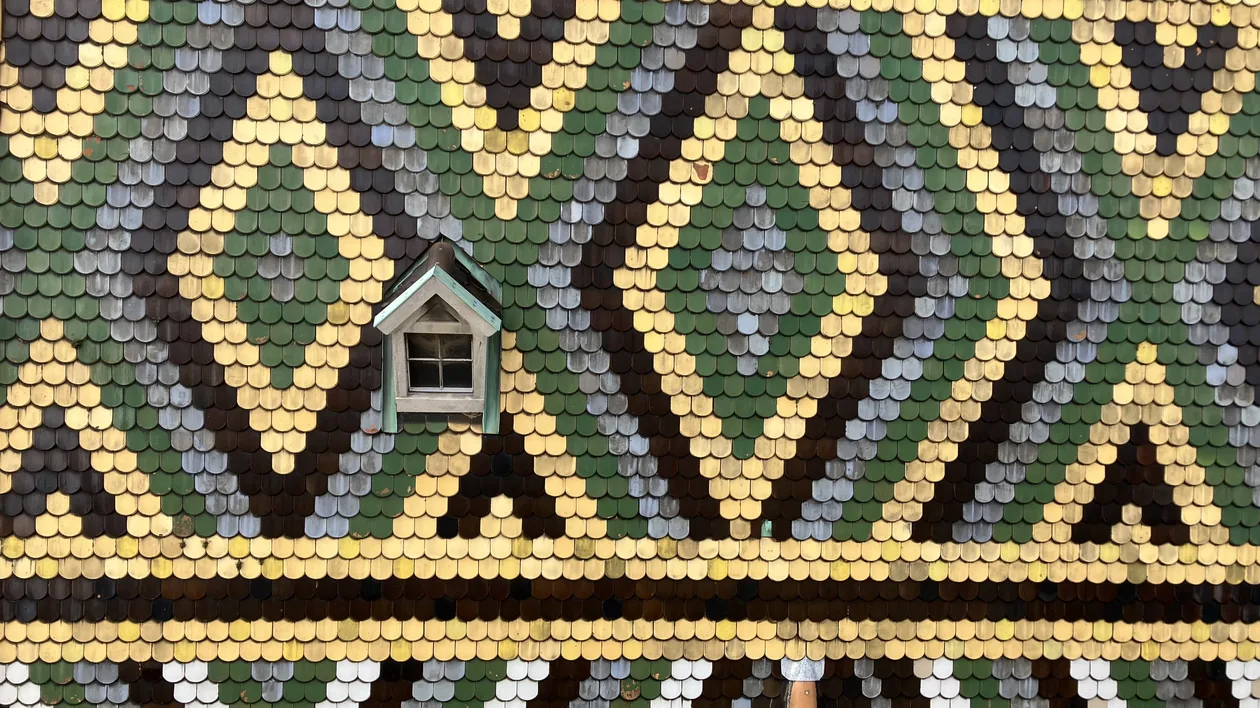
The free nave is a third of it
What the €25 ticket adds — the roof, the towers, the catacombs, the museum
Get your free guide
Enter your email to unlock the full room-by-room guide. One email unlocks all Vienna museum guides.
Free · No spam · Unsubscribe anytime
Most visitors see the cathedral from behind a rope, for free, and leave. The ticket is what turns a photo of the ceiling into an actual visit.
Past the free rear section, the choir and side chapels are where the carving rewards a slow look. Find Anton Pilgram's Gothic pulpit and the self-portrait peering out from a window below it.
A lift, the 21-tonne Pummerin bell, and a look straight down onto the 230,000 glazed tiles. The south tower is taller but means 343 steps and is sometimes closed — north is the easier, better-value climb.
A guided route beneath Stephansplatz. Over 10,000 Viennese were moved here in the 18th century, plague victims among them. Find the Ducal Crypt with Rudolf IV and the urns of Habsburg organs.
No cards on site. People arrive ready to climb and get sent to an ATM. A pre-booked ticket sidesteps it entirely.
Paid areas and tours open around 09:00, and mornings are far quieter than weekend afternoons.
South is taller but 343 steps and sometimes closed. The north tower's lift gets you the roof view without the climb.
No shorts, no sleeveless tops. It is a working cathedral, and the rule is enforced at the door.
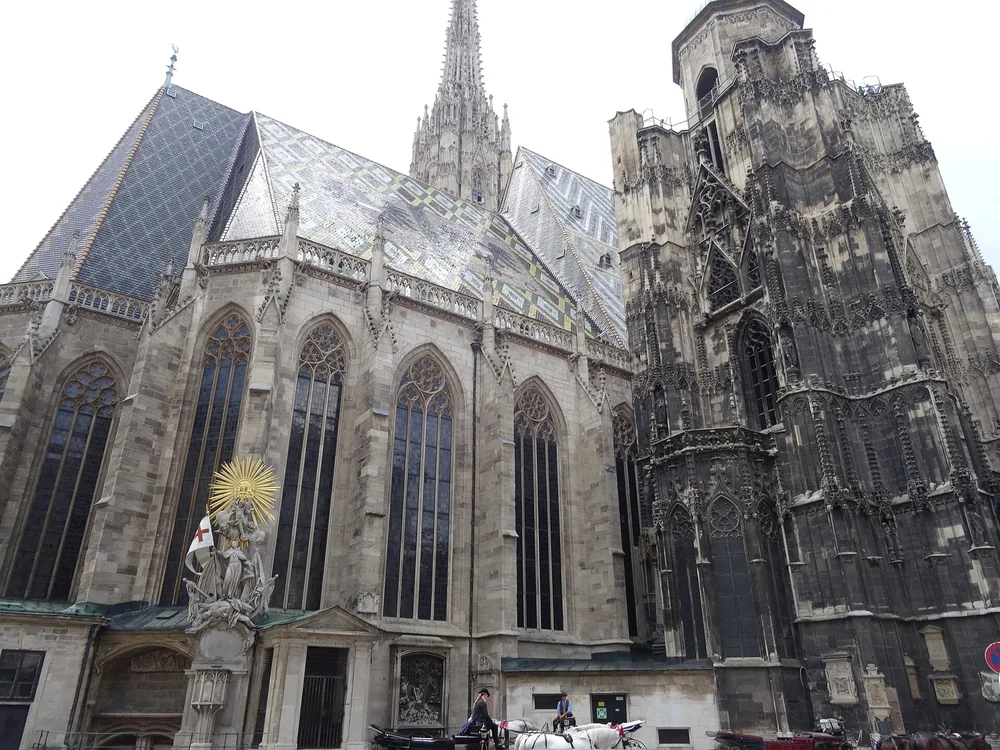
Why it matters: 230,000 glazed tiles in a zigzag pattern, with the Habsburg double eagle on the south side — rebuilt after the 1945 fire.
What to notice: Read the pattern from the square first, then look down on it from the north tower. It works better from above and outside than from under it.
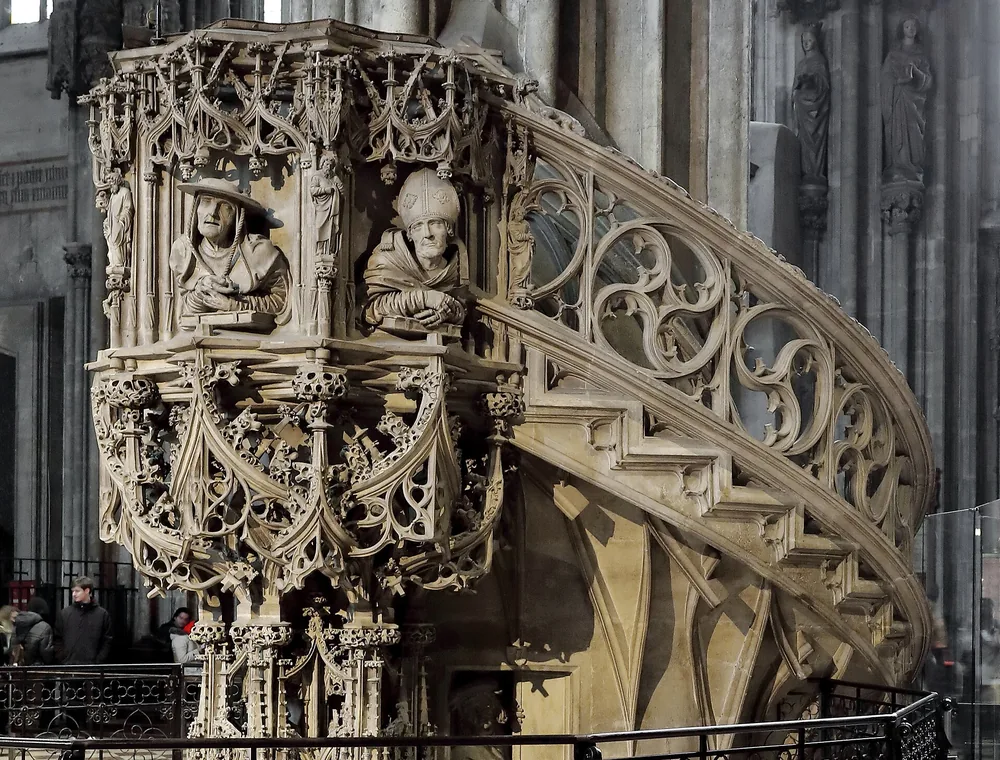
Why it matters: A late-Gothic stone pulpit carved with toads and lizards climbing the rail toward the preacher.
What to notice: Look below the stairs for the 'Fenstergucker' — a sculptor's self-portrait peering out of a stone window, chisel in hand.
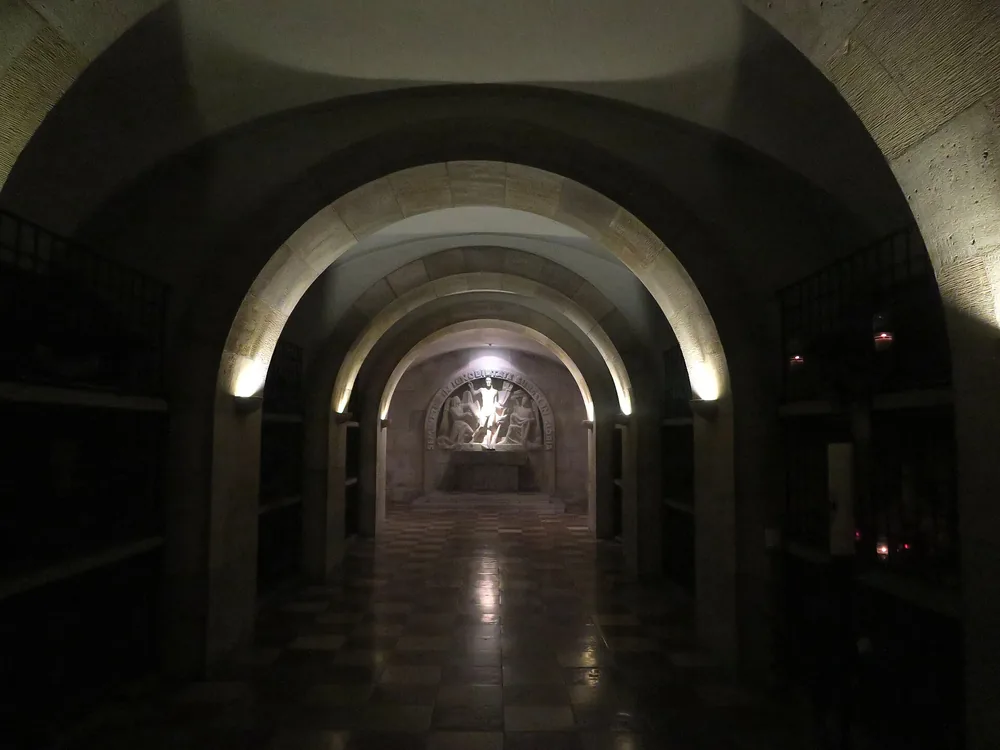
Why it matters: The resting place of Rudolf IV, founder of the Gothic cathedral, and a store of Habsburg remains.
What to notice: Urns here hold the preserved organs of Habsburg royals — bodies, hearts and entrails were buried in three different churches across Vienna.
How well did you look?
3 quick questions about what you just saw
Visit complete!
Share your visit or save it for later
Your collection