Ruth Asawa Retrospective at Guggenheim Bilbao: What to See (2026)
300 works, six decades, one of the most technically original artists of the 20th century. The Guggenheim Bilbao's Ruth Asawa retrospective runs until September 13.
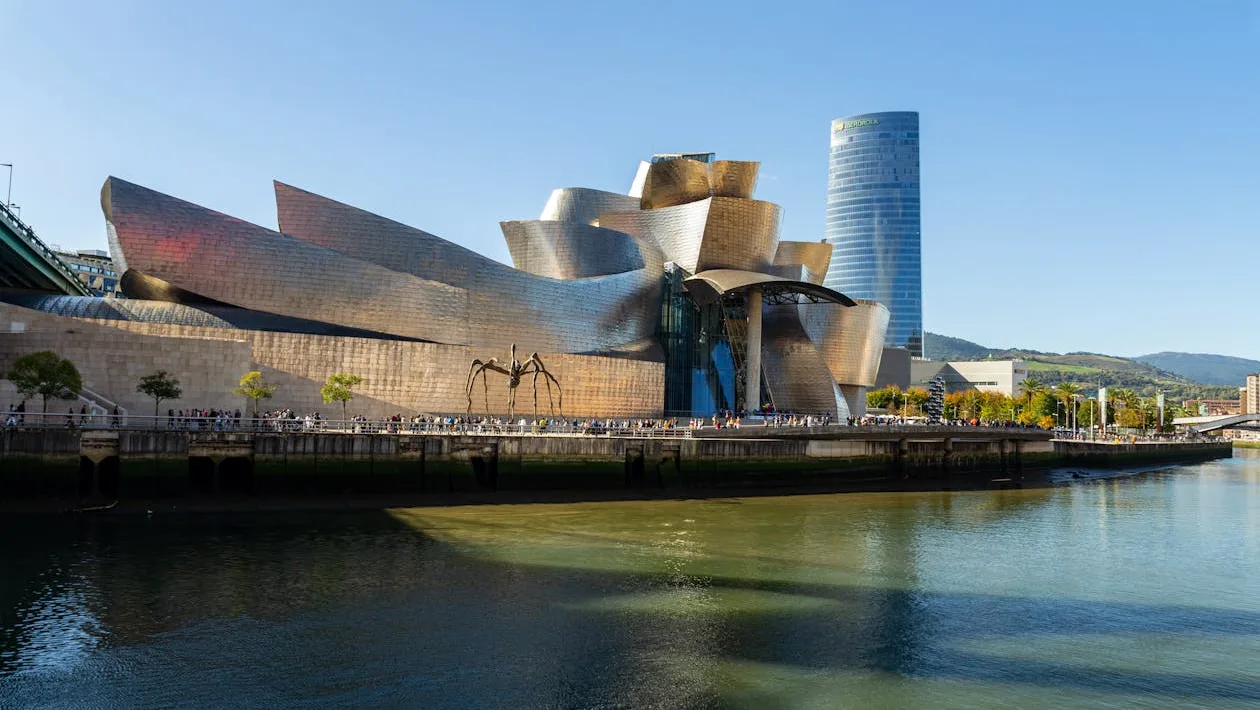
Ruth Asawa's family was detained in a Japanese American incarceration camp in 1942. Four years later she was at Black Mountain College under Josef Albers. A year after that, she was in Mexico watching a craftsman loop wire into baskets. The technique she learned that afternoon became the foundation of six decades of work. The Guggenheim Bilbao is showing all of it — the exhibition's only European stop — until September 13.
- 300 works across 10 sections: wire sculptures, bronze casts, drawings, prints, paperfolds
- Organized by SFMOMA and MoMA — previously in San Francisco and New York
- Tickets €18, under 18 free, no free Tuesday — runs until September 13, 2026
What is the Ruth Asawa retrospective?
Asawa built her reputation in the 1950s with looped-wire sculptures that exist "between line and volume" — simultaneously hollow and solid, the interior as visible as the exterior. The wire doesn't describe a shape from outside. It builds one from within.
The retrospective traces six decades across 10 sections: from the early looped-wire work to nature-inspired tied-wire pieces, large-scale public fountains, commercial designs based on paperfold patterns, and extensive drawings and prints.
Where to book
Our take: For most readers here, the €18 official entry is the answer. Admission includes an audio guide, and Asawa's rooms reward slow looking more than commentary — this is a show you want to walk at your own pace. The GetYourGuide guided exterior tour (€45, English, skip-the-line, 4.7★ from 93 reviews) covers the whole museum with an expert guide, not this exhibition specifically, so treat it as a different purchase rather than a better ticket. Either way, finish before September 13.
Get the room-by-room guide
What to look for
The looped-wire sculptures suspended from the ceiling. Don't approach them looking for a solid form. Walk underneath, walk around. The work exists in the space it defines, not in the wire itself — "simultaneously inside and outside," as Asawa described it. That only becomes clear when you stop looking for a surface.
The reconstructed living room. The centrepiece recreates Asawa's San Francisco home: wire sculptures that once hung above her children, now suspended from the museum ceiling. An art studio that was also a family space.
The tied-wire nature pieces alongside the looped works. The technique differs: tied-wire creates a more textural, weighted surface compared to the airy loops. Compare the two approaches in the same room. The shift in feeling is significant.
The Origami Fountains (1975–76). Large-scale public works that moved the wire logic into bronze. The formal connection between the hanging sculptures and these permanent pieces is clearer in a retrospective than it would be anywhere else.
The drawings and paperfolds. The three-dimensional work started on paper. The paperfolds reveal the mathematical thinking — logarithmic spirals, folding logic — underneath what looks, in the final sculptures, entirely intuitive.
What most visitors wish they'd known
Budget more time than you expect. The wire sculptures take time to read — this isn't a show you can pace steadily. Visitors at SFMOMA and MoMA consistently stayed longer than planned. A realistic minimum is 90 minutes.
There is no free Tuesday window — don't plan around one. Travel sites and AI assistants widely claim the Guggenheim Bilbao is free on Tuesdays from 6:00 to 8:00 PM. We priced that exact slot on the museum's booking engine in July 2026: €18, the full rate. If you want to see Asawa, you're paying for it. Our Guggenheim Bilbao tickets guide covers every price tier and how to book.
The Artean Pass isn't worth it this year. At €18 it combines the Guggenheim with the Museo de Bellas Artes — but the Bellas Artes is free during its expansion works, and €18 is exactly what a summer Guggenheim ticket costs on its own. Buy the single ticket.
- Exhibition
- Ruth Asawa: Retrospective — 19 March to 13 September 2026
- Tickets
- Adults €18 (summer rate to 13 Sep) · Students 18–25 / 65+ €9 · Under 18 free
- Free admission
- None — no free Tuesday. Last day of exhibition (13 Sep) 4:00 PM onwards: 50% off
- Hours
- Tue–Sun 10:00–19:00 (extended to 20:00 in summer from 15 June)
- Location
- Guggenheim Museum Bilbao, Abandoibarra Etorbidea 2, Bilbao
- Website
- guggenheim-bilbao.eus
Hours and admission details can change — confirm on the official page before you go.
Last verified: April 2026
Frequently asked questions
Is the Ruth Asawa exhibition included in the Guggenheim Bilbao ticket?
Yes. The regular adult ticket includes the Ruth Asawa retrospective and all other exhibitions, with no per-show surcharge. That ticket is €18 for the whole remaining run of this exhibition — the museum's summer rate applies from 15 June to 13 September, which is the day Asawa closes. Under 18 enter free. There is no free Tuesday evening window, despite what most travel sites say.
When does the Ruth Asawa retrospective at Guggenheim Bilbao close?
The exhibition runs from March 19 to September 13, 2026. This is the European stop of a major traveling show that previously ran at SFMOMA and MoMA.
How long does the Ruth Asawa exhibition take?
Most visitors spend 1.5 to 2 hours across 10 sections and 300 works. Budget more time than for a standard paintings show — the wire sculptures reward slow looking.
Who was Ruth Asawa?
Ruth Asawa (1926–2013) was a Japanese-American artist known for looped-wire sculptures. She studied under Josef Albers at Black Mountain College and learned her wire technique from a basket-maker in Mexico in 1947.
The Guggenheim Bilbao doesn't often host a show of this scope. If you're in the Basque Country before September, go.
Already subscribed? Open the room-by-room guide →