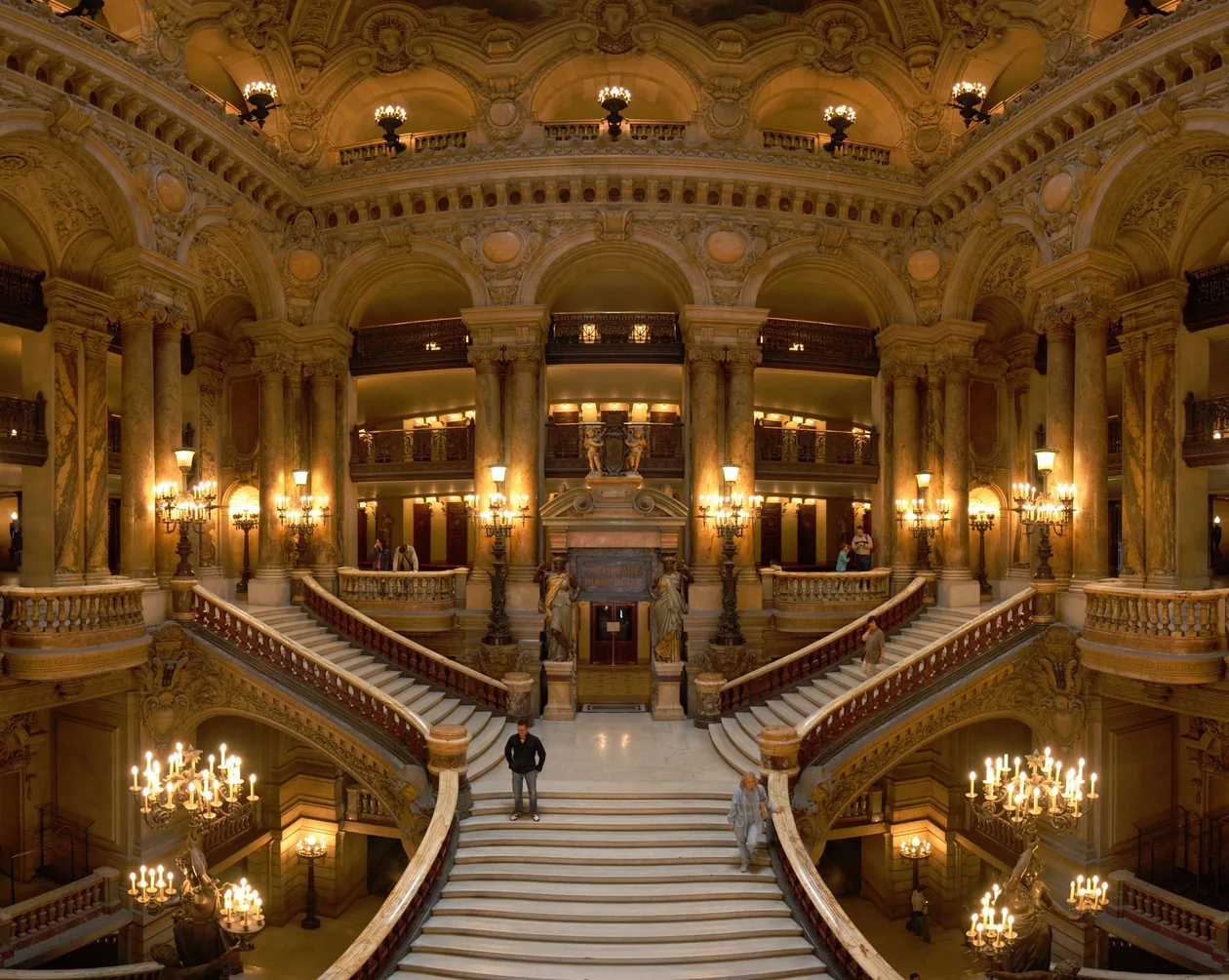
The building that made arriving the first act
A self-guided route through the staircase, the foyer, and the ceiling you might not get to see
Get your free guide
Enter your email to unlock the full room-by-room guide. One email unlocks all Paris museum guides.
Free · No spam · Unsubscribe anytime
Garnier spent more on the foyer and the staircase than on the stage. The visit is the show — treat the auditorium as a bonus you might not get.
Stop before you climb. The double flight of white marble was built as a stage for the audience itself — the balconies above were galleries for watching others arrive. Climb slowly; the view changes at every landing.
Aim to reach the foyer between 10:00 and noon, when light from the tall windows rakes across the gold leaf and Paul Baudry's ceiling. Walk its full length — it runs longer than the auditorium it serves.
The doorway off the foyer leads to set models, costumes and the wood-lined library at the back — the quietest room in the building. Finish at the auditorium if it is open: that is the only place to see Chagall's ceiling.
It closes for rehearsals and performances without notice, and the Chagall ceiling is inside. Look up the day's status on operadeparis.fr before you leave.
The 10:00 opening is reliable; the closing time moves with the performance schedule. On matinee days the visit ends early.
When tour groups fill the Grand Foyer, the gallery just off it stays calm. Most visitors walk straight past the door.
The route is well signed and you set your own pace. Book the guided or after-hours tour only if you want the backstage stories.
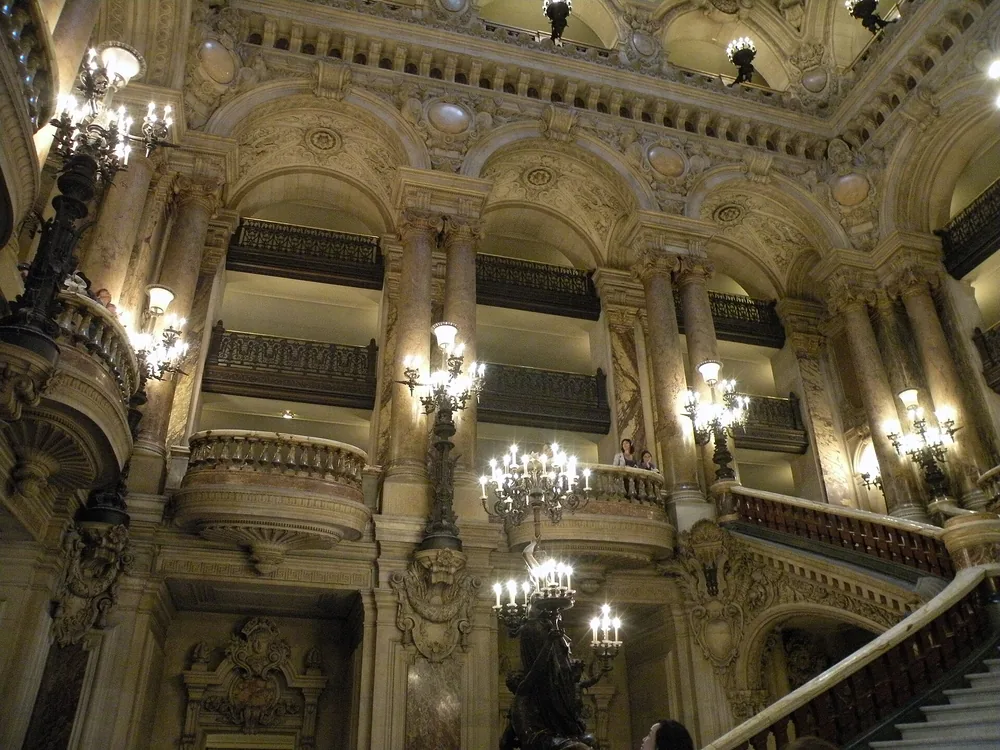
Why it matters: The centrepiece, built so that the audience's arrival was part of the spectacle.
What to notice: Seventeen different coloured marbles meet here. Look down at the steps, then up at the balconies designed for watching the crowd.
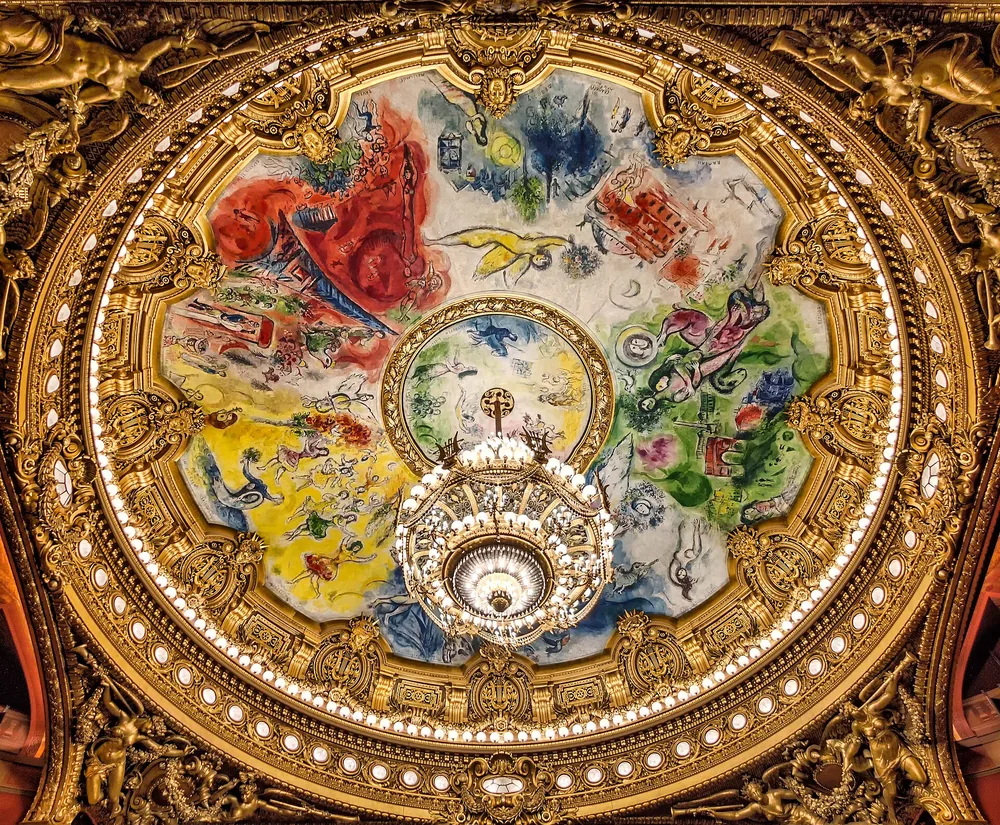
Why it matters: Commissioned by André Malraux, it set a 20th-century dome inside a 19th-century theatre and split opinion ever since.
What to notice: Fourteen opera and ballet scenes ring the chandelier. It is only visible when the auditorium is open to visitors.
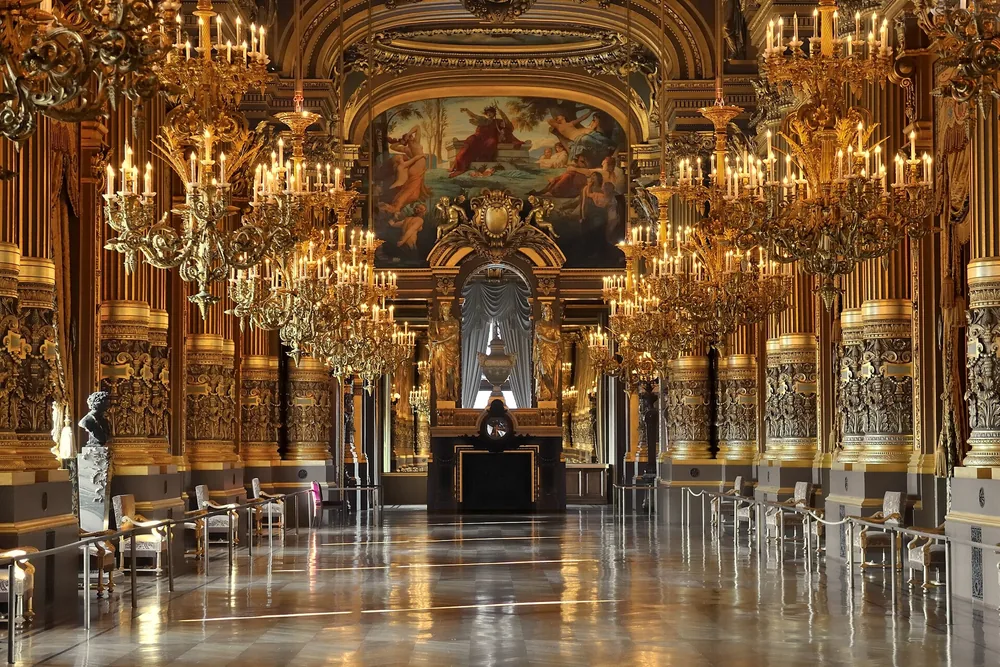
Why it matters: A gallery of mirrors and gold leaf built so the interval rivalled the performance.
What to notice: Stand at one end and look down the length. Between 10:00 and noon the window light does the work the chandeliers can't.
How well did you look?
3 quick questions about what you just saw
Visit complete!
Share your visit or save it for later
Your collection