Natural History Museum London 2026: Free Entry + What to See
Yes, the Natural History Museum is free. Every day, no ticket needed. The catch isn't price; it's the crowds and three paid 2026 exhibitions worth knowing about before you arrive.
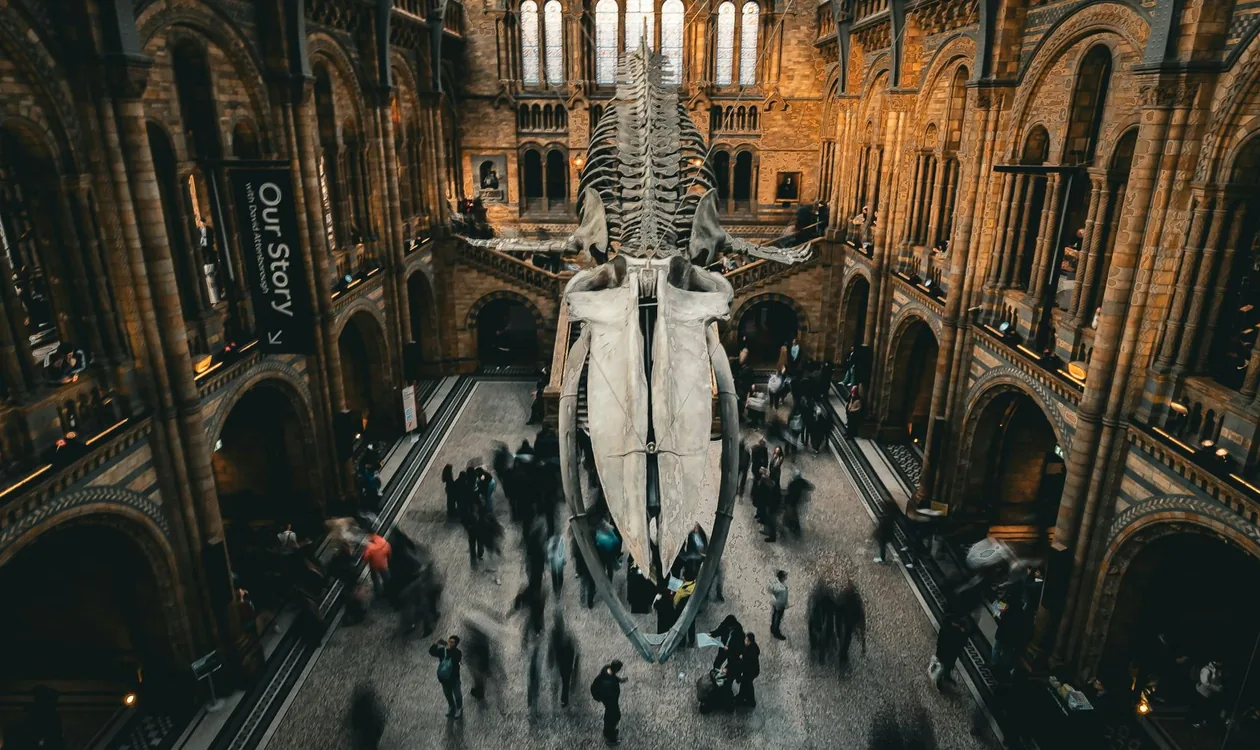
Yes, the Natural History Museum is free. Every day, no ticket required: the permanent galleries, the gardens, and Alfred Waterhouse's 1881 Romanesque building. The catch isn't price; it's the crowds and the three paid 2026 exhibitions you'll want to know about before you arrive.
In 3 minutes
- Free: All permanent galleries, gardens, and the building. Every day, no ticket required
- Open: Daily 10:00–17:50, last entry 17:30. Closed 24–26 December
- Book: A free timed slot at nhm.ac.uk on busy days (weekends, school holidays, summer); skips a 30–45 minute walk-up queue
- Paid 2026: Jurassic Oceans (£15–17.50) · Wildlife Photographer of the Year (£15.50–18) · Our Story with David Attenborough (£20–25)
Is the Natural History Museum free?
Yes. Entry is free and always has been. Like the British Museum, the National Gallery, and the V&A, it's one of London's permanently free museums. The museum holds 80 million specimens across more than 30 galleries; the only things you pay for are the three temporary exhibitions running in 2026.
Book a free timed slot on nhm.ac.uk on weekends, school holidays, and through summer. The museum holds walk-up capacity but the queue at Cromwell Road can run 30–45 minutes on a peak Saturday. Booking takes two minutes.
What you actually pay for in 2026
Three temporary exhibitions charge separately. All three include museum entry afterwards.
- Jurassic Oceans: Monsters of the Deep opens 22 May 2026. £15 off-peak / £17.50 peak (child £7.50 / £8.75). Pliosaurs, ichthyosaurs, mosasaurs, and one piece of 200-million-year-old fossilised dung visitors can touch.
- Wildlife Photographer of the Year runs until 12 July 2026. £15.50 off-peak / £18 peak. Top 100 images from the world's biggest nature photography competition; consistently the museum's strongest temporary show.
- Our Story with David Attenborough has been extended to August 2026. £20 off-peak up to £25 peak. A 360° immersive experience narrated by Attenborough.
What to see (the 2-hour route)
Hintze Hall: the blue whale. A 25-metre skeleton named Hope hangs in the main hall where Dippy the diplodocus used to be. Stand directly underneath, then walk up to the first-floor gallery balcony for the side view most visitors don't bother with.
Dinosaurs (Blue Zone). The most crowded gallery in the building. Go first thing at 10:00 or after 15:00. The animatronic T. rex pulls a queue; the rest of the gallery thins out the moment you walk past it.
Earth's Treasury (Red Zone). Mineral and gem hall, quieter by a factor of ten. The Vault, a side room with reinforced glass, holds meteorites older than the planet, a 1,385-carat sapphire, and a small piece of the Moon.
Treasures (Cadogan Gallery, Green Zone). Twenty-two objects the museum considers its most important: a first edition of Darwin's On the Origin of Species, Mary Anning's ichthyosaur skull, a moon rock.
The building itself. Waterhouse's 1881 design splits the museum into two wings: extinct species carved on the east, living species on the west. Every column and ceiling tile is decorated to match its zone. Worth a 10-minute pause at the Central Entrance just to look up.
When to visit and how to get there
Tuesday–Thursday at 10:00 opening or after 15:00. Avoid weekends and UK school holiday weeks (mid-February, Easter, late May, late October, late July to early September). January, February, October, and November are the quietest months.
The closest tube is South Kensington (Piccadilly, District, Circle), five minutes' walk. A covered subway tunnel runs from the station platforms directly to the Central Entrance on Cromwell Road: step-free, weather-protected, and the entrance most visitors take. The Exhibition Road entrance is usually quieter and pushchair-friendly.
On a busy day, a guided tour on GetYourGuide (skip-the-line entry, live guide options, free 24h cancellation) is worth the price. Less necessary on a quiet Tuesday. If you're already in South Kensington, the V&A is a three-minute walk and also free; both museums are large enough that adding a third is a mistake.
Practical info
- Admission
- Free. All permanent galleries and gardens. Timed slot recommended on busy days
- Hours
- Daily 10:00–17:50 (last entry 17:30) · Closed 24–26 December
- Book at
- nhm.ac.uk/visit
- Paid exhibitions 2026
- Jurassic Oceans £15–17.50 · Wildlife Photographer of the Year £15.50–18 (until 12 Jul) · Our Story with David Attenborough £20–25
- Getting there
- Tube: South Kensington (Piccadilly, District, Circle) · 5 min via subway tunnel to Central Entrance
- Address
- Cromwell Road, South Kensington, London SW7 5BD
Hours and exhibition prices can change. Confirm on nhm.ac.uk before you visit.
Last verified: May 2026
Frequently asked questions
Is the Natural History Museum London free in 2026?
Yes. Entry is free every day, no ticket required. The permanent galleries, gardens, and the building are all free. The museum recommends booking a free timed slot on nhm.ac.uk during busy periods (weekends, school holidays, summer); walk-up capacity exists but the queue can run 30–45 minutes without a booking. Three temporary exhibitions in 2026 charge separately.
Do you need to book free Natural History Museum tickets in advance?
Not strictly. On a quiet Tuesday or Wednesday morning you can walk straight in. During UK school holidays, weekends, and summer (July–August), a free timed booking on nhm.ac.uk is the difference between walking in and queueing 30–45 minutes at the Cromwell Road entrance. Booking takes two minutes.
What are the busiest days at the Natural History Museum?
Weekends, UK school half-terms (mid-February, Easter, late May, late October), and the six-week summer holiday from late July. Peak density is 11:00–15:00. Quietest months: January, February, October, November. Best slots any week: Tuesday–Thursday at 10:00 opening, or after 15:00.
Which paid exhibitions are at the Natural History Museum in 2026?
Three. Jurassic Oceans: Monsters of the Deep opens 22 May 2026 (£15 off-peak / £17.50 peak). Wildlife Photographer of the Year runs until 12 July 2026 (£15.50 off-peak / £18 peak). Our Story with David Attenborough, the 360° immersive experience, has been extended to August 2026 (£20–£25). All include museum entry afterwards.
How long do you need at the Natural History Museum?
Two hours for the highlights: Hintze Hall, dinosaurs, Earth's Treasury, the Treasures gallery. 3–4 hours if you have kids or want to slow down through the mineral hall and the Darwin Centre. The museum holds 80 million specimens; you won't see them all in a day.