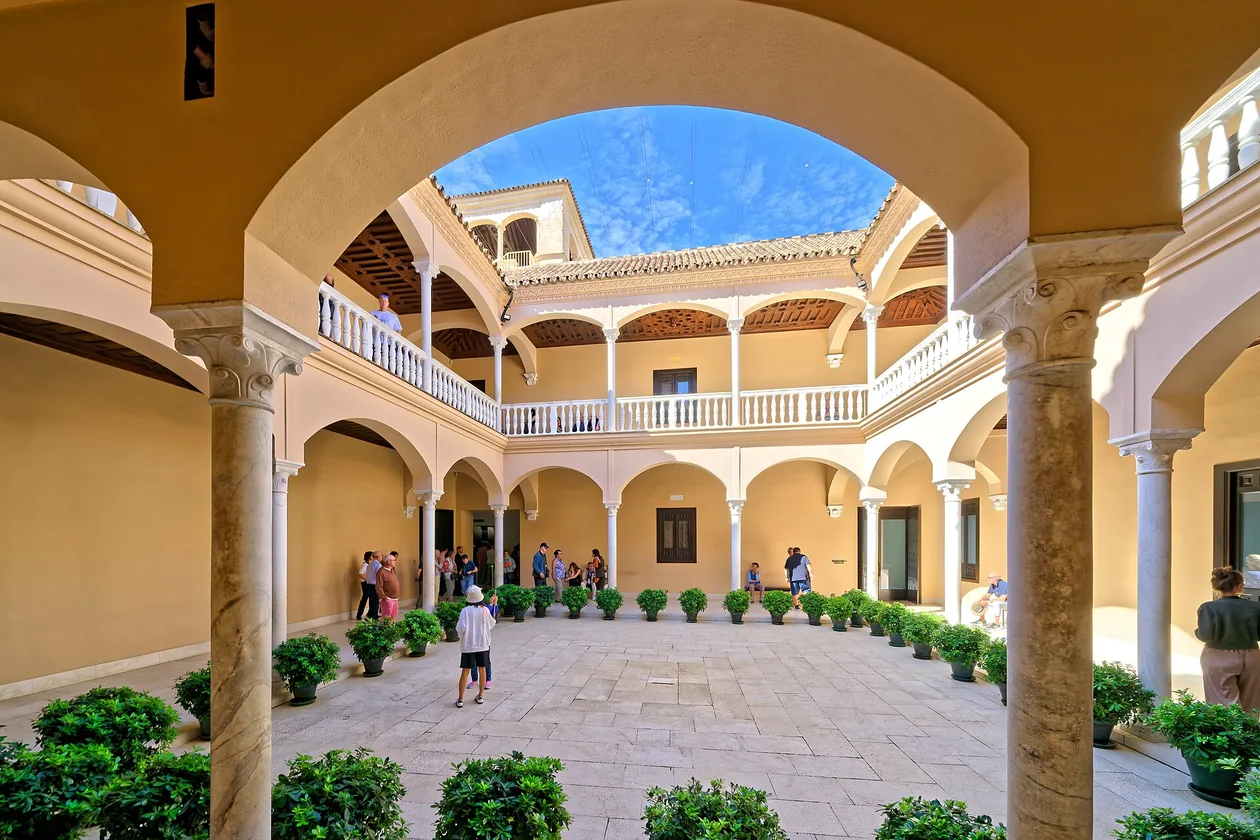
Picasso in the city he was born in
A family collection, strongest where the big retrospectives are thin
Get your free guide
Enter your email to unlock the full room-by-room guide. One email unlocks all Málaga museum guides.
Free · No spam · Unsubscribe anytime
No Guernica, no single blockbuster. The Museo Picasso Málaga is a family collection — its value is range and the quiet to see it.
Roughly 1908 to 1920 is the collection's strongest stretch. Slow down here. Look for the early academic studies nearby too — Picasso could draw like the masters before he broke the rules, and the contrast is the point.
Plates and vessels reworked into faces, owls and bulls — the part most retrospectives skip and the surprise of this museum. Quieter than the painting rooms, and often the most playful work on show.
The renovation of the 16th-century Palacio de Buenavista uncovered Phoenician, Roman and Moorish remains, now visible below. Included in the ticket and missed by most — you came for Picasso and walk through 2,000 years of Málaga.
The last two hours every Sunday are free for everyone, which means a queue. Arrive before it opens or pay on a calmer weekday.
July, August and weekends can sell out. A timed online ticket saves the queue and guarantees entry.
No Guernica, no Demoiselles. Come for the range across eight decades, not one famous canvas.
Most visitors miss the archaeology under the palace. It's part of the ticket — go down.
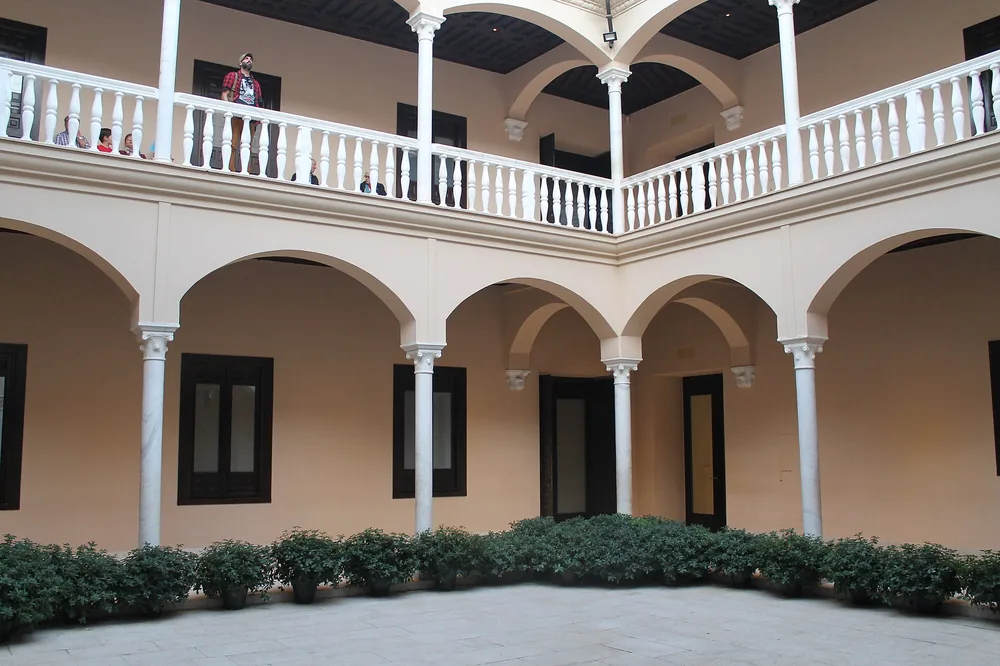
Why it matters: The Mudéjar mansion that houses the collection — and, in its renovated basement, Phoenician, Roman and Moorish remains.
What to notice: Stand in the arcaded courtyard before the galleries. The wooden ceilings and patio are part of the visit, not just the setting.
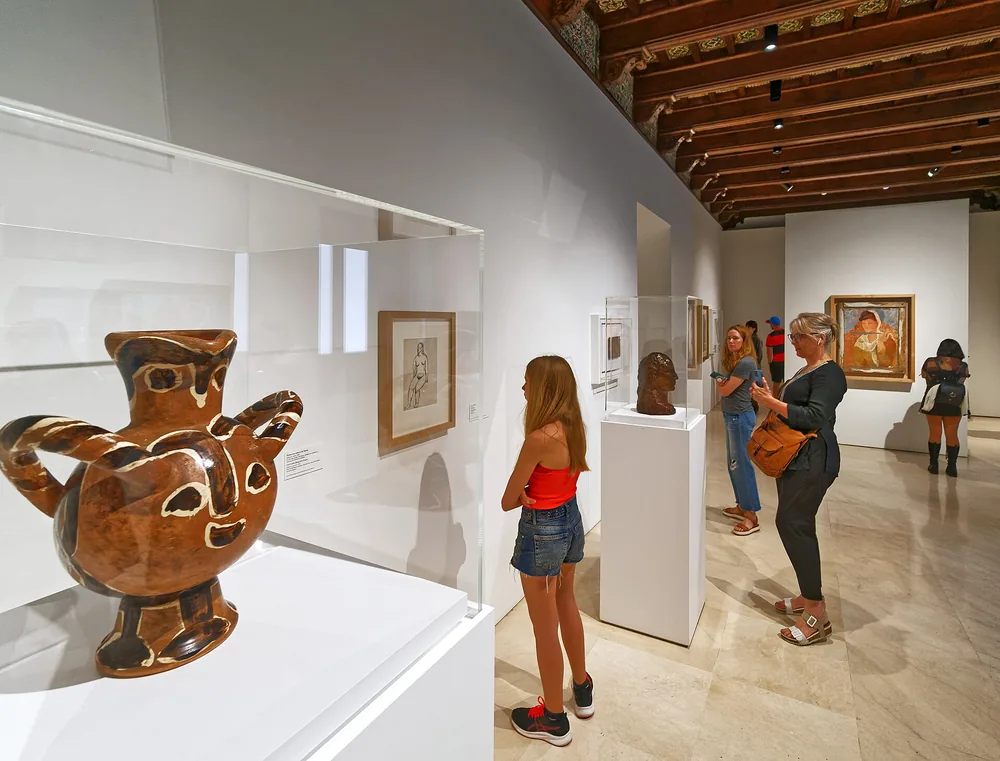
Why it matters: The run of plates and vessels that big retrospectives tend to leave out — and the surprise of the museum.
What to notice: Look how a jug becomes a face or a bull with a few strokes. Playful, fast, and unmistakably his.
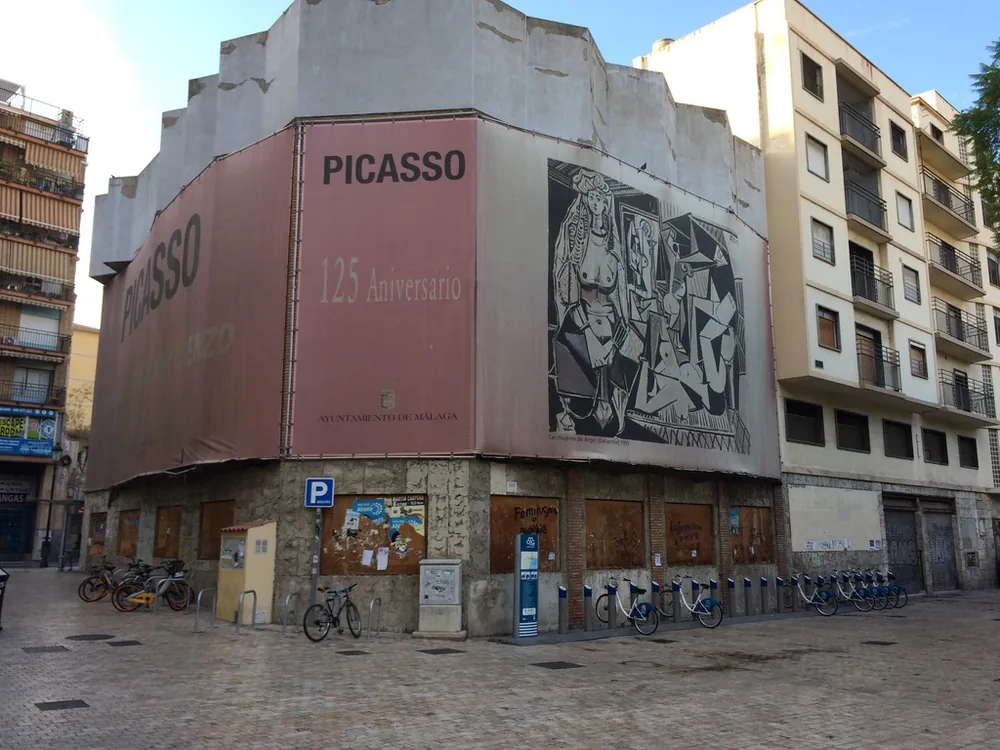
Why it matters: Picasso was born a few streets away. The museum exists because the city, and his family, claimed him back.
What to notice: Pair the museum with the Plaza de la Merced birthplace nearby — the collection makes more sense once you've seen where he started.
How well did you look?
3 quick questions about what you just saw
Visit complete!
Share your visit or save it for later
Your collection