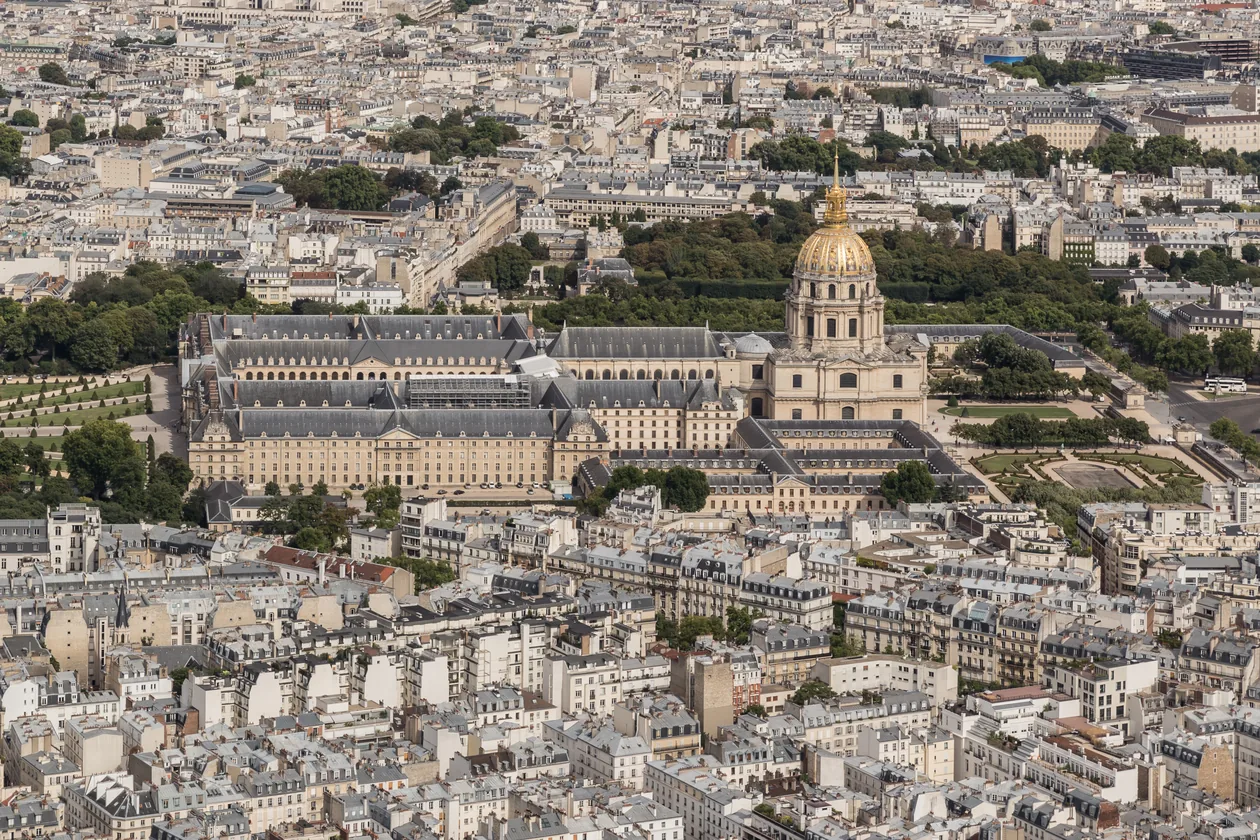
A tomb, an army museum, and the order to see them in
Napoleon first, one wing of the museum next, relief maps last
Get your free guide
Enter your email to unlock the full room-by-room guide. One email unlocks all Paris museum guides.
Free · No spam · Unsubscribe anytime
Les Invalides is a complex, not a museum. The visitors who enjoy it pick two wings and skip the rest — the ones who try to see everything stop seeing anything.
See it while you're fresh. Stop at the gallery rail above the crypt before you descend — the sunken design means you read the red quartzite sarcophagus from above, then from the floor. Twelve Victory statues ring it, one per campaign.
Arms and armour (medieval and Renaissance) or the two World Wars galleries — not both well in one visit. The armour halls are the steadiest crowd-pleaser; the war galleries reward more attention.
The Plans-Reliefs gallery — scale models of fortified cities built for the king's military planners. Easy to skip when tired, which is exactly why it goes last, on whatever energy you have left.
See the tomb before museum fatigue sets in. Most people do it backwards and rush the part they came for.
The Esplanade side opens at 10:00; the Place Vauban side, by the Dôme, opens at 14:00 — handy if you only want the tomb in the afternoon.
Come at the 10:00 opening, or take the first-Friday late opening to 22:00 — quietest slot of the month and €10 instead of €17.
The digital audio guide is free but you'll want your own earphones to use it across the galleries.
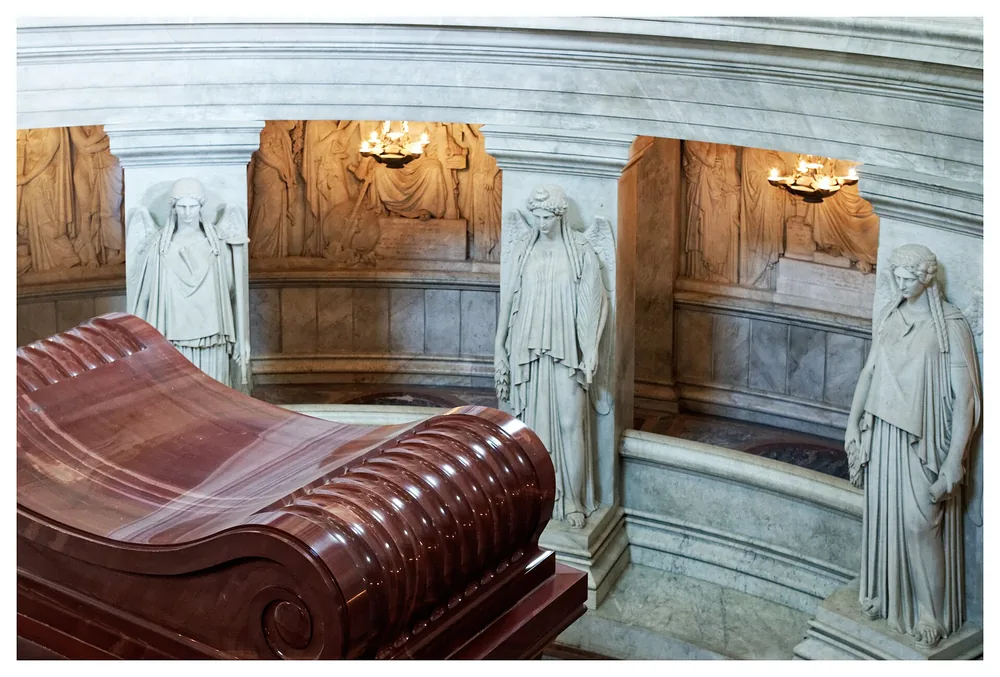
Why it matters: Napoleon's remains were brought back from Saint Helena in 1840 and placed here in 1861, under the highest dome in Paris.
What to notice: One block of red quartzite on a green granite base. Look down from the gallery first — the crypt was built to be seen from above.
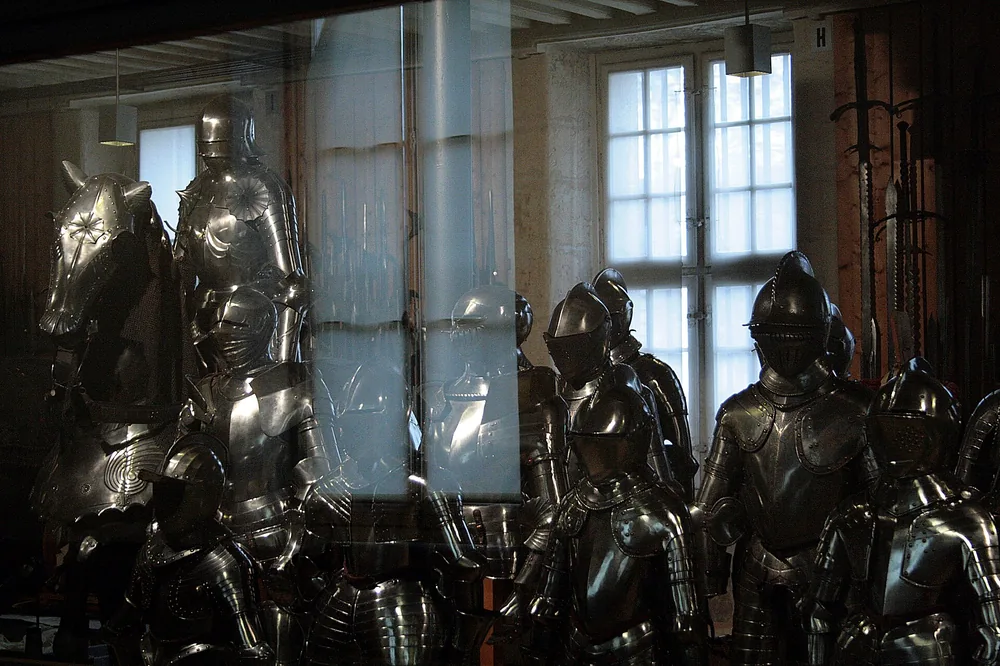
Why it matters: One of the largest arms and armour collections in the world, including parade armour made for kings.
What to notice: The finest pieces were built to be seen, not fought in. Look at the engraving and gilding on the ceremonial suits.
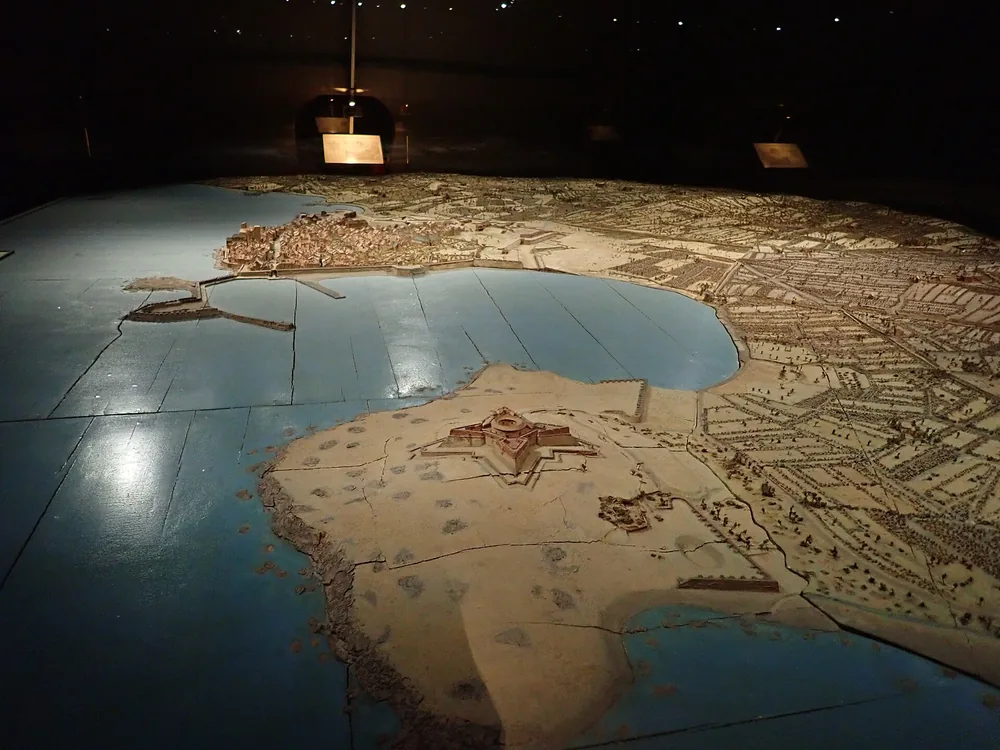
Why it matters: Giant scale models of fortified cities, made so the king's planners could study France's defences.
What to notice: Find the model of your own destination if it's on show. The detail down to individual buildings is the point.
How well did you look?
3 quick questions about what you just saw
Visit complete!
Share your visit or save it for later
Your collection