Ubu Painter at Museu Picasso Barcelona: What to See Before It Closes
Guide to Ubu Painter at Museu Picasso Barcelona: what the exhibition is about, what to look for, and practical tips for your visit. Free PDF included.

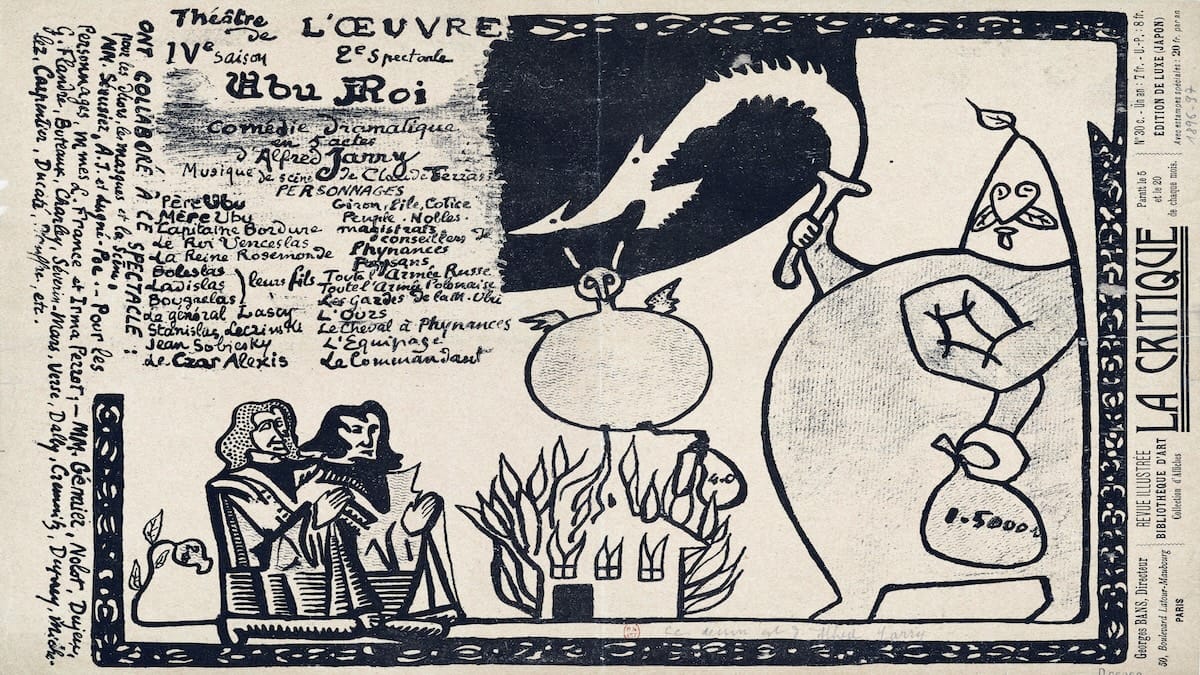
Alfred Jarry invented Ubu in 1896 as a grotesque schoolboy joke about a physics teacher. Within a year, it caused a riot at the Théâtre de l'Oeuvre. Within a decade, artists were using it as a weapon. This exhibition at Museu Picasso traces how a satirical character left the stage and became visual art.
If you walk in expecting Picasso's permanent collection, recalibrate. This is a temporary exhibition about the cultural afterlife of one absurd figure — and why artists from Bonnard to Kentridge keep coming back to it.
In 3 minutes
- Ubu started as Alfred Jarry's parody of authority — a grotesque king who is stupid, violent, and funny all at once
- The exhibition follows how Ubu left theatre and text and became a reusable visual tool across movements: Nabis, Surrealism, contemporary art
- Picasso's Dream and Lie of Franco (1937) is the sharpest work here — Ubu reinvented as a real dictator. The satire still cuts
Context
Jarry created Père Ubu for his play Ubu Roi, first performed in Paris in December 1896. The audience rioted at the opening word. The character was deliberately crude — a fat, cowardly tyrant who speaks like a child and acts without consequence. That was the point.
This exhibition at Museu Picasso doesn't just show Jarry's work. It tracks what happened when other artists picked up the Ubu figure and used it for their own purposes. The Nabis saw it as playful. The Surrealists saw it as subversive. Picasso, in 1937, turned it into a direct political weapon against Franco.
The show runs until April 6, 2026. It's compact — 15 minutes is enough if you know where to focus. The works are spread across drawing, printmaking, painting, and printed scores. The variety is part of the argument: Ubu works in any medium because the idea is stronger than any single form.
What to look for
- Who is the target. Every Ubu image has a victim — someone being mocked, reduced, or inflated into absurdity. Ask who.
- What the distortion is doing. Notice what feels childish, ugly, or deliberately overdone. Exaggeration here is not decoration. It is the argument.
- How Ubu changes medium. From woodcut to printed score to oil painting. Pay attention to what becomes more violent, more comic, or harder to ignore when Ubu jumps format.
Tips most sites won't tell you
- Go in the opening hour, between 10:00 and 11:00. It's the least crowded window, confirmed by multiple visitors.
- Enter opposite to the crowd flow. Most people follow the default path — start at the far corner and work backward for a quieter experience.
- If you've already seen the permanent collection, buy the expo-only ticket for €6.50 instead of the full €14. The option exists but isn't advertised prominently.
- Bring a €1 coin for the lockers. Drinks are not allowed inside the galleries.
Practical info
Hours and prices can change. Confirm on the official site before you go.
The exhibition closes April 6. If you're visiting Museu Picasso before then, add 15 minutes for Ubu. It's a sharp, compact show that works best when you know what you're looking at — which you now do.