Museu Tàpies Barcelona: Is It Worth Visiting?
Museu Tàpies divides visitors. Some call it powerful, others leave in 10 minutes. Here's what to know so you see what most people miss.

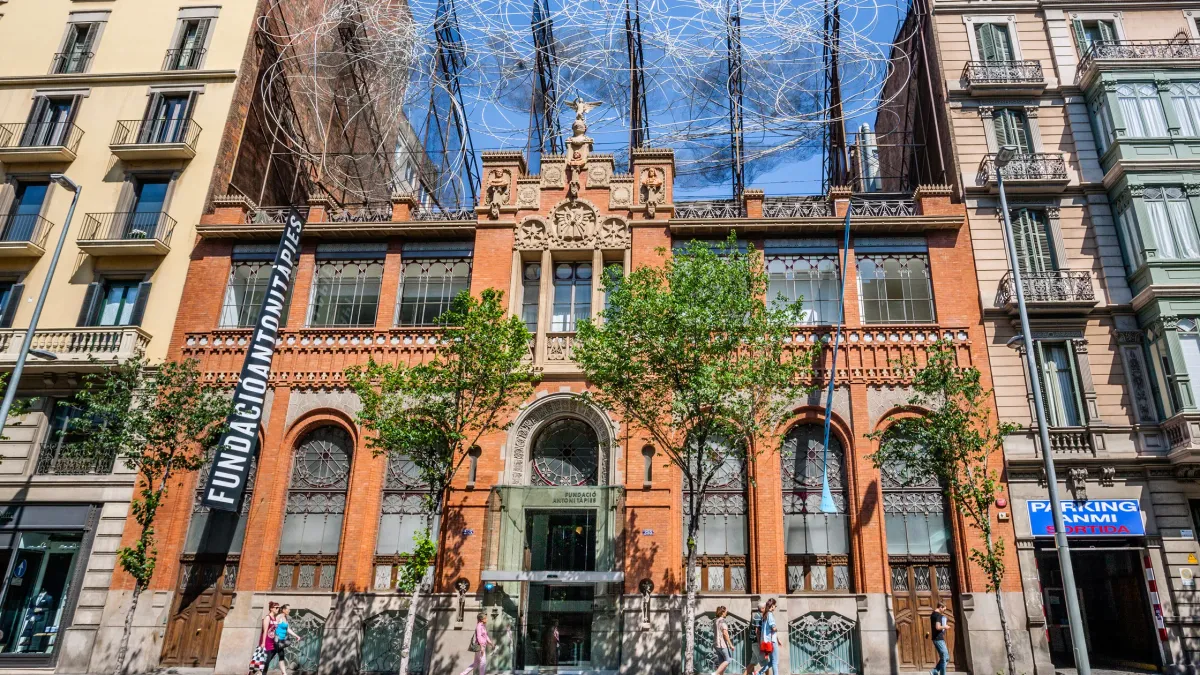
The Museu Tàpies is probably the most divisive museum in Barcelona. Half the visitors walk out calling it quietly powerful. The other half leave within ten minutes feeling like they just paid €12 to look at painter's drop cloths stuck to a wall.
Both reactions are completely valid. And whether you love it or leave confused almost always comes down to one thing: did you know what you were looking at before you walked in?
If you visit this museum cold, you'll likely be disappointed. If you spend three minutes reading this first, you'll see things most visitors miss entirely.
In 3 minutes
- Why Tàpies mixed sand, rope and old socks into his paintings, and what to look for on the surface
- The rooftop sculptures most visitors never ask to see
- 3 free entry days, the Articket shortcut, and why the chocolate shop in the courtyard is worth a stop
Context
Antoni Tàpies (1923-2012) was Barcelona's most important artist after Picasso and Miró. He started out imitating Van Gogh and Picasso while recovering from a lung illness in a sanatorium. Then he went to Paris, met the Art Brut crowd, and came back to Barcelona with a radical idea: art doesn't need to be pretty, it needs to be real.
He started mixing sand, straw, marble dust, rope, even old socks into his paintings. The surfaces are thick, scratched, layered. He called it "material art" and the point was philosophical: matter isn't dead, it's always in flux. If that sounds abstract, here's what it means when you're standing in front of his work: you're not looking at a picture of something. You're looking at the thing itself.
The museum holds over 300 works donated by Tàpies and his wife Teresa, covering every phase from 1940s sketches to late sculptures. The building itself is worth your attention. Domènech i Montaner designed it in 1881 as a publishing house for Montaner i Simón, one of Catalonia's most important publishers. It was one of the first buildings in Barcelona to combine exposed red brick with cast iron in what became the Modernista style. Large chromatic windows flood the interior with natural light, originally designed to illuminate the printing presses in the basement.
What to look for
- Start outside. Look up at the rooftop. That tangle of aluminium wire and metal netting is Núvol i Cadira (Cloud and Chair, 1990). Tàpies designed it specifically to crown his own museum. The original plan was 18 metres tall and walkable. The final version is 2.85 metres.
- Find the textures. Run your eyes across the surfaces of his paintings. Tàpies scratched, scraped and gouged his canvases. The works are meant to be experienced as physical objects, not flat images. Step close, then step back.
- Spot the recurring symbols. Crosses, letters, numbers, and four red stripes appear again and again. The stripes reference the Catalan flag. Using them during the Franco dictatorship got Tàpies briefly thrown in jail.
- Compare decades. The collection spans 60+ years. The 1940s sketches are delicate and figurative. By the 1950s, everything shifts to thick, textured abstraction. The 1990s sculptures incorporate whole pieces of furniture and running water. Track the evolution.
- Visit the terrace. Ask to see Mitjó (Sock, 1991), a 2.75-metre sock sculpture installed on the rooftop terrace. It divided Barcelona when it was proposed. You'll either find it absurd or brilliant.
- Check the basement. The lower floor often hosts temporary exhibitions by other contemporary artists, and several visitors rate it as the best part of their visit. Don't skip it.
- Notice the library. If it's open (check at the desk), the library is housed in the original Montaner i Simón warehouse with its original Modernista shelves still intact. It specializes in modern art and Asian art and is considered one of the most complete of its kind.
Tips most sites won't tell you
- Free entry three days a year: 12 February (Santa Eulàlia), 18 May (International Museum Day), and 24 September (La Mercè). These are the only free days. There is no first-Sunday-free policy here.
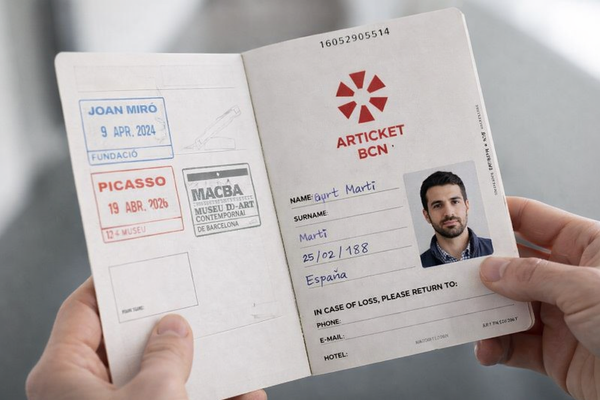
- The Articket is your best deal. At €38 for six museums (including Picasso, Miró, MACBA, MNAC and CCCB), you're basically getting Tàpies for free. The pass is valid for 12 months, so no pressure to rush. If you're visiting any three of those six, it pays for itself.
- Most visitors spend 45 minutes to 1 hour. That's enough for the permanent collection. If there's a good temporary exhibition downstairs, add 30 minutes.
- The chocolate shop in the courtyard is real. Multiple visitors mention a chocolate shop (Chocolat Factory) in the building's entrance area with hot chocolate, fresh bread and sandwiches. Worth a stop before or after.
- Staff are consistently praised. Unlike most Barcelona museums, several reviews specifically mention how welcoming and informative the staff are. They'll walk you through what's on each floor if you ask.
- No audio guide for temporary exhibitions. The permanent collection has wall annotations in English, but don't expect a self-guided audio tour. If you want deeper context, the Foundation organizes guided tours of Tàpies' public works across Barcelona.
Verified facts
- Address: Carrer d'Aragó 255, Eixample
- Hours: Tue-Sat 10:00-19:00, Sun 10:00-15:00. Closed Mondays.
- Closed: 1 Jan, 6 Jan, 25-26 Dec
- Tickets: €12 adults, €8 students/seniors 65+, free under 16
- Free with: Articket (€38, 6 museums), Barcelona Card
- Free days: 12 Feb, 18 May, 24 Sep
- Metro: Passeig de Gràcia (L2, L3, L4)
- Bus Turístic: Blue and Red routes, stop Casa Batlló - Fundació Antoni Tàpies
- Accessibility: Left lateral door with elevator to all levels
- Nearby: Casa Batlló (95m), Casa Amatller, Rambla de Catalunya
- Official site: museutapies.org
- Library note: Closed 22 Jan - 12 Feb 2026 for maintenance (confirm dates on their site)
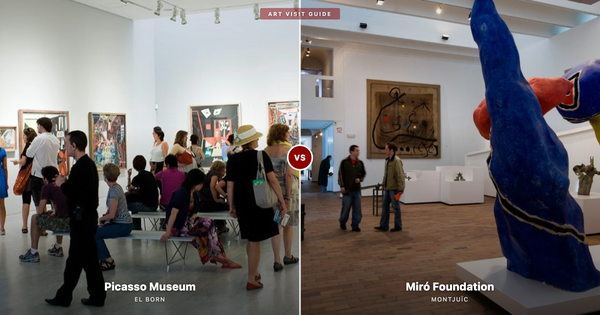
One last thing. If you've been to Miró and liked the idea of an artist who threw out the rulebook, Tàpies is the next logical step. Miró simplified. Tàpies deconstructed. And unlike most Barcelona museums, you'll probably have the place almost to yourself.