Fundació Joan Miró Barcelona: What to See and How to Visit
Miró built this museum with his friend on Montjuïc hill. Here's what to look for, what most visitors miss, and how to make the most of your visit.

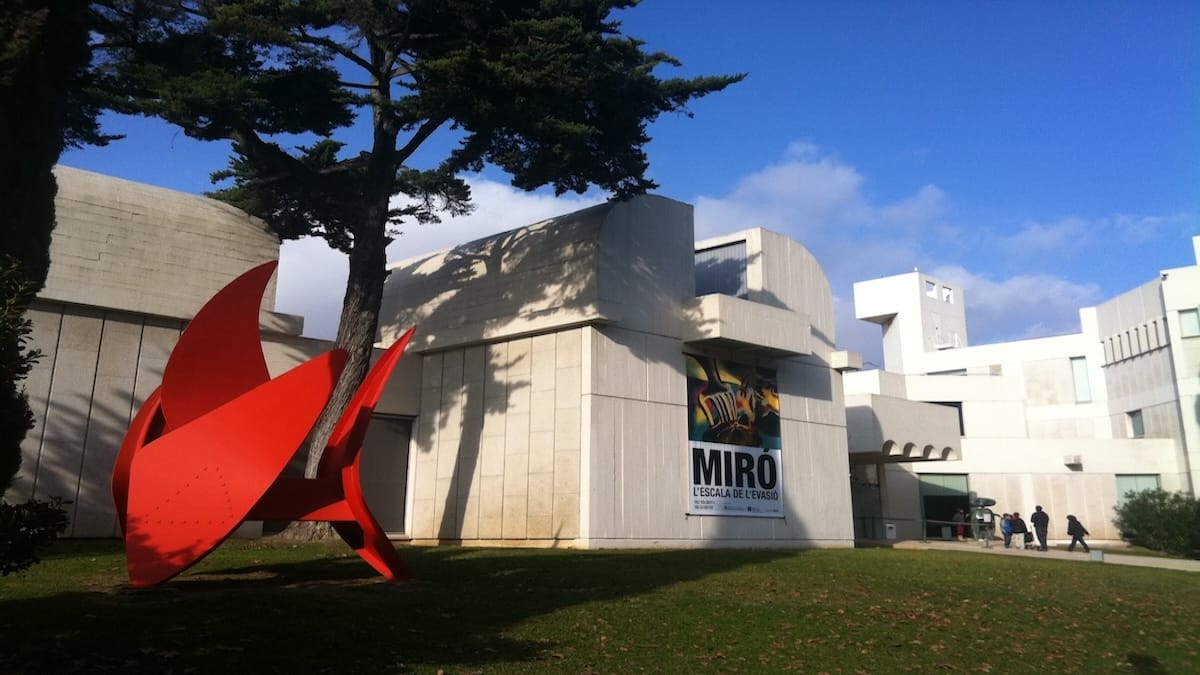
The Fundació Joan Miró in Barcelona holds over 10,000 works by Joan Miró (1893–1983), including 217 paintings, 178 sculptures, and 9 tapestries. It sits on Montjuïc hill in a purpose-built modernist space designed by Josep Lluís Sert. Most visitors spend 90 minutes to 2 hours. This guide covers the key works, what to notice, and how to plan your visit.
Most visitors walk into the Fundació Joan Miró expecting colourful, childlike paintings. They're not wrong, but they're missing the point. Miró spent 70 years building a private visual language — stars, eyes, birds, moons — that looks simple until you realise every shape means something.
If you arrive knowing what to look for, this becomes one of the best museum visits in Barcelona. If you arrive cold, you'll enjoy the building and the views but miss what makes Miró extraordinary.
The Fundació Joan Miró sits on Montjuïc hill in a purpose-built modernist space by Josep Lluís Sert. The permanent collection spans Miró's career from the 1910s to his final large-scale works. Most visitors spend 90 minutes to 2 hours. Tickets cost €15.
In 3 minutes
- Miró's "childlike" paintings are a sophisticated visual alphabet he built over seven decades — stars, birds, moons, eyes all mean something specific
- The museum holds over 10,000 works in a building designed by his close friend Josep Lluís Sert, with Mediterranean light that frames everything
- The funicular is out of service — Metro to Espanya, then 15 min walk uphill. Afternoons are calmer than mornings
What is the Fundació Joan Miró?
Joan Miró (1893–1983) was born in Barcelona and spent his life between Catalonia, Paris, and Mallorca. Unlike Picasso, who left Spain and never came back, Miró kept returning. This museum exists because he chose Barcelona as the home for his legacy.
The Fundació opened in 1975 in a building designed by his close friend Josep Lluís Sert. Sert built it with Mediterranean light in mind: white walls, open courtyards with orange trees, and terraces that blur the line between indoors and outdoors. The architecture doesn't compete with the art. It frames it.
The collection spans over 10,000 works — 217 paintings, 178 sculptures, 9 tapestries, 4 ceramics, and nearly his entire graphic output. You won't see all of it in one visit, but you'll see enough to understand how a man who started painting Catalan farmhouses ended up creating one of the most recognisable visual languages in modern art.
Best works at the Fundació Joan Miró
- Learn his personal alphabet. Stars, moons, eyes, birds, women — these shapes repeat across decades. Once you start recognising them, every painting becomes a sentence you can read. The star always means escape. The bird always means freedom. The eye is always watching.
- Watch what happens in the 1930s. The playful colours darken. The forms become aggressive, distorted. Spain was falling apart, and Miró's paintings became a visual scream. Compare any 1920s work to Man and Woman in Front of a Pile of Excrement (1935) and the shift is visceral.
- Find the Mercury Fountain. Alexander Calder built it for the 1937 Paris Expo as a protest against the siege of Almadén. It runs on actual mercury — toxic and mesmerising. It sat next to Guernica at the Spanish Pavilion. Now it's here, behind glass.
- Notice how the building controls the light. Sert designed skylights and courtyards so natural light changes how you see the work throughout the day. Afternoon light is warmer, softer. This isn't accidental — the architecture is part of the exhibition.
- Don't rush the late works. The monumental canvases from Miró's seventies and eighties look like he stopped caring. He didn't. He was stripping everything down to pure gesture. Stand back from the large triptychs and let the scale work on you.
Visitor tips for the Fundació Joan Miró
- Go in the afternoon. School groups fill the museum in the mornings during term time. Multiple reviewers warn about "a zoo of teenagers." Afternoons are noticeably calmer, especially Tuesday through Thursday.
- The funicular is out of service. Your best option: Metro to Espanya (L1/L3), then a 15-minute uphill walk through the park. Comfortable shoes matter. Bus 55 and 150 also stop nearby.
- The restaurant is better than you'd expect. A proper restaurant (not just a café) with a garden terrace in the central courtyard. Food is served on Miró-designed plates, parakeets in the garden are a bonus. One of the only decent lunch spots on Montjuïc. Book ahead on weekends.
- Combine it with MNAC. They're a 10-minute walk apart on Montjuïc. Start with Miró in the early afternoon and move to MNAC for the free Saturday entry from 3 pm. The restaurant terrace here is good enough to have lunch between the two. If you enjoy contemporary art, MACBA is also worth a visit on a separate day.
- Download Bloomberg Connects before you go. Free app that replaces the audio guide. It works well and saves you €5. Do it on Wi-Fi — Montjuïc signal is patchy.
Common questions
How long do you need at the Fundació Joan Miró?
Most visitors spend 90 minutes to 2 hours. The building is compact — one floor of permanent collection plus temporary exhibitions. If you use the free Bloomberg Connects app instead of paying 5 euros for an audio guide, you get the same commentary. Afternoons are quieter than mornings, when school groups visit.
Is the Fundació Joan Miró worth visiting?
Yes, especially if you appreciate modern art or architecture. The Sert building is considered one of the best museum spaces in Europe — natural light, open galleries, and a garden terrace with views over Barcelona. Even visitors who don’t connect with Miró’s work consistently praise the building itself (source: TripAdvisor reviews).
How do you get to the Fundació Joan Miró?
Metro to Espanya (L1/L3), then a 15-minute uphill walk through Montjuïc park. Bus 55 or 150 stops closer. The funicular from Paral·lel is currently out of service. Combine with MNAC, which is a 10-minute walk away on the same hill.
Is the Fundació Joan Miró included in the Articket?
Yes. The Fundació Joan Miró is one of the 6 museums covered by the Articket Barcelona pass (€38). The Articket includes skip-the-line access at all venues. If you plan to visit Miró plus 2 or more other art museums, the pass saves money and time.
When is the Fundació Joan Miró free?
The Fundació Joan Miró does not currently offer regular free admission days. However, it participates in La Nit dels Museus (usually May) and International Museum Day (May 18). Reduced-price tickets (€9) are available for students, seniors, and Barcelona Card holders. Under 15s enter free.
Practical info
Hours and prices can change. Confirm on the official site before you go.
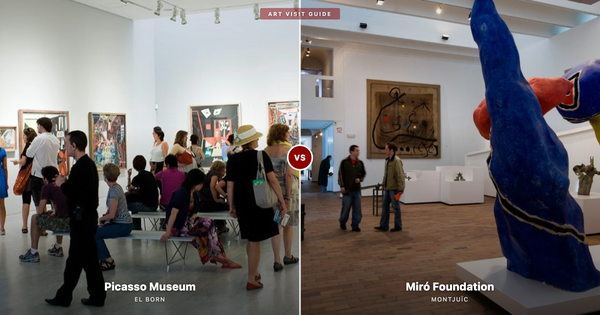
Miró is the opposite of Picasso in almost every way. Where Picasso shows you his skill, Miró shows you his freedom. The Fundació is where that freedom lives — in a building designed by a friend, on a hill above the city he kept coming back to.