10 Best Museums in Berlin (2026): Art-Focused Visitor Guide
Half of Museum Island is closed for restoration. Here are the ten Berlin museums worth your time — what's open, what's worth the detour, and what to skip.
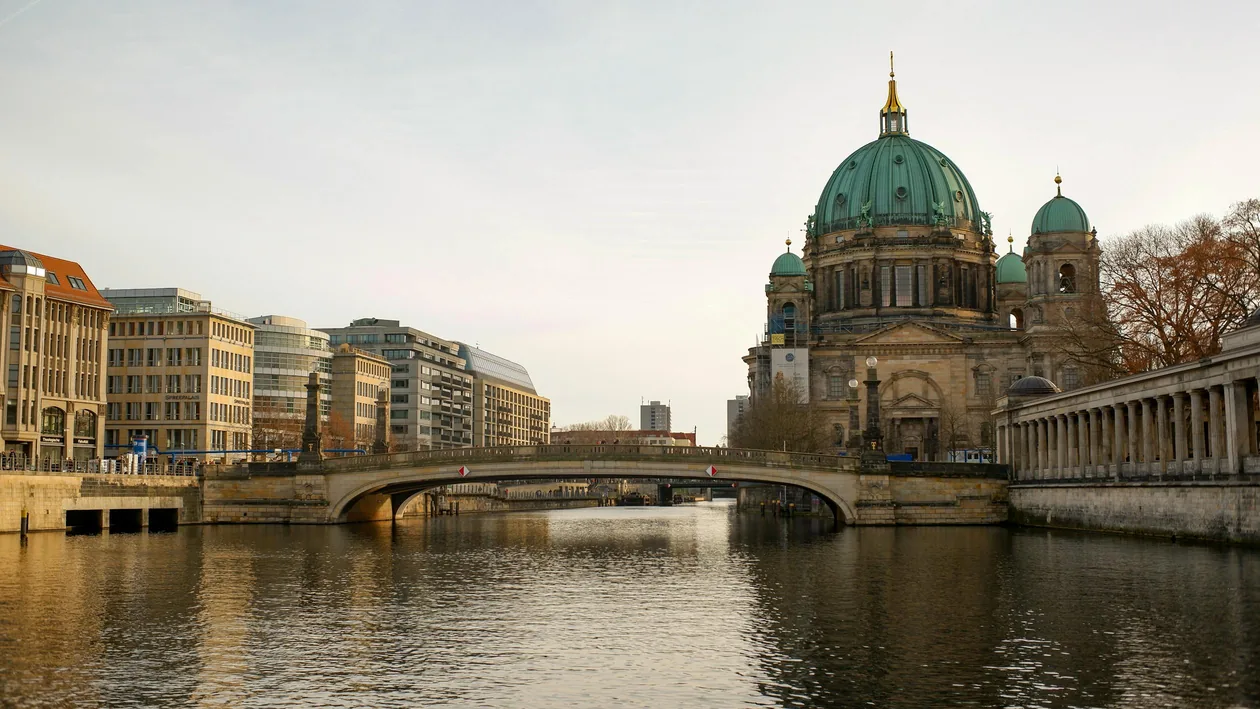
Walk into Berlin expecting Museum Island and you'll find half of it under scaffolding. The Pergamon (the headline museum with the Ishtar Gate and the altar) has been closed since October 2023 and doesn't reopen until 4 June 2027. The Berggruen, where the Picassos and Klees lived, is closed too.
That's the bad news. The good news is that four other Museum Island buildings are open, the Gemäldegalerie holds sixteen Rembrandts most tourists never reach, and Berlin's contemporary scene (Hamburger Bahnhof, the Berlinische Galerie, the East Side Gallery) is in its strongest year in a decade. Here are the ten museums worth your time, ranked with honest verdicts.
In 3 minutes, you'll know:
- Which museums are open in 2026 and which to skip on this trip
- How to pair them without burning out
- Where the Museum Pass Berlin pays for itself
1. Gemäldegalerie — the painting museum tourists keep missing
What: 1,500 European paintings across 72 rooms at the Kulturforum near Potsdamer Platz. Sixteen Rembrandts, Vermeer's Pearl Necklace, Caravaggio's Cupid as Victor, plus van Eyck, Bruegel, Raphael, Titian, and Dürer. Tickets: €14 via the official SMB site. Free under 18. Time needed: 1.5–2 hours for highlights. 3+ hours if you slow down with the Rembrandts. Best for: Anyone serious about Old Masters, or anyone tired of Berlin contemporary scene-hopping.
Walk in through the south entrance off Matthäikirchplatz and follow the long central spine clockwise — you'll cover the Northern Renaissance, the Italian Renaissance and the Dutch Golden Age in chronological order without backtracking. The Rembrandt rooms (Room VII–X) are the emotional peak; on a Tuesday or Wednesday morning at 10:00 you can have them to yourself for half an hour. The collection rivals the Louvre's pre-1800 holdings, sits a four-minute walk from the Neue Nationalgalerie, and gets a fraction of either's footfall.
2. Neues Museum — Nefertiti and the Golden Hat
What: The Egyptian and prehistory wing of Museum Island. Nefertiti's 3,300-year-old painted bust (Level 1, North Dome), Schliemann's Trojan finds, and the Berlin Golden Hat — a 1,000 BC ceremonial cone covered in calendrical markings. Tickets: €14, free under 18. Included in Museum Pass Berlin and the Museum Island day ticket (€24, 4.5★). Time needed: 1.5–2 hours. Best for: Anyone who came for Egypt and isn't getting the Pergamon Altar.
Nefertiti's room is small and gets a permanent ring of visitors — photography is forbidden inside, which keeps people moving. Arrive at 10:00 (opening), go straight to Level 1, then work down through prehistory on Level 2 and the Migration Period rooms on Level 3. The building itself, restored by David Chipperfield between 1997 and 2009, is a study in how to rebuild a war-damaged museum without faking history. Closed Mondays; brief maintenance closure 16–18 March 2026.
3. Alte Nationalgalerie — 19th-century painting in a Greek temple
What: German Romanticism (Caspar David Friedrich), Realism (Adolph Menzel, Lovis Corinth) and a strong French Impressionist holding (Manet, Monet, Degas) inside a neoclassical temple on Museum Island. Tickets: €14, free under 18. Special exhibition surcharge in 2026. Time needed: 2 hours. Best for: Painting fans, Friedrich devotees, anyone who wants Impressionism without the d'Orsay queue.
Until 27 September 2026, the museum hosts roughly 100 Impressionist paintings on loan from across Europe and the US — the kind of show that justifies the trip on its own. Reach the museum via the colonnade courtyard for the best approach. The standing collection is tightly hung and easy to absorb; Corinth's The Blind Samson and Menzel's The Iron Rolling Mill are the works to anchor on if you're short on time.
4. Neue Nationalgalerie — the Mies van der Rohe glass box
What: Ludwig Mies van der Rohe's last completed building (opened 1968), recently refurbished by David Chipperfield (2015–2021). Permanent collection of 20th-century classical modernism (Expressionism, Bauhaus, Surrealism) below ground; column-free temporary hall above. Tickets: €14 (€16 during major exhibitions). Brancusi retrospective until 9 August 2026. Time needed: 1–1.5 hours. Best for: Architecture fans, Bauhaus fans, modernism completists.
The building is the reason architects fly here. Even when nothing's on, the open ground floor (all glass walls and black steel) is a free walk-through. The permanent collection (Kirchner, Beckmann, Dix, Grosz) lives below ground in galleries that feel like vaults. Thursdays it stays open until 20:00 and the 18:00–20:00 slot is the quietest of the week. Closed Mondays.
5. Bode-Museum — sculpture on its own island
What: One of Europe's strongest sculpture collections (medieval German wood carving, Italian Renaissance bronzes, Byzantine icons), plus the Münzkabinett, the world's largest coin cabinet (500,000 pieces). Tickets: €14, free under 18. Included in Museum Pass Berlin. Time needed: 1.5 hours. Best for: Sculpture fans, Renaissance specialists, anyone who wants Museum Island without the crowds.
At the northern tip of Museum Island, the Bode looks like a small palace on its own riverbank and behaves like one inside — long sculpture halls, polished floors, light from the courtyards. The Münzkabinett on the upper floors is the kind of collection that exists in textbook references and rarely on view; few visitors climb the stairs to see it. Best paired with the Neues Museum, which is a four-minute walk south.
6. Hamburger Bahnhof — contemporary in a converted railway station
What: Berlin's national gallery of contemporary art, inside a 19th-century terminal station 10 minutes north of the Reichstag. Andy Warhol (around 60 works), Joseph Beuys, Lichtenstein, Anselm Kiefer, plus large-scale installations in the Rieckhallen extension. Tickets: €16, free under 18. Free on the first Thursday evening of every month (16:00-20:00, Volkswagen Art4All). Time needed: 1.5–2 hours. Best for: Contemporary art viewers, Warhol fans, anyone with a free Thursday evening.
The permanent display rotates, but Warhol, Beuys and Lichtenstein are usually on the wall. The Rieckhallen (warehouses behind the main building) hold installations large enough to walk through, which the photos never capture. Tue–Fri 10:00–18:00, Thu until 20:00, Sat–Sun 11:00–18:00. Closed Mondays. From 13 November, the Sophie Calle exhibition is the winter reason to go — her first Berlin solo show in over twenty years, included in the €16 ticket.
7. Berlinische Galerie — the museum about Berlin itself
What: 20th-century art made in or about Berlin. Otto Dix's portrait of the journalist Sylvia von Harden (monocle, cigarette, the face of Weimar Berlin), Hannah Höch's Dada collages, the Junge Wilde painters of the 1980s. Tickets: €12 (€7 reduced). €7 for everyone on the first Wednesday of every month ("Happy Wednesday"). Free under 18. Time needed: 1.5 hours. Best for: Anyone who wants Berlin's own art history, anyone who's done Museum Island and needs a smaller-scale afternoon.
Located in a converted warehouse in Kreuzberg since 2004, the museum is smaller than the Museum Island heavyweights and far easier to absorb. On a weekday afternoon you can spend two hours without seeing another tour group. Closed Tuesdays (not Mondays) — the one museum in this list where the weekly closure trips up planners.
8. Museum für Fotografie / Helmut Newton Foundation — Berlin's photography museum
What: A converted Prussian officers' casino opposite Zoo Station. Ground floor and basement are the Helmut Newton Foundation (Newton was born in Berlin in 1920 — his private collection, equipment and personal effects); upper floors host rotating shows from the State Library's wider photography holdings. Tickets: €12 (€6 reduced). Free under 18. Time needed: 60–90 minutes. Best for: Photography fans, Newton followers, anyone with an hour to fill in Charlottenburg.
Smaller than the Museum Island circuit, and easy to combine with a walk through the Tiergarten east toward Hamburger Bahnhof. Newton's "Sumo" book (a 30 kg art-book monolith) sits on its own steel lectern in the basement and is the object visitors photograph (cautiously) without trying to lift.
9. East Side Gallery — the open-air mural mile
What: 1.3 km of the original Berlin Wall, painted by 118 artists from 21 countries in 1990. Birgit Kinder's Trabant breaking through the wall, Dmitri Vrubel's My God, Help Me to Survive This Deadly Love (Brezhnev and Honecker kissing) and Thierry Noir's coloured heads are the murals that travel on every Berlin postcard. Tickets: Free, open 24 hours, no booking. Time needed: 30–60 minutes to walk the full length. Best for: Everyone. First-timers, photographers, anyone with a free morning.
Walk it from Warschauer Straße S-Bahn south-west to Ostbahnhof, the murals on the Spree-facing side. Arrive at 08:00–09:00 for photography and silence — by 11:00 tour groups arrive and the narrow pavement becomes a slow-moving column. It is not the Berlin Wall Memorial (that's at Bernauer Straße, a separate site about the wall as a system of fortifications). The East Side is the wall as a canvas.
10. Brücke-Museum — the Expressionist outpost in Dahlem
What: A small purpose-built bungalow at the edge of the Grunewald forest, designed by Werner Düttmann in 1967. The world's largest displayed collection of Die Brücke artists: Kirchner, Schmidt-Rottluff, Heckel, Pechstein, Mueller. Tickets: €8, free under 18. Included in Museum Pass Berlin. Time needed: 1 hour, plus 45 minutes each way from central Berlin (bus 115 or X10 to "Brücke-Museum / Kunsthaus Dahlem"). Best for: German Expressionism specialists. Everyone else can skip it.
The displays rotate, the building is small, and the "Brücke greats" aren't always on show — check the current exhibition page before you commit the half-day. Through 21 June 2026, the show is Kunst Hand Werk Brücke, focused on the applied-arts side of the group (a bed carved by Kirchner, a cushion sewn by Schmidt-Rottluff). For Expressionism fans this is the deepest single-room collection in Germany. For everyone else, it's a long detour.
Currently closed: Pergamon and Berggruen
The Pergamonmuseum is closed entirely until 4 June 2027 for structural restoration. Even after that partial reopening, the wing holding the Babylonian Ishtar Gate stays closed for further work. If you came to Berlin for the Pergamon Altar, you can't see it on this trip. The substitute is Pergamon — Das Panorama at Am Kupfergraben 2, a separate building across the canal with around 80 original sculptures from the Pergamon collection plus Yadegar Asisi's 360° painted panorama of the ancient city in 129 AD. €12, Tue–Sun, and the closest visitors will get to the Altar until 2027.
Museum Berggruen, which holds the Picassos, Klees, Matisses and Giacomettis, has been closed for renovation since September 2022. The reopening was first announced for 2025, then delayed; current expectation is late 2026 or 2027, with no public date confirmed. Check the SMB website before counting on it.
For the full Pergamon closure timeline, what reopens when, and the Panorama substitute, see our Pergamon closure guide.
How to pair them
Two museums per day is the honest limit. Three works only if you keep visits to 90 minutes each. If Museum Island is the main draw, the full Museum Island one-day route covers all five stops (4 museums + Pergamon Panorama) in detail.
- Museum Island morning: Neues (10:00, 1h45) → Alte Nationalgalerie (12:00, 1h30). Lunch at Hackescher Markt.
- Kulturforum afternoon: Gemäldegalerie (10:30, 1h45) → Neue Nationalgalerie (13:30, 1h). Three-minute walk between them; one ticket if you have the Museum Pass.
- Contemporary day: Hamburger Bahnhof (10:00) → Berlinische Galerie (14:00). One U-Bahn change.
- Wall day: East Side Gallery (08:30) → Berlinische Galerie (10:30) → lunch in Kreuzberg. No queues, no booking, no SMB ticket.
- Photo + contemporary: Museum für Fotografie (10:00) → Hamburger Bahnhof (13:30). A 20-minute walk apart through the Tiergarten.
For the day-by-day, hour-by-hour breakdown — including the Thursday evening windows most visitors miss — see our best time to visit Berlin museums guide.
What do most visitors wish they knew about Berlin museums?
Three things. First, that the Pergamon is closed — knowing this before booking changes the itinerary. Second, that the Museum Pass Berlin (€32 for three consecutive days, 30+ museums, digital only since September 2025) pays for itself after any two paid SMB visits, and it is the cheapest way to combine Museum Island and Kulturforum on the same trip. Third, that Museumssonntag (the free first Sunday) ended in December 2024 — plenty of older travel content still treats it as live, but there's no free-entry day anymore; the closest thing left is the Hamburger Bahnhof's first-Thursday-evening free hours.
- Standard SMB ticket
- €14 (€16 during major exhibitions) · €7 reduced · under 18 free
- Museum Pass Berlin
- €32 for 3 consecutive days, 30+ museums. Digital only since September 2025.
- Museum Island day ticket
- From €24 — covers Neues, Bode, Alte Nationalgalerie, Altes Museum and the Pergamon Panorama. Book on GetYourGuide (4.4★, 2,951 reviews).
- Closed Mondays
- All SMB state museums. The Berlinische Galerie closes Tuesdays instead.
- Free entry
- Hamburger Bahnhof first Thursday evening (16:00-20:00). Museumssonntag (former free first Sunday) ended December 2024.
- Currently closed
- Pergamonmuseum (reopens 4 June 2027, partial). Museum Berggruen (reopening late 2026 / 2027, TBC).
- Disclaimer
- Prices and special-exhibition windows change. Confirm on each museum's official site before you go.
Last verified: July 2026
Frequently asked questions
What are the best museums in Berlin?
Ten are worth your time, and they fall into three groups. For Old Masters and classical art: the Gemäldegalerie (sixteen Rembrandts, a Vermeer, Caravaggio), the Neues Museum (Nefertiti's bust on Museum Island), the Alte Nationalgalerie (Caspar David Friedrich and French Impressionism), and the Bode-Museum (sculpture and the world's largest coin cabinet). For modern and contemporary: the Neue Nationalgalerie (Mies van der Rohe's glass box, 20th-century modernism), the Hamburger Bahnhof (Warhol and Beuys in a converted station), the Berlinische Galerie (Otto Dix and Weimar-era Berlin), and the Brücke-Museum (German Expressionism in Dahlem). For something free and outdoors, the East Side Gallery covers 1.3 km of painted Berlin Wall, and the Museum für Fotografie rounds out the ten. The Pergamonmuseum (closed until 4 June 2027) and the Berggruen cannot be visited in 2026.
What are the best museums in Berlin, Germany?
Berlin, Germany has over 170 museums, more than any other German city, concentrated in two clusters a 25-minute walk apart: Museum Island (the UNESCO site with the Neues, Alte Nationalgalerie, Bode and Altes Museum) and the Kulturforum near Potsdamer Platz (Gemäldegalerie and Neue Nationalgalerie). The art essentials are four: the Gemäldegalerie for Old Masters (sixteen Rembrandts, a Vermeer, Caravaggio), the Neues Museum for Nefertiti and Egyptian antiquities, the Alte Nationalgalerie for 19th-century painting and Impressionism, and the Neue Nationalgalerie for 20th-century modernism in Mies van der Rohe's glass pavilion. Beyond the art museums, Berlin's history is the draw: the East Side Gallery (1.3 km of painted Berlin Wall, free and open daily), the Jewish Museum, and the contemporary Hamburger Bahnhof in a converted railway station. One caveat reshapes any itinerary: the Pergamonmuseum, the city's most famous museum, is closed until 4 June 2027, and the Berggruen (Picasso, Klee, Matisse) is closed for renovation through at least late 2026. Standard SMB tickets run €12–€16, and the Museum Pass Berlin (€32 for three days) is the cheapest way to combine the two clusters.
Which is the best museum in Berlin for first-time visitors?
The Gemäldegalerie at the Kulturforum. Sixteen Rembrandts, a Vermeer, Bruegel, Caravaggio and Raphael in 72 rooms — and on a normal Tuesday morning, the Rembrandt rooms are near-empty. If you want a single museum that holds its own against the Louvre or the Rijksmuseum, this is the one.
Is the Pergamon Museum open in 2026?
No. The Pergamonmuseum has been closed entirely since October 2023 and will not reopen until 4 June 2027 — and only partially, with the Ishtar Gate wing still under restoration. The temporary Pergamon — Das Panorama exhibition (€12, Am Kupfergraben 2) is the only Pergamon-themed experience open in 2026.
Are Berlin museums free?
Not generally — most charge €12–€16. Under 18s are always free at SMB museums. Museumssonntag, the free-first-Sunday programme, ended in December 2024 and hasn't returned. What's still genuinely free: the Hamburger Bahnhof on the first Thursday evening of the month, and the East Side Gallery (an open-air 1.3 km section of the Berlin Wall) every day. Full free-day breakdown in our free museums in Berlin guide.
How many days do you need for Berlin's museums?
Two full days covers the main museums comfortably. Day one: Museum Island (Neues + Alte Nationalgalerie). Day two: Kulturforum (Gemäldegalerie + Neue Nationalgalerie). A third day adds the contemporary circuit (Hamburger Bahnhof, Berlinische Galerie). Don't try to do Museum Island and Kulturforum on the same day — they sit a 25-minute walk apart and both deserve fresh legs.
Is the Museum Pass Berlin worth it?
Yes, if you'll see at least three paid SMB museums in three consecutive days. The pass is €32, individual tickets are €14 each — three visits cover €42 of single tickets for €32, anything more is straight savings. Since September 2025 it's digital only, bought through the SMB ticket shop. It does not include special exhibitions with their own ticket. Full break-even by profile in our Museum Pass Berlin worth-it analysis.
What is the best time to visit Berlin museums?
Tuesday, Wednesday or Thursday at 10:00 (opening). Weekends and Mondays (when most museums are closed) push crowds onto the other days, so Saturday afternoons on Museum Island are the worst. Thursdays the Neue Nationalgalerie stays open until 20:00 — the 18:00–20:00 window is genuinely quiet.
Which Berlin museum has Nefertiti?
The Neues Museum, on Museum Island. Her 3,300-year-old painted limestone bust has her own circular hall on Level 1 (the North Dome). Photography is forbidden inside that room to protect the pigment — it's the one rule the guards actually enforce.
Is the Berggruen Museum open?
No. The Berggruen has been closed for renovation since September 2022. The reopening was originally planned for 2025, then delayed; current expectation is late 2026 or 2027, with no public date confirmed as of May 2026. Confirm on the SMB website before counting on it. The collection (Picasso, Klee, Matisse, Giacometti) has been touring internationally during the closure.
Which Berlin museums are open on Mondays?
Almost none. Every SMB state museum (Altes, Neues, Alte Nationalgalerie, Bode, Gemäldegalerie, Neue Nationalgalerie, Hamburger Bahnhof) closes Mondays. The Berlinische Galerie in Kreuzberg closes Tuesdays instead — the one exception to the SMB Monday rule. The East Side Gallery is outdoor and open every day. The Jewish Museum switched to Monday closures in March 2026, so older guides are now wrong about it. Full breakdown of what's open and a Monday itinerary in our Berlin museums open on Monday guide.
Is the Museumsinsel worth visiting if the Pergamon is closed?
Yes. Even without the Pergamon, the UNESCO complex still has Nefertiti at the Neues Museum, 19th-century painting at the Alte Nationalgalerie, sculpture at the Bode, classical antiquities at the Altes Museum, and the Pergamon Panorama across the canal — five distinct stops in walking distance. The day ticket (€24-26) covers all of them and is the single highest-density museum experience in Berlin. Full route in our Museum Island guide.
Is Berlin the best city in Germany for museums?
For art museums and total volume, yes. Berlin holds the densest art-museum concentration in Germany — Museum Island and Kulturforum alone rival what most European capitals offer in total. Munich is the strong runner-up, particularly for Northern Renaissance (Alte Pinakothek) and Greco-Roman antiquities (Glyptothek), and Dresden's Zwinger palace museums hold one of Europe's strongest Old Master collections. For a single museum-heavy trip, Berlin wins; for depth in specific periods, Munich and Dresden each have a case.
Ten museums, two closures, one city still figuring out how to be the capital of European art. Pick two for your first day and come back for more on your second. If you're combining Berlin with another trip, the eight London museums worth your time and the Vienna ranking (Kunsthistorisches, Belvedere, Leopold) are the obvious next stops for anyone building a European art route. For a one-museum side-trip north, Kengo Kuma's Hans Christian Andersen Museum in Odense is a 6-hour train ride via Hamburg and the strongest piece of contemporary museum architecture in Northern Europe.
For the cross-city view, see the world ranking of 15 best art museums.