7 Best Museums in Athens (Ranked for 2026)
Most travellers visit the Acropolis Museum and call it a day. Athens has a deeper bench — the National Archaeological holds 5,000 years of Greek art, the Cycladic and the Goulandris pair classical with modern, and Benaki opens its doors free every Thursday evening. An honest ranking of seven.
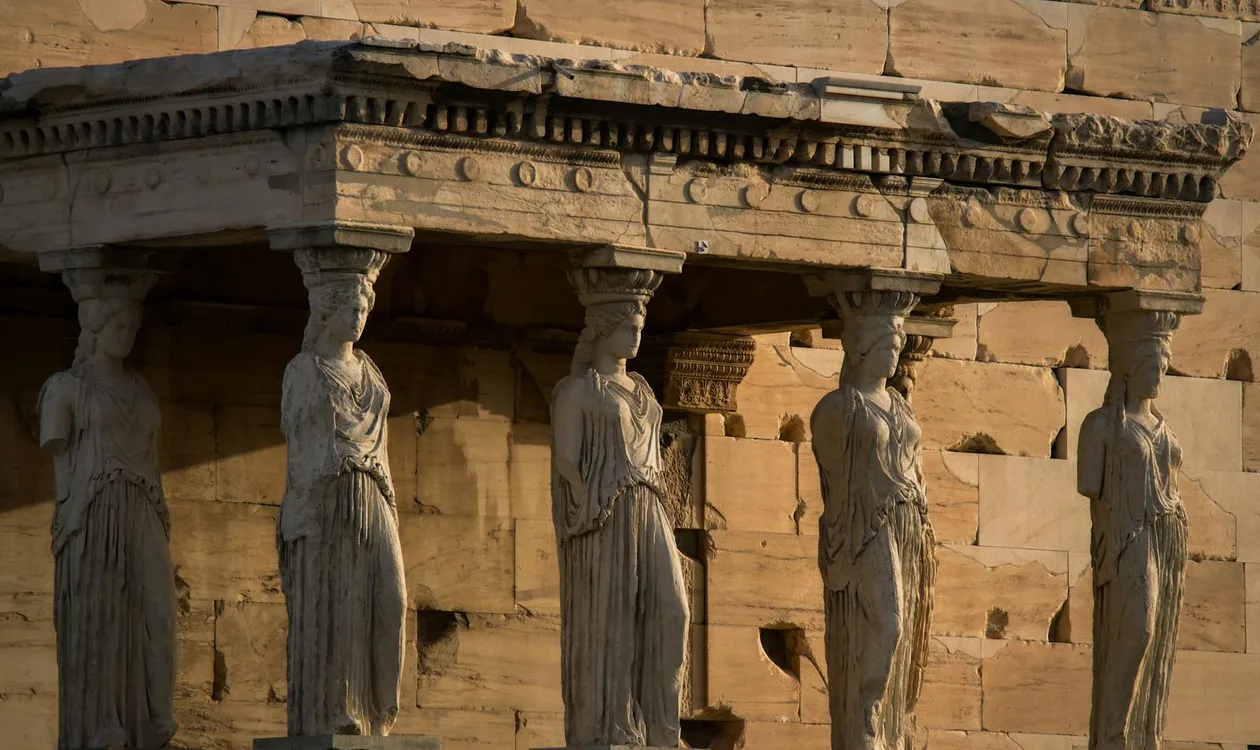
Most travellers see Athens through one museum: the Acropolis Museum, on the way down from the rock. It deserves the attention — the Parthenon frieze on the top floor, with the Acropolis itself visible through the glass behind the sculptures, is one of the best curatorial decisions made in any European museum in the last twenty years. But stop there and you've seen one of seven.
The National Archaeological holds 5,000 years of Greek art under one roof. The Museum of Cycladic Art shows you the minimalist marble figurines that influenced Brâncuși and Modigliani. The Goulandris Foundation hangs a Picasso next to a van Gogh, a Cézanne next to a Bacon. Below is an honest ranking, with the prices, the hours, and the days everything closes.
In 3 minutes you'll know:
- Which Athens museums reward 2-3 hours and which work as 60-minute add-ons
- Where to find free admission slots (and on which day of the week)
- How to pair the museums efficiently around the Tuesday closures
1. Acropolis Museum — the one you came for
What: The home of the original Caryatids, the Parthenon frieze, and the pre-classical sculpture that survived the 480 BC Persian sack. The top-floor Parthenon Gallery is the museum's anchor — all glass, with the Acropolis itself visible through the windows behind the sculptures. About half the frieze you see is original marble; the rest is white plaster cast (replacements for the Elgin Marbles in the British Museum). Tickets: €20 general, €10 reduced, the same price all year. Free under 18 EU. Book on GetYourGuide — 4.3★ from 2,700+ reviews, free cancellation. Detail in the Acropolis Museum tickets guide. Hours: Opens 8am (9am Mondays). Late closing Friday (10pm summer). Time needed: 2–3 hours. Best for: Anyone visiting the Acropolis the same day — visit the rock first, museum second.
The 8am opening is the quietest hour of the week; crowds arrive around 10:30. Pair it with the Acropolis site itself: the tickets guide for the Acropolis site covers timing and slot booking. For the ancient sites beyond the Acropolis, our archaeological sites in Athens guide prices the Ancient Agora, Roman Agora, Hadrian's Library and the Olympieion, and explains why the combined ticket no longer exists. If you're choosing between Acropolis Museum and the National Archaeological for a single museum day, the side-by-side comparison lays out which suits which visitor.
2. National Archaeological Museum — the deepest collection in Greece
What: The largest archaeological museum in Greece, with 11,000 items on permanent display. The anchors are the Mask of Agamemnon (Mycenaean gold, 16th century BC), the Santorini frescoes (Akrotiri, predating the volcanic eruption around 1600 BC), and the bronze Zeus/Poseidon of Artemision. The Egyptian and Cypriot Antiquities collection in the wings is consistently quieter than the Greek sculpture halls. Tickets: €20 adult. Free under 18 EU. Part of the €15 / 3-day multi-museum pass (also includes Byzantine, Numismatic, Epigraphical) — breaks even at two of those museums. Book at the door or via namuseum.gr. Full prices, hours and route in our National Archaeological Museum tickets guide. Hours: Summer (May 4–Nov 15): Wed–Mon 08:00–20:00, Tue 13:00–20:00. Winter: Wed–Mon 08:30–15:30, Tue 13:00–20:00. Closed Jan 1, Mar 25, May 1, Orthodox Easter Sunday, Dec 25–26. Time needed: 2.5–3 hours minimum. Archaeology fans: 4. Best for: Anyone who wants the through-line of Greek civilisation from Neolithic to Roman in one building.
Most visitors enter from the main façade and start with Mycenaean — correct. The trap is the second floor; the Akrotiri frescoes are there and you'll regret skipping them. The museum sits in Exarcheia, 25 minutes' walk north of Syntagma or a metro hop (Victoria, line 1; Omonia, lines 1 and 2). A short coffee break in the museum café halfway through is the local approach.
3. Museum of Cycladic Art — the one that's free on Wednesdays
What: The Nicholas and Dolly Goulandris collection of Cycladic, ancient Greek, and Cypriot art. 3,000 objects, the centrepiece being the minimalist marble figurines from the Cyclades (3rd millennium BC) that directly influenced 20th-century sculptors like Brâncuși, Modigliani and Henry Moore. The temporary exhibitions on the upper floors regularly host major international shows. Tickets: €14 adult. €11 reduced (students, 65+, ages 19–25). Free every Wednesday. Book on GetYourGuide or at the door. Hours: Mon/Wed/Fri/Sat 10am–5pm. Thu 10am–8pm. Sun 11am–5pm. Closed Tuesday. Time needed: 1.5–2 hours. Best for: Anyone interested in the connection between ancient Aegean abstraction and modern sculpture. Wednesday visitors looking for a free museum.
The Wednesday free entry is consistently under-mentioned in English-language guides. The Thursday late opening (until 8pm) is the second-best slot — quieter than weekend mornings and gives you time for dinner in Kolonaki afterwards. The museum sits a 5-minute walk east of Syntagma; pair it with the Benaki, which is around the corner.
4. Benaki Museum of Greek Culture — free Thursday evenings
What: Greece's most important private museum, founded by Antonis Benakis in 1930 and housed in a neoclassical mansion opposite the National Garden in Kolonaki. Over 40,000 objects covering Greek history from the Neolithic to the 20th century across four floors. The strongest sections are the Byzantine icons (ground floor) and the regional folk art collection — wedding dresses, embroidered textiles, traditional houses partially reconstructed. Tickets: €12 adult. €9 EU citizens. Reduced €6–8 (students, seniors). Free every Thursday 6pm–midnight (excluding organised tours). Hours: Daily 10am except Tuesday (closed). Closes 6pm Mon/Wed/Fri/Sat. Midnight Thursday. 4pm Sunday. Time needed: 2 hours. Best for: Anyone wanting Greek cultural history that extends beyond antiquity. Visitors with a free Thursday evening.
The Thursday late opening is the locals' ritual — Kolonaki residents drop in for an hour after work. The collection is large enough that you can return for a free Thursday after a paid visit and see different sections each time. The museum's second branch (Benaki Museum of Islamic Art, in Thissio) is a separate ticket — well worth it but a different day.
5. Basil & Elise Goulandris Foundation — modern art most visitors miss
What: A modern and contemporary collection by Cézanne, van Gogh, Gauguin, Monet, Degas, Rodin, Toulouse-Lautrec, Bonnard, Picasso, Braque, Léger, Kandinsky, Miró, Giacometti, Pollock, Bacon, Lichtenstein, Botero — plus acclaimed modern and contemporary Greek artists. Opened in 2019 in a building combining a pre-war listed mansion with a contemporary extension. Tickets: Around €14 adult (verify current price at goulandris.gr). Book on GetYourGuide for skip-the-line. Hours: Wed–Mon 10am–6pm. Closed Tuesday and Friday. Time needed: 1.5–2 hours. Best for: Anyone surprised that Athens has a Picasso, a van Gogh, and a Bacon in the same building. Modern art visitors wanting a break from antiquity.
The double-closure (Tuesday and Friday) catches most visitors out. The Picasso room is on the upper floor and most groups don't make it that far. Audio guides are included at no extra cost — take one. The museum sits in Pangrati, a 15-minute walk east of Syntagma or a short Uber.
6. Byzantine and Christian Museum — the underrated middle period
What: The largest collection of Byzantine and post-Byzantine Christian art in Greece. Icons, frescoes, mosaics, manuscripts, liturgical objects from the 4th to the 19th centuries — a thousand years of art that bridges the gap between classical antiquity and modern Greece. Housed in the Villa Ilissia, a 19th-century neoclassical mansion in Kolonaki. Tickets: €8 April–October. €4 November–March. Free under 18. Part of the €15 / 3-day multi-museum pass. Hours: Wed–Mon 8:30am–3:30pm. Closed Tuesday, Jan 1, Mar 25, May 1, Good Friday, Orthodox Easter Sunday, Dec 25–26. Time needed: 1.5–2 hours. Best for: Anyone interested in the period Greek museums usually skip. Visitors with the €15 multi-museum pass.
The Villa Ilissia setting alone is worth the entry — formal garden, neoclassical façade. The collection is laid out chronologically and the second half (post-Byzantine) is consistently emptier than the early Christian rooms. A natural pairing with the Cycladic and the Benaki: all three are within a 10-minute walk of each other in Kolonaki.
7. Numismatic Museum — niche but housed in Schliemann's villa
What: Greece's national coin collection — over 600,000 coins covering ancient Greek, Roman, Byzantine, Medieval and modern issues. The collection itself is specialist, but the setting is the draw: the museum is housed in Iliou Melathron, the 19th-century neoclassical palace built for Heinrich Schliemann (the archaeologist who excavated Troy and Mycenae). Tickets: €10 adult. €5 reduced (EU 65+). Part of the €15 / 3-day multi-museum pass. Hours: Wed–Mon 8:30am–3:30pm. Closed Tuesday and major public holidays. Time needed: 1 hour. Best for: Visitors with the €15 pass. Anyone interested in Schliemann or 19th-century neoclassical interiors. Numismatists.
The painted ceilings and Pompeian-style frescoes throughout the building are the real attraction. The coin galleries are well-curated but specialised — set expectations. The museum sits on Panepistimiou Street, between Syntagma and Omonia; pair it with the National Archaeological in the same day if you're using the €15 pass.
Frequently asked questions
Which museum in Athens should I visit first?
The Acropolis Museum if you're seeing the Acropolis the same day — visit the site first, then the museum to see the original Caryatids and Parthenon frieze in context. If you're not visiting the Acropolis, start with the National Archaeological Museum: it covers 5,000 years of Greek art and is the strongest single collection in the country.
Are there free museum days in Athens?
Yes. The Museum of Cycladic Art is free every Wednesday. The Benaki Museum of Greek Culture is free every Thursday from 6pm to midnight (excluding organised tours). Acropolis Museum, Acropolis site, and all state museums are free on March 6 (Melina Mercouri Day), April 18 (International Day for Monuments and Sites), and May 18 (International Museum Day).
Is the €15 multi-museum ticket worth it?
The 3-day pass covers the National Archaeological Museum, the Byzantine and Christian Museum, the Numismatic Museum, and the Epigraphical Museum. Breakeven is at two museums (National Archaeological alone is €20). If you have three days in Athens and like archaeology, it's the best museum deal in the city.
Can I visit Athens' main museums in one day?
Acropolis Museum and National Archaeological in one day is realistic but tight — both are large and deserve 2-3 hours each. Add a coffee stop and a metro link. For a deeper rotation, split: Acropolis Museum + Benaki on day one, National Archaeological + Cycladic on day two. Most Athens museums close on Tuesdays — plan around it.
Where is the National Archaeological Museum?
Patission Street, about 2 km north of Syntagma Square. The closest metro is Victoria (line 1, green) — 5-minute walk. Omonia (lines 1 and 2) is a 10-minute walk south. It is not within walking distance of the Acropolis; budget a metro hop or a 25-minute walk.
If you're choosing between just two museums, the Acropolis Museum vs National Archaeological comparison is the natural starting point. For a wider Mediterranean art arc, the Lisbon ranking covers the same listicle approach for Portugal's capital.
For a cross-Europe view: see the world ranking of 15 best art museums or the monthly tracker of European museum prices.
Last verified: August 2026